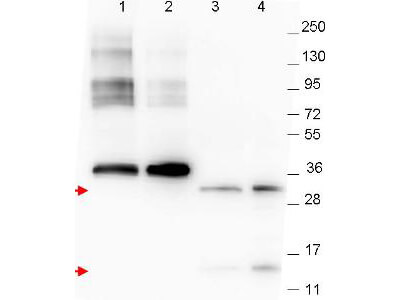
GDF15 Antibody
Product Sizes
25 ul
200-301-B07S-25UL
About this Product
- SKU:
- 200-301-B07S
- Additional Names:
- GDF15|mouse anti-NAG1 Antibody, NAG-1, GDF15, MIC-1, nonsteroidal anti-inflammatory drug-activated gene, NSAID-activated gene 1 protein, growth differentiation factor 15, macrophage inhibitory compound 1, prostate-derived factor
- Application:
- ELISA, Western Blot
- Buffer:
- 0.02 M Potassium Phosphate, 0.15 M Sodium Chloride
- CE/IVD:
- RUO
- translate.label.attr.clone:
- 23B3.D2.H5
- Clonality:
- Monoclonal
- Concentration:
- 1.13 mg/ml
- Extra Details:
- Non-steroidal anti-inflammatory drug (NSAID) activated gene (NAG-1) is a member of the transforming growth factor-beta (TGF-beta) superfamily. NAG-1 is also known as Macrophage Inhibitory Cytokine-1 (MIC-1), Growth Differentiation Factor 15 (GDF15), Placental Bone Morphogenetic Protein (PLAB), or Prostate Derived Factor (PDF). NAG-1 is expressed in human placenta, prostate and colon. It possesses antitumorigenic and proapoptotic activities. NAG-1 expression is dramatically increased in inflammation, injury and malignancy. Increase of NAG-1 expression is a feature of many cancers including breast, colon, pancreas and prostate. In a number of studies, NAG-1 expression was increased by a number of NSAIDs. This increase in expression may correlate with the chemopreventive effect NSAIDs seem to have with certain cancers. NAG-1 expression is also induced by PPAR gamma ligands and by several dietary compounds such as conjugated linoleic acids (CLAs), naturally occurring fatty acids in ruminant food products, indoles, epicatechin gallate, and genistein. Induced expression of NAG-1 results in stimulation of apoptosis and inhibition of cell growth. Inhibition of NAG-1 induced expression by small interference RNA (siRNA) results in repression of induced apoptosis. NAG-1 expression is regulated by a numbers of transcription factors such as ERG-1 and Sp1. EGR-1 may be necessary for NSAID-induced NAG-1 expression. The study of expression of NAG-1 proteins, including variants, is important to define their potential role as serum biomarkers for cancer diagnosis, treatment monitoring, epidemiology study, and nutrition surveys.
- Formulation:
- 0.02 M Potassium Phosphate, 0.15 M Sodium Chloride, pH 7.2
- Host:
- Mouse
- Immunogen:
- This Protein A purified antibody was prepared by repeated immunizations with a synthetic peptide corresponding to a region near the carboxy terminal end of human NAG-1 protein. A residue of cysteine was added to facilitate coupling to KLH.
- Isotype:
- IgG1, IgG1, kappa
- Physical State:
- Liquid
- Reactivities:
- Human
- Shipping Conditions:
- Dry Ice
- Specificity:
- This product was purified from concentrated tissue culture supernatant Protein A chromatography. This antibody reacts with the C-terminus of endogenous NAG-1 protein from human tissues. A BLAST analysis suggests reactivity with NAG-1 from chimpanzee and macaque based on a 100% homology. Partial reactivity is expected against rat based on an 86% homology with the immunizing sequence. Cross-reactivi
- Storage Conditions:
- -20[o]C diluted. Avoid freeze/thaw cycles., See Manual Avoid freeze/thaw cycles.
- Supplier:
- Rockland Inc
- Type:
- Antibody: Monoclonal Antibody
- Manufacturer's Data Sheet:https://www.rockland.com/search/?searchString=200-301-B07S