p39 Control Protein
Product Sizes
100 ug
£523.00
000-001-C17-100UG
About this Product
- SKU:
- 000-001-C17
- Additional Names:
- Basic membrane protein A, Borrelia burgdorferi bmpA, immunodominant antigen P39, membrane lipoprotein BmpA, control protein|bmpA, BB_0383
- Application:
- Bioactivity, ELISA, SDS-PAGE, Western Blot
- Buffer:
- 0.02 M Potassium Phosphate, 0.15 M Sodium Chloride
- CE/IVD:
- RUO
- Concentration:
- 0.994 mg/ml
- Extra Details:
- The p39 protein, or Basic membrane protein A, is one of the immunogenic cell membrane components of Borrelia burgdorferi, the spirochete carried by Ixodes ticks. The spirochete migrates from the tick midgut during feeding to its salivary glands and are thus transmitted to the mammal host. This transition may be facilitated by changes in expression of some B. burgdorferi genes. It is believed that expression of the various proteins associated with the spirochete may be regulated by the changes in tick life cycle, changes in conditions during tick feeding (such as temperature, pH, and nutrients) and/or in coordination with the course of infection of the mammal host. BmpA is expressed during the invasion of the spirochete and in the evolution of the arthritis of Lyme disease in mammals. It belongs to the BMP lipoprotein family. The major products of the B. burgdorferi basic membrane protein (bmp) A/B operon that are induced in murine and human joints possess inflammatory properties. Non-lipidated and lipidated versions of BmpA have been shown to induce the pro-inflammatory cytokine TNF-A Alpha and IL-1B Beta in human synovial cells. The induction of cytokine responses in synovial cells via activation of the NF-kappaB and p38 MAP kinase pathways could potentially contribute to the genesis of Lyme arthritis. The BmpA outer-surface protein is an important antigen for serodiagnosis of human infection. B. burgdorferi adheres to host extracellular matrix components, including laminin, but may not bind mammalian type I or type IV collagens or fibronectin. Lyme disease proteins are ideal for researchers interested in immunology, neurology, rheumatology, coinfections, autoimmune, and neurodegenerative diseases.
- Formulation:
- 0.02 M Potassium Phosphate, 0.15 M Sodium Chloride, pH 7.2
- Immunogen:
- bmpA, BB_0383
- Physical State:
- Liquid
- Purity:
- >90%
- Shipping Conditions:
- Dry Ice
- Specificity:
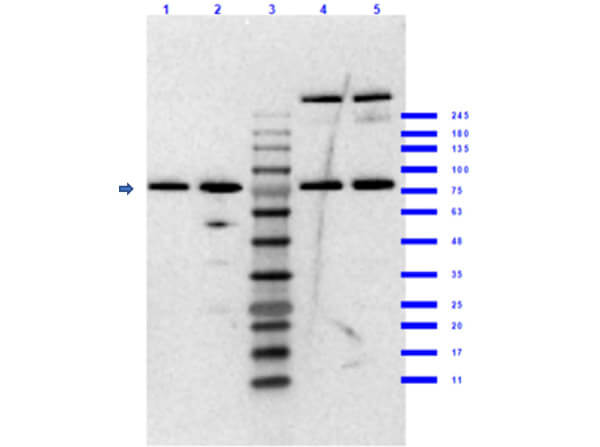
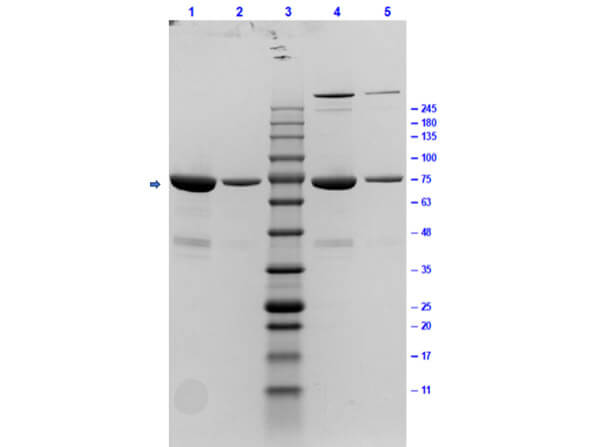
- p39 is a fusion protein with an MBP tag and was expressed in E. coli. Analysis by SDS-PAGE resulted in a pattern consistent with purified p39 and was estimated to be greater than 90% pure.
- Storage Conditions:
- Please refer to datasheet
- Supplier:
- Rockland Inc
- Type:
- Proteins, Peptides, Small Molecules & Other Biomolecules: Recombinant Proteins
- Manufacturer's Data Sheet:https://www.rockland.com/search/?searchString=000-001-C17