A Beekeepers Journey – ‘You Will Get Stung!’ – Part 6
A sad way to start my 6th blog, unfortunately the Kings Sutton Beekeepers lost our colony over the very wet winter we experienced. On inspecting the hive in February, we found that our colony had died. We performed a hive autopsy to try and establish the reason for the decline of the colony and could see damp had leaked into the hive unit and we think this was the main reason. Although sad it was a common theme across all apiaries this winter.
We felt at a loss as a group and that we had failed but were slightly reassured with the number of national losses.
March
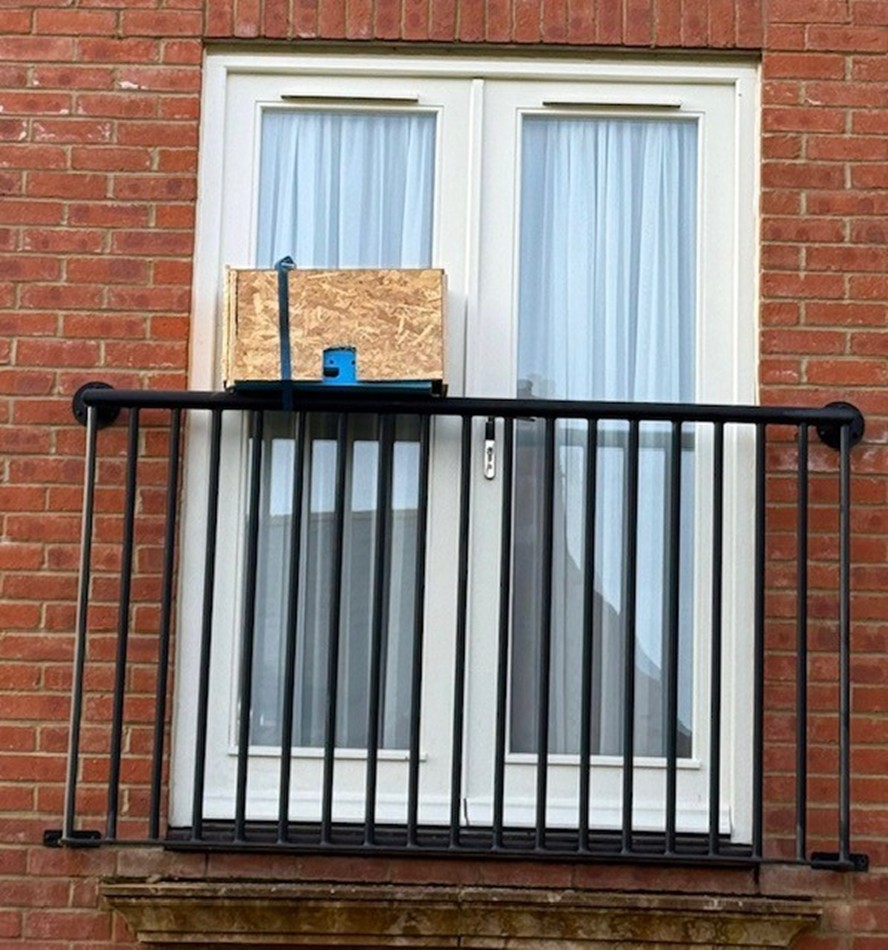
This did not put us off, straight away 2 group member placed ‘swarm’ traps in their gardens, and we placed an emergency order for a new colony. A swarm trap is an empty, temporary, 40-liter container designed to mimic a hollow tree and attract scouting honeybees looking for a new home during spring swarming season (Usually May!).
April
Cleaning, repairing, fencing and planning and TWO new colonies!!
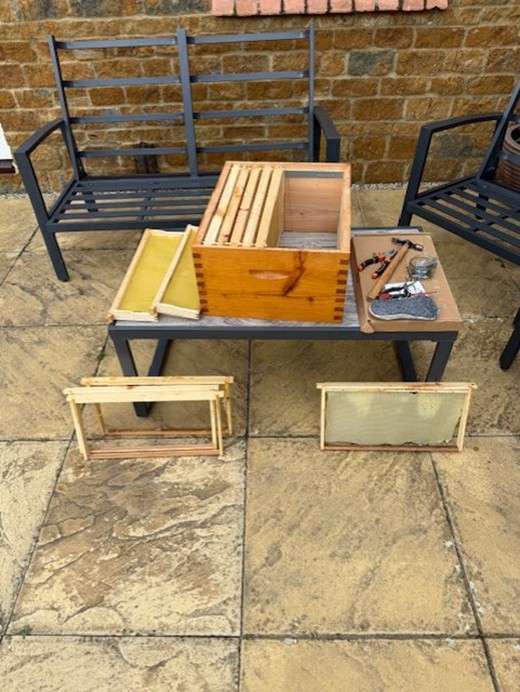
We cleaned all equipment, hives, hive tools, smokers and suits. We repaired frames and set new foundation sheets. We sectioned of our apiary with new fencing and we began to plan.
Then, suddenly, we received phone calls about a swarm in the village. The group rallied and we successfully collected our first swarm. We had our first new colony, and it cost us nothing! (Normally approximately £350).
Then a second phone call on the last weekend of the month and another swarm to collect from the village. Again, the group rallied and we collected our second swarm. We had our second colony!
We think both swarms are the first, largest swarm to leave a honeybee hive, occurring when an old queen leaves with roughly 50–70% of the worker bees to establish a new colony. It is a natural reproductive process (swarming) characterized by a massive cluster of bees settling temporarily on a branch, fence, or structure, often during spring. The primary swarm is led by the original, old, mated queen. Bees in a primary swarm are usually quite docile because they have gorged on honey before leaving, making them less inclined to sting.

What Next?
We let both colonies settle into their new hives over the next 3 weeks, making sure we provide enough space for them by adding ‘Supers’ when required!
Supers: are a removable box added to the top of a Langstroth beehive to provide extra space for bees to store surplus honey. It is used during peak nectar flows and placed above a queen excluder to ensure it contains only honey, not brood (eggs).
Swarms can be unpredictable and may not survive, but we are confident that our swarms will this year and to back all this up we have also been promised another colony from a local commercial beekeeper who is managing his hives by managing their swarming.
This will give us 3 hives in our apiary and hopefully lots of honey to sell to our local community.
The next blog will be in June giving an update on our beekeeping during the spring.
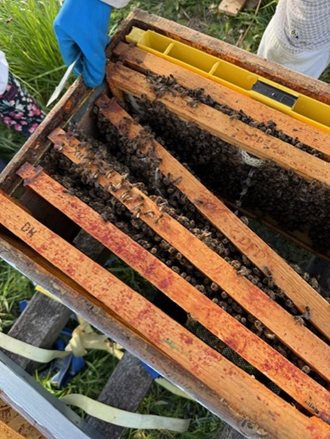
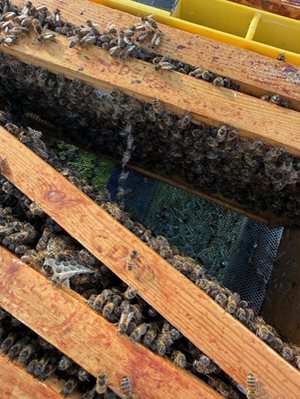
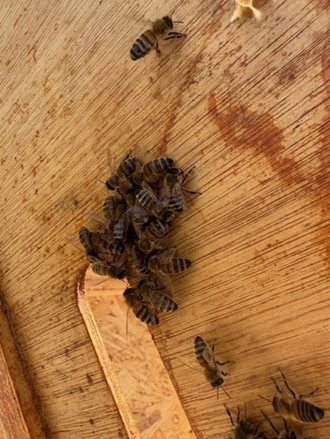
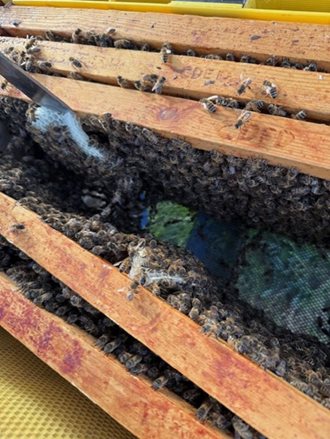
Our new colonies settling in!