MET (Ab-1003) Antibody
Product Sizes
100 ul
£332.00
CSB-PA988938-100UL
About this Product
- SKU:
- CSB-PA988938
- Additional Names:
- AUTS9 antibody; c met antibody; D249 antibody; Hepatocyte growth factor receptor antibody; HGF antibody; HGF receptor antibody; HGF/SF receptor antibody; HGFR antibody; MET antibody; Met proto oncogene antibody; Met proto oncogene tyrosine kinase antibody; MET proto oncogene; receptor tyrosine kinase antibody; Met proto-oncogene (hepatocyte growth factor receptor) antibody; Met proto-oncogene antibody; Met protooncogene antibody; MET_HUMAN antibody; Oncogene MET antibody; Par4 antibody; Proto-oncogene c-Met antibody; RCCP2 antibody; Scatter factor receptor antibody; SF receptor antibody; Tyrosine-protein kinase Met antibody
- Application:
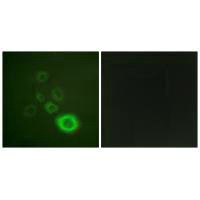
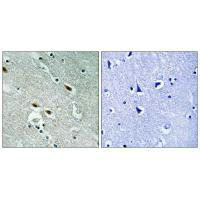
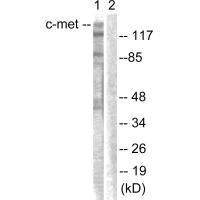
- ELISA, Immunofluorescence, Immunohistochemistry, Western Blot
- Buffer:
- phosphate buffered saline (without mg2+ and ca2+)
- Clonality:
- Polyclonal
- Extra Details:
- Receptor tyrosine kinase that transduces signals from the extracellular matrix into the cytoplasm by binding to hepatocyte growth factor/HGF ligand. Regulates many physiological processes including proliferation, scattering, morphogenesis and survival. Ligand binding at the cell surface induces autophosphorylation of MET on its intracellular domain that provides docking sites for downstream signaling molecules. Following activation by ligand, interacts with the PI3-kinase subunit PIK3R1, PLCG1, SRC, GRB2, STAT3 or the adapter GAB1. Recruitment of these downstream effectors by MET leads to the activation of several signaling cascades including the RAS-ERK, PI3 kinase-AKT, or PLCgamma-PKC. The RAS-ERK activation is associated with the morphogenetic effects while PI3K/AKT coordinates prosurvival effects. During embryonic development, MET signaling plays a role in gastrulation, development and migration of muscles and neuronal precursors, angiogenesis and kidney formation. In adults, participates in wound healing as well as organ regeneration and tissue remodeling. Promotes also differentiation and proliferation of hematopoietic cells. Acts as a receptor for Listeria internalin inlB, mediating entry of the pathogen into cells. Hillier L.W., Nature 424:157-164(2003). Wang D., J. Biol. Chem. 277:36216-36222(2002). Giordano S., Nat. Cell Biol. 4:720-724(2002)
- Host:
- Rabbit
- Immunogen:
- Synthesized non-phosphopeptide derived from Human c-Met around the phosphorylation site of tyrosine 1003 (V-D-Y(p)-R-A).
- Isotype:
- IgG
- Physical State:
- Liquid
- Purification:
- Affinity Purified
- Reactivities:
- Human, Mouse, Rat
- Shipping Conditions:
- Blue Ice
- Storage Conditions:
- -20[o]C/-70[o]C Avoid freeze/thaw cycles.
- Supplier:
- Cusabio
- Type:
- Antibody: Polyclonal Antibody
- Manufacturer's Data Sheet:MET-Ab-1003-Antibody-11084338.html