GCG Antibody
Product Sizes
100 ul
£332.00
CSB-PA694689-100UL
About this Product
- SKU:
- CSB-PA694689
- Additional Names:
- GCG antibody; Glicentin related polypeptide antibody; glicentin-related polypeptide antibody; GLP-1 antibody; GLP-1(7-36) antibody; GLP-1(7-37) antibody; GLP-2 antibody; GLP1 antibody; GLP1; included antibody; GLP2 antibody; GLP2; included antibody; GLUC_HUMAN antibody; Glucagon antibody; Glucagon like peptide 1 antibody; glucagon-like peptide 1 antibody; Glucagon-like peptide 1; included antibody; Glucagon-like peptide 2 antibody; Glucagon-like peptide 2; included antibody; GRPP antibody; OXM antibody; OXY antibody; preproglucagon antibody
- Application:
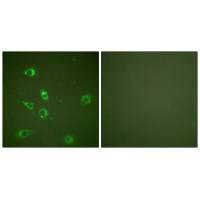
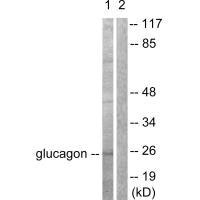
- ELISA, Immunofluorescence, Western Blot
- Buffer:
- phosphate buffered saline (without mg2+ and ca2+)
- Clonality:
- Polyclonal
- Extra Details:
- Glucagon plays a key role in glucose metabolism and homeostasis. Regulates blood glucose by increasing gluconeogenesis and decreasing glycolysis. A counterregulatory hormone of insulin, raises plasma glucose levels in response to insulin-induced hypoglycemia. Plays an important role in initiating and maintaining hyperglycemic conditions in diabetes. GLP-1 is a potent stimulator of glucose-dependent insulin release. Play important roles on gastric motility and the suppression of plasma glucagon levels. May be involved in the suppression of satiety and stimulation of glucose disposal in peripheral tissues, independent of the actions of insulin. Have growth-promoting activities on intestinal epithelium. May also regulate the hypothalamic pituitary axis (HPA) via effects on LH, TSH, CRH, oxytocin, and vasopressin secretion. Increases islet mass through stimulation of islet neogenesis and pancreatic beta cell proliferation. Inhibits beta cell apoptosis. GLP-2 stimulates intestinal growth and up-regulates villus height in the small intestine, concomitant with increased crypt cell proliferation and decreased enterocyte apoptosis. The gastrointestinal tract, from the stomach to the colon is the principal target for GLP-2 action. Plays a key role in nutrient homeostasis, enhancing nutrient assimilation through enhanced gastrointestinal function, as well as increasing nutrient disposal. Stimulates intestinal glucose transport and decreases mucosal permeability. Oxyntomodulin significantly reduces food intake. Inhibits gastric emptying in humans. Suppression of gastric emptying may lead to increased gastric distension, which may contribute to satiety by causing a sensation of fullness. Glicentin may modulate gastric acid secretion and the gastro-pyloro-duodenal activity. May play an important role in intestinal mucosal growth in the early period of life. Edoardo C. Aromataris, J. Physiol., Jun 2006; 573: 611 - 625. Xiao C. Li, Hypertension, Mar 2006; 47: 580 - 585. Kirstan A. Vessey, Invest. Ophthalmol. Vis. Sci., Nov 2005; 46: 3922 - 3931. Xiaosong Ma, Mol. Endocrinol., Jan 2005; 19: 198 - 212.
- Host:
- Rabbit
- Immunogen:
- Synthesized peptide derived from Human glucagon.
- Isotype:
- IgG
- Physical State:
- Liquid
- Purification:
- Affinity Purified
- Reactivities:
- Human, Mouse, Rat
- Shipping Conditions:
- Blue Ice
- Storage Conditions:
- -20[o]C/-70[o]C Avoid freeze/thaw cycles.
- Supplier:
- Cusabio
- Type:
- Antibody: Polyclonal Antibody
- Manufacturer's Data Sheet:GCG-Antibody-11084559.html