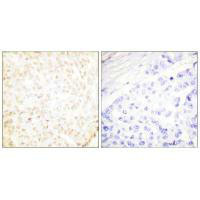
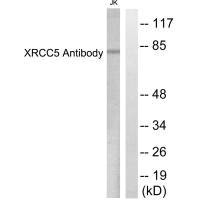
XRCC5 Antibody
Product Sizes
100 ul
£332.00
CSB-PA068028-100UL
About this Product
- SKU:
- CSB-PA068028
- Additional Names:
- 86 kDa subunit of Ku antigen antibody; ATP dependent DNA helicase 2 subunit 2 antibody; ATP dependent DNA helicase II 80 kDa subunit antibody; ATP dependent DNA helicase II 86 Kd subunit antibody; ATP dependent DNA helicase II antibody; ATP-dependent DNA helicase 2 subunit 2 antibody; ATP-dependent DNA helicase II 80 kDa subunit antibody; CTC box binding factor 85 kDa antibody; CTC box-binding factor 85 kDa subunit antibody; CTC85 antibody; CTCBF antibody; DNA repair protein XRCC5 antibody; KARP 1 antibody; KARP1 antibody; Ku 80 antibody; Ku autoantigen 80kDa antibody; Ku80 antibody; Ku86 antibody; Ku86 autoantigen related protein 1 antibody; KUB 2 antibody; KUB2 antibody; Lupus Ku autoantigen protein p86 antibody; NFIV antibody; Nuclear factor IV antibody; Thyroid lupus autoantigen antibody; Thyroid-lupus autoantigen antibody; TLAA antibody; X ray repair complementing defective repair in Chinese hamster cells 5 (double strand break rejoining) antibody; X-ray repair complementing defective repair in Chinese hamster cells 5 (double-strand-break rejoining) antibody; X-ray repair cross-complementing protein 5 antibody; Xray repair complementing defective repair in Chinese hamster cells 5 antibody; XRCC 5 antibody; XRCC5 antibody; XRCC5_HUMAN antibody
- Application:
- ELISA, Immunohistochemistry, Western Blot
- Buffer:
- phosphate buffered saline (without mg2+ and ca2+)
- Clonality:
- Polyclonal
- Extra Details:
- Single-stranded DNA-dependent ATP-dependent helicase. Has a role in chromosome translocation. The DNA helicase II complex binds preferentially to fork-like ends of double-stranded DNA in a cell cycle-dependent manner. It works in the 3'-5' direction. Binding to DNA may be mediated by XRCC6. Involved in DNA non-homologous end joining (NHEJ) required for double-strand break repair and V(D)J recombination. The XRCC5/6 dimer acts as regulatory subunit of the DNA-dependent protein kinase complex DNA-PK by increasing the affinity of the catalytic subunit PRKDC to DNA by 100-fold. The XRCC5/6 dimer is probably involved in stabilizing broken DNA ends and bringing them together. The assembly of the DNA-PK complex to DNA ends is required for the NHEJ ligation step. In association with NAA15, the XRCC5/6 dimer binds to the osteocalcin promoter and activates osteocalcin expression. The XRCC5/6 dimer probably also acts as a 5'-deoxyribose-5-phosphate lyase (5'-dRP lyase), by catalyzing the beta-elimination of the 5' deoxyribose-5-phosphate at an abasic site near double-strand breaks. XRCC5 probably acts as the catalytic subunit of 5'-dRP activity, and allows to 'clean' the termini of abasic sites, a class of nucleotide damage commonly associated with strand breaks, before such broken ends can be joined. The XRCC5/6 dimer together with APEX1 acts as a negative regulator of transcription. Ming-Ni Lee, Clin. Cancer Res., Feb 2007; 13: 832 - 838. PA Jeggo, PNAS, Jul 1992; 89: 6423. Patrick Hayden, Blood (ASH Annual Meeting Abstracts), Nov 2006; 108: 3416.
- Host:
- Rabbit
- Immunogen:
- Synthesized peptide derived from C-terminal of Human XRCC5.
- Isotype:
- IgG
- Physical State:
- Liquid
- Purification:
- Affinity Purified
- Reactivities:
- Human, Mouse
- Shipping Conditions:
- Blue Ice
- Storage Conditions:
- -20[o]C/-70[o]C Avoid freeze/thaw cycles.
- Supplier:
- Cusabio
- Type:
- Antibody: Polyclonal Antibody
- Manufacturer's Data Sheet:XRCC5-Antibody-11084729.html