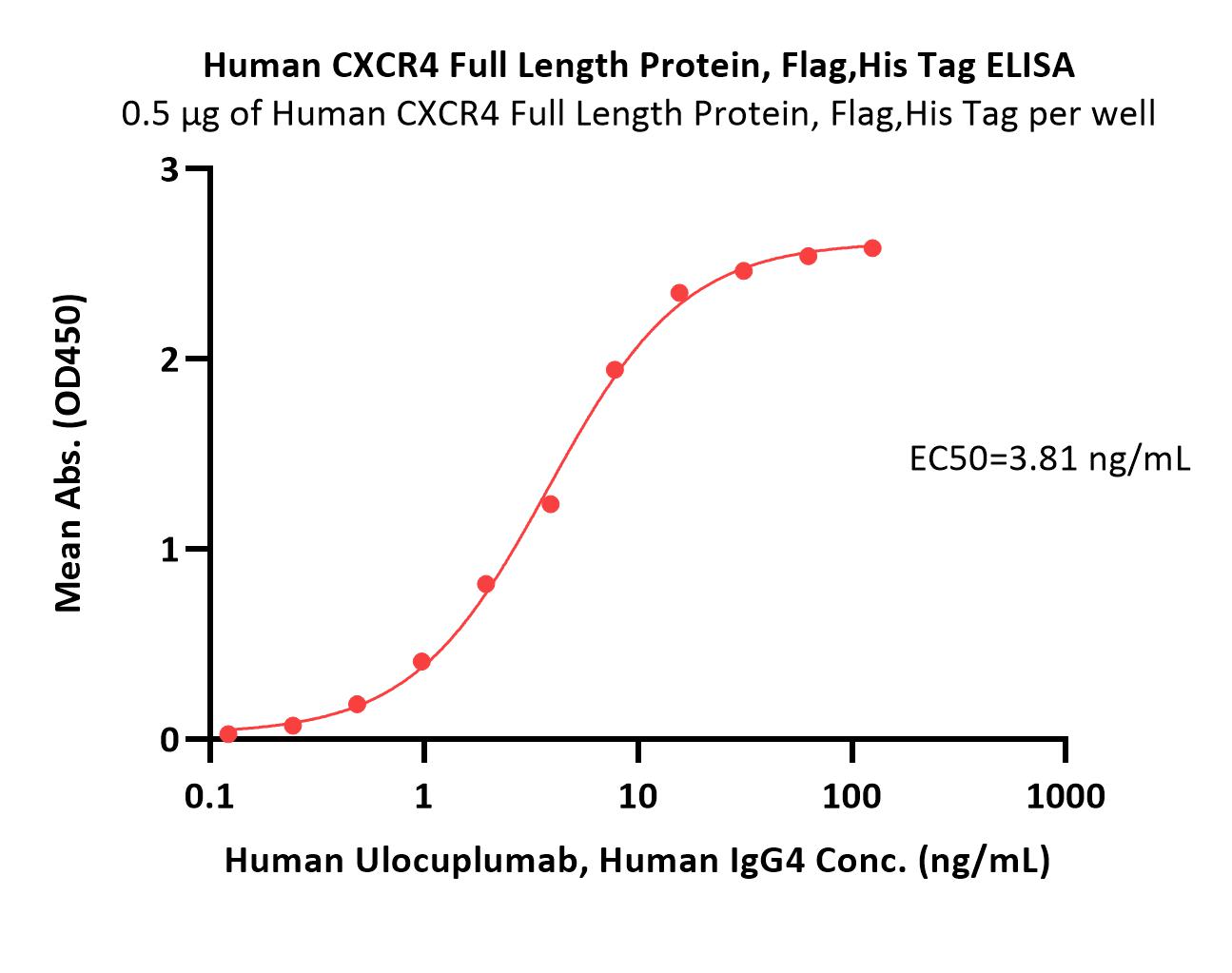
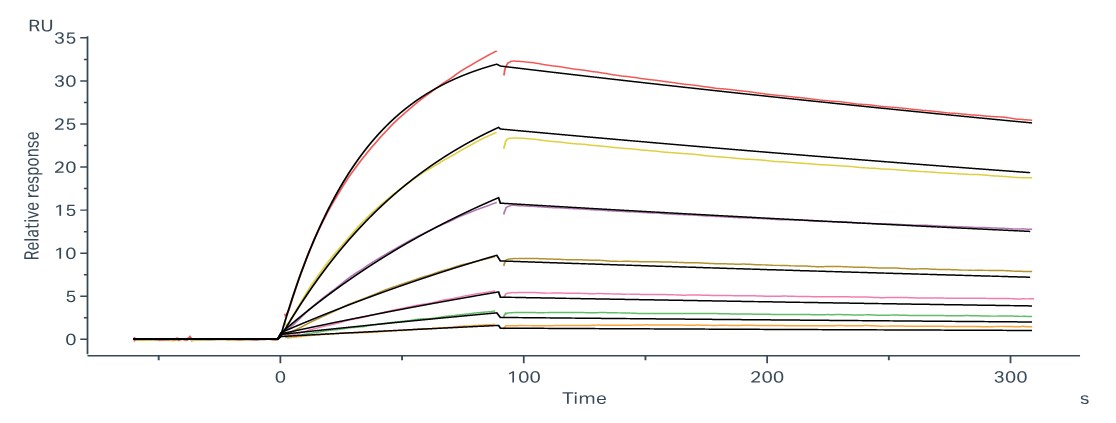
Human CXCR4 Full Length Protein, Flag,His Tag (Detergent)
Product Sizes
20 ug
£1419.00
CX4-H52D3-20UG
100 ug
£3674.00
CX4-H52D3-100UG
500 ug
£8319.00
CX4-H52D3-500UG
About this Product
- SKU:
- CX4-H52D3
- Buffer:
- 50 mM HEPES, 150 mM NaCl, Buffer B, pH7.5
- Extra Details:
- C-X-C chemokine receptor type 4 is also known as fusin or CD184 (cluster of differentiation 184) , CXCR4, CD184, D2S201E, FB22, HM89, HSY3RR, LAP3, LCR1, LESTR, NPY3R, NPYR, NPYRL, NPYY3R or WHIM. CXCR-4 is an alpha-chemokine receptor specific for stromal-derived-factor-1 (SDF-1 also called CXCL12) , a molecule endowed with potent chemotactic activity for lymphocytes. This receptor is one of several chemokine receptors that HIV isolates can use to infect CD4+ T cells. HIV isolates that use CXCR4 are traditionally known as T-cell tropic isolates. Typically, these viruses are found late in infection. It is unclear as to whether the emergence of CXCR4 using HIV is a consequence or a cause of immunodeficiency.CXCR4 is upregulated during the implantation window in natural and hormone replacement therapy cycles in the endometrium, producing, in presence of a human blastocyst, a surface polarization of the CXCR4 receptors suggesting that this receptor is implicated in the adhesion phase of human implantation. SDF-1 and CXCR4 were believed to be a relatively "monogamous" ligand-receptor pair (other chemokines tend to use several different chemokine receptors in a fairly "promiscuous" manner) . Recent evidence demonstrates ubiquitin is also a natural ligand of CXCR4. Chronic exposure to THC increased T lymphocyte CXCR4 expression on both CD4+ and CD8+ T lymphocytes. Drugs that block the CXCR4 receptor appear to be capable of "mobilizing" hematopoietic stem cells into the bloodstream as peripheral blood stem cells.
- Immunogen:
- CXCR4
- Molecular Weight:
- 58.4 kDa
- Physical State:
- Liquid
- Shipping Conditions:
- Dry Ice
- Storage Conditions:
- -70[o]C
- Supplier:
- ACRO Biosystems
- Type:
- Proteins, Peptides, Small Molecules & Other Biomolecules: Recombinant Proteins