Antibodies, or immunoglobulins, are Y-shaped protective proteins produced by specialised white blood cells called B lymphocytes in response to specific antigens. Their remarkable specificity and affinity underpin immune defence and make them essential tools across biomedical research, diagnostics and therapeutic development (1).
Antibodies bind to specific regions of their targets, known as epitopes, through complementary binding sites. This selective binding makes them powerful tools for detecting, visualising, quantifying and manipulating biological targets
To date, there are around 1.6 million commercial antibodies covering approximately 96% of human proteins (2). These antibodies support applications ranging from protein detection and imaging to immunoassays, cell analysis and in vivo studies. However, selecting the right antibody depends not just on the target of interest, but on the application, sample type, detection method and experimental objective.
In this page, we explore antibody types available through 2BScientific’s trusted suppliers and how to select them for different experimental workflows.
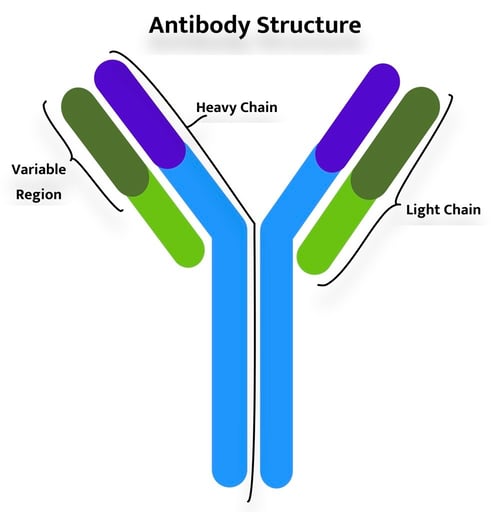
Absolute Antibody offers a broad range of recombinant primary antibodies, all produced from defined sequences to support batch-to-batch reproducibility and long-term supply. Many clones are available in multiple species and isotypes, with engineered formats including antibody fragments, Fc Silent™ variants and bispecific antibodies to suit different experimental needs.
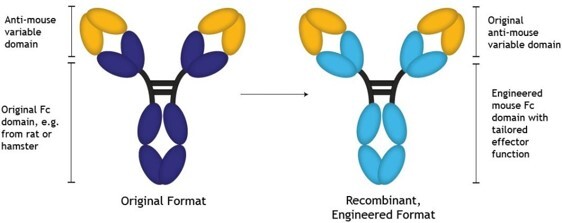
Figure 1. Recombinant antibody engineering enables antibodies to be produced in different species, isotypes and formats. Image: Absolute Antibody.
Explore Absolute Antibody Products
Secondary Antibodies and Detection
Secondary antibodies are used in indirect detection, binding to primary antibodies already attached to the target antigen. Unlike direct detection, which uses only a labelled primary antibody, secondary antibodies can carry fluorophores or enzymes to visualise the target, amplify signal and support multiplexing.
To select a secondary antibody suited to the application, several factors should be considered:
-
Host and sample species: The secondary antibody must recognise the species in which the primary antibody was raised and should itself be raised in a different species. The primary antibody host should also differ from the sample species to help reduce cross-reactivity.
-
Antibody class: The secondary antibody should match the class or subclass of the primary antibody. This is important for monoclonal antibodies, which belong to a single isotype and subclass, whereas polyclonal antibodies are typically detected using anti-IgG secondaries.
-
Conjugate: The conjugate should be compatible with the application and detection method. Fluorophores are commonly used in imaging and flow cytometry, while enzyme labels are widely used for western blotting, ELISA and IHC. For multiplexing, fluorophores should be carefully selected to minimise spectral overlap.
Rockland Immunochemicals offers an extensive range of secondary antibodies for applications including ELISA, western blotting, IHC and flow cytometry. Its portfolio spans multiple host species, antibody classes and detection formats, including fluorescent, colorimetric and chemiluminescent conjugates, as well as pre-adsorbed antibodies for reducing cross-reactivity in multiplex experiments.

Figure 2. Immunofluorescence staining of ELK1 and MZF1 proteins using a rhodamine-conjugated goat anti-mouse IgG secondary antibody. Image: Rockland Immunochemicals.
Controls and blocking reagents
Alongside antibody selection, suitable controls and blocking reagents help identify and minimise background and non-specific binding, improving confidence in experimental results.
Isotype controls share key characteristics of the experimental antibody, such as host species, isotype and conjugate, but lack specificity for the target of interest. Used as negative controls, they help assess background caused by non-specific antibody binding.
Blocking reagents reduce background by occupying sites where antibodies might otherwise bind non-specifically. Choosing an appropriate blocker is important, as some reagents can interfere with antibody binding or detection.
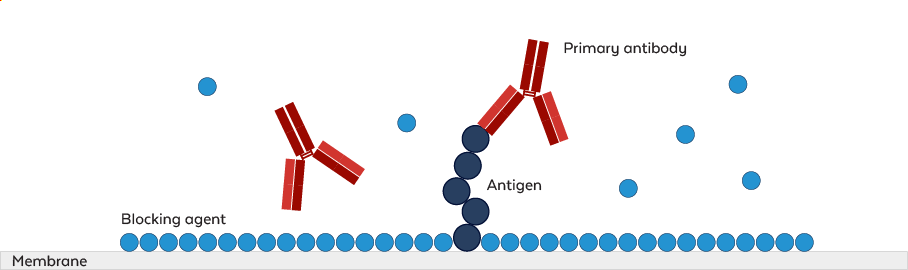
Figure 3. Blocking reagents occupy non-specific binding sites to reduce background signal in antibody-based assays. Image: Rockland Immunochemicals.
Rockland Immunochemicals offers isotype controls and blocking buffers for ELISA, western blotting and IHC, helping researchers assess non-specific binding and reduce background signal.
Antibodies For In Vivo Research
In vivo antibodies are formulated for use in living organisms to minimise unwanted biological responses that could affect animal welfare and confound results. This allows researchers to study antibody effects in a physiological context that better reflects the whole organism.
These antibodies are used across immunology, cancer and infectious disease research to neutralise pathogens, modulate immune responses and block or activate receptors and pathways. When selecting an in vivo antibody, several factors should be considered:
-
Purity: Contaminants can trigger unwanted biological responses and confound results. Look for high-purity preparations, typically ≥95%.
-
Endotoxin levels: Endotoxins can provoke immune responses, confound results and negatively affect animal welfare. Low-endotoxin preparations, typically ≤1 EU/mg, are generally preferred.
-
Aggregation: Antibody aggregates can alter activity, increase immunogenicity and affect tolerability. Aggregation can be assessed using techniques such as size-exclusion chromatography (SEC).
InVivo Biotech’s InVivoPure+ antibodies are monoclonal antibodies designed for in vivo research applications. They are produced under serum-free conditions, with ≥95% purity and endotoxin levels of ≤1 EU/mg, helping minimise contaminants that could interfere with in vivo experiments.
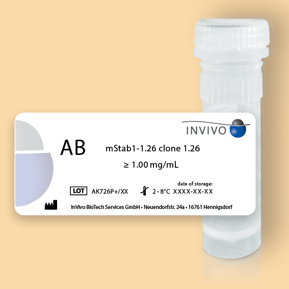
Figure 4. InVivoPure+ mStab1-1.26, an in vivo-grade monoclonal antibody targeting mouse Stabilin-1. Image: InVivo Biotech.
Explore 2BScientific’s full range of antibodies from specialist suppliers supporting protein detection, imaging, immunoassays, cell analysis and in vivo research. More specialised formats, including nanobodies and research biosimilars, are also available for alternative targeting approaches and the study of therapeutic antibodies.

-
Primary Antibodies
-
Secondary Antibodies
Spotlight title
Founded in 1982 to provide researchers with tools that were not readily available from other commercial sources, SouthernBiotech has remained a steadfast, high-quality source of secondary antibodies. Over the years we have expanded our product line to meet researchers’ changing needs. What has not changed is our commitment to customer success.
Featured products

Featured Supplier
Absolute Antibody specialises in antibody sequencing, engineering and recombinant expression, with a catalogue of more than 15,000 engineered recombinant antibodies. Its sequence-defined production platform supports reproducible manufacture and long-term antibody supply, while enabling species and isotype switching, antibody fragments, bispecific formats and Fc Silent™ variants. With experience producing more than 180 antibody formats, Absolute Antibody also offers specialised ranges such as VivopureX™, which uses recombinant engineering to adapt established antibody clones for in vivo research.