Benefits of animal-free research products
Alongside ethical considerations, animal-free products can offer important research benefits. Chemically defined and recombinant products can help minimise batch-to-batch variability, while removing animal-derived components can reduce the risk of introducing unwanted biological contaminants. In some applications, human-specific alternatives may provide greater relevance to human biology.
Studies comparing animal-free and animal-derived products have shown how these benefits can translate into improved experimental performance. Examples include stronger fluorescence signals from some recombinant antibodies and comparable cell morphology, with equal or greater growth using animal-free cell culture media (7,8).
Furthermore, advances in recombinant antibody production are expanding the availability of animal-free reagents. Defined DNA sequences can be expressed using systems such as E. coli and yeast, or cell lines cultured under animal-component-free conditions, enabling recombinant antibodies to be produced without continued animal use (Figure 1).
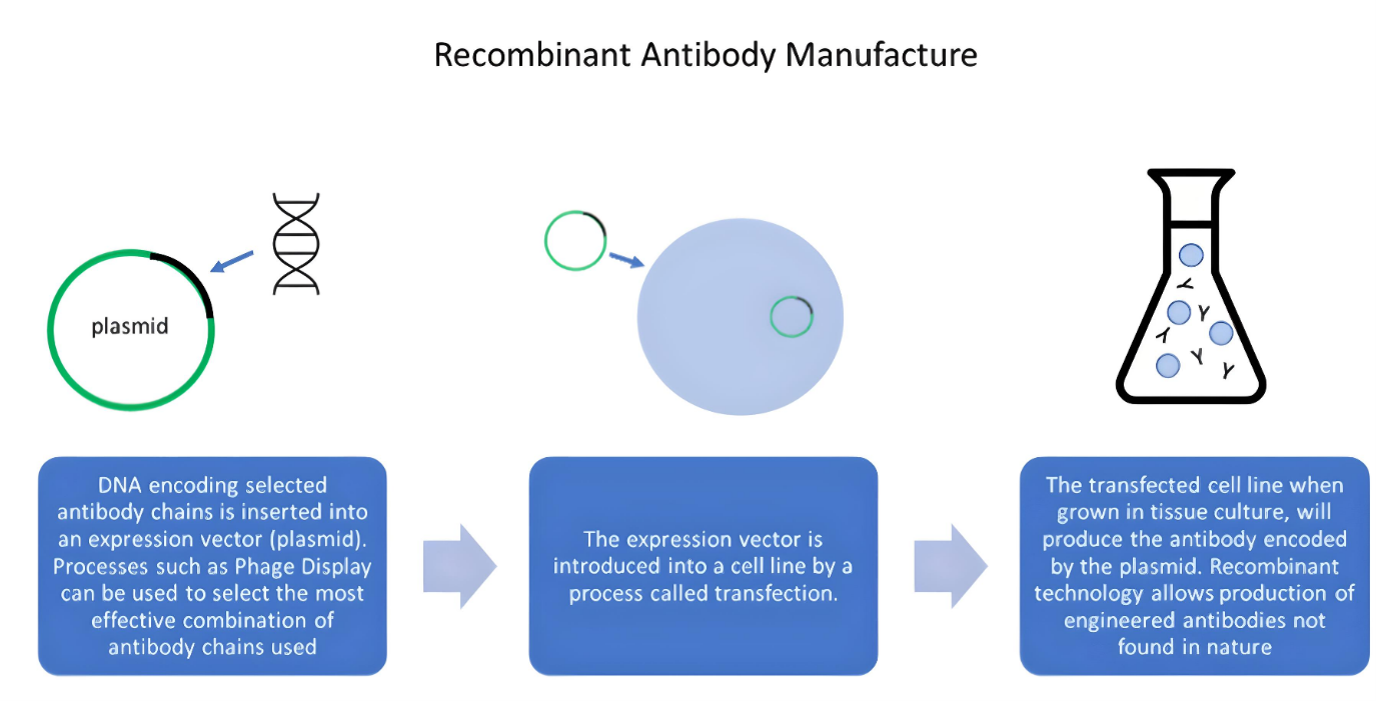
Figure 1 – Workflow for manufacturing recombinant antibodies. Defined antibody DNA sequences are introduced into an expression system to enable controlled recombinant antibody manufacture.
Traditional polyclonal and hybridoma-based antibody production relies on animal immunisation, which can introduce variability between preparations. Likewise, animal isolated proteins can show lot-to-lot variation depending on their production method. Comparatively, animal-free recombinant antibodies and proteins offer a more consistent alternative through defined, controlled production systems.
Absolute Antibody uses an animal-free recombinant production platform across its catalogue reagents and custom expression services. Sequence-defined production helps reduce batch variability and supports consistent recombinant antibody and protein production. For researchers with existing antibodies, their sequencing services can also recreate existing antibodies using animal-free recombinant production.
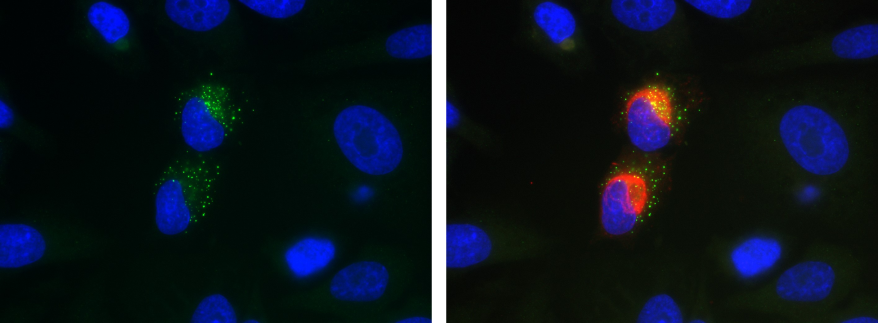
Figure 2 - Immunofluorescence staining of Zika virus-infected A549 cells with Absolute Antibody anti-dsRNA antibody J2 (Ab01299).
LifeSpan Biosciences' dedicated range of animal-free proteins are manufactured using animal-free reagents and components, minimising the risk of trace animal-derived contamination. These proteins help minimise the risk of animal-derived contamination while providing defined, high-purity recombinant alternatives.
A major challenge in cell culture is the reliance on animal-derived supplements, whose complex composition and batch-to-batch variation can introduce experimental variability. Animal-component-free and serum-free media provide more defined culture conditions, helping improve consistency and standardisation.
FUJIFILM Biosciences offers chemically defined, animal-component-free cell culture media, including PRIME-XV T Cell CDM and PRIME-XV NK CDM, supporting T-cell and NK/NKT-cell expansion, respectively. These media provide more controlled culture conditions while reducing reliance on animal-derived materials.
Animal-derived blocking and diluent buffers can introduce batch variability and unwanted interactions with assay reagents, increasing background interference and reducing consistency. Animal-free alternatives can help minimise non-specific binding while providing more controlled assay conditions.
Kementec Solutions offers animal by-product-free blocking and diluent buffers. These BSA-free formulations are designed to improve assay reproducibility, minimise non-specific binding and reduce cross-reactivity with animal-derived antigens and antibodies.
Explore Kementec Solutions Products
Vector Laboratories offers animal-free blocking and diluent solutions for immunoassay and imaging workflows. Its R.T.U. Animal Free Blocker and Diluent contains no animal-derived proteins and helps reduce non-specific binding and background in applications including IHC, immunofluorescence, blotting and ELISpot.
Explore Vector Laboratories Products
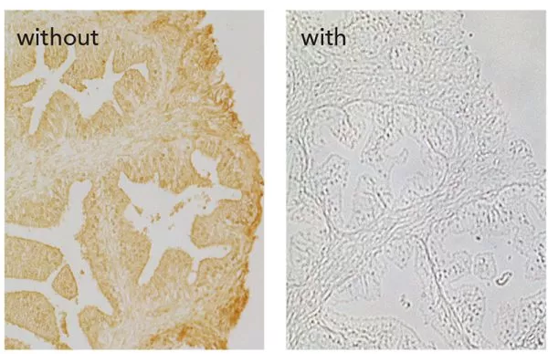
Figure 3. Reduced non-specific background staining with Vector Laboratories’ R.T.U. Animal Free Blocker and Diluent in immunohistochemistry.
As animal-free technologies continue to develop and become more widely available, researchers have a growing range of options for reducing reliance on animal-derived materials without compromising the requirements of their experimental workflows.
Explore the animal-free research tools available through 2BScientific to identify the products best suited to your research.

Featured Supplier
Absolute Antibody specialises in recombinant antibody sequencing, engineering and expression for research, diagnostic and biopharmaceutical applications. Its recombinant production platform uses serum-free mammalian transient expression and is completely animal- and animal-component-free. Alongside a growing catalogue of recombinant antibodies and proteins, Absolute Antibody provides custom sequencing, engineering and expression services to support defined and reproducible antibody production.