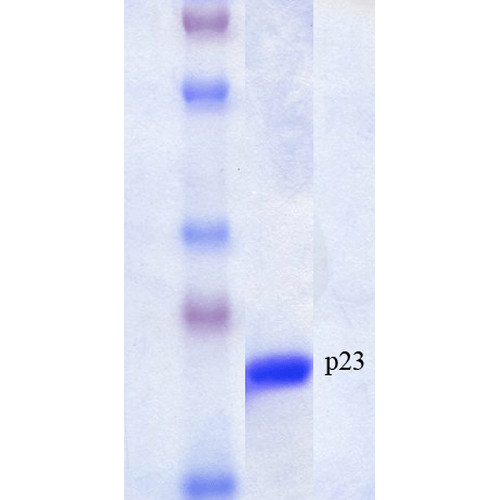
SPR-303
p23 Protein

Cannot supply to this region.
- SKU:
- SPR-303
- Additional Names:
- Sid 3177, Co chaperone p23, cPGES, HSP90 co chaperone, cytosolic prostaglandin E2 synthase, PTGES3, TEBP, Prostaglandin E synthase 3
- Application:
- SDS-PAGE, WB, FuncS
- Molecular Weight:
- ~23 kDa
- Purity:
- >90%
- Purification:
- Affinity Purified
- Storage Conditions:
- -20[o]C
- Supplier:
- StressMarq Biosciences
- ABP:
- No Import Docs
- Buffer:
- 20mM HEPES buffer pH7.2, 80mM NaCl, 10% glycerol
- Immunogen:
- p23 Protein
- Species:
- Human
- Sequence:
- SHMQPASAKWYDRRDYVFIEFCVEDSKDVNVNFEKSKLTFSCLGGSDNFKHLNEIDLFHCIDPNDSKHKRTDRSILCCLRKGESGQSWPRLTKERAKLNWLSVDFNNWKDWEDDSDEDMSNFDRFSEMMNNMGGDEDVDLPEVDGADDDSQDSDDEKMPDLE
- Uniprot:
- Q15185
- Synonyms:
- cPGES;cytosolic prostaglandin E synthase;cytosolic prostaglandin E2 synthase;Hsp90 co-chaperone;P23;progesterone receptor complex p23;prostaglandin E synthase 3;prostaglandin E synthase 3 (cytosolic);TEBP;telomerase-binding protein p23;unactive progesterone receptor, 23 kD
- Extra Details:
- p23 is a small co-chaperone that stabilizes the ATP-bound conformation of HSP90, promoting the maturation of client proteins and preventing premature release. It plays a key role in the late stages of the HSP90 chaperone cycle, ensuring proper folding and functional activation of a wide range of signaling proteins. In neuroscience, p23 is involved in the regulation of neuronal development, synaptic plasticity, and stress responses. Its interaction with HSP90 is critical for maintaining the stability of proteins implicated in neurodegenerative diseases, including tau, glucocorticoid receptors, and kinases. Reduced p23 expression has been associated with increased protein aggregation and cellular stress in models of Alzheimer's disease. Conversely, enhancing p23 function may improve proteostasis and reduce neurotoxicity. Its role in modulating the chaperone machinery positions p23 as a potential biomarker and therapeutic target in neurodegeneration.
- Shipping Conditions:
- Blue Ice