SPR-101
HSP90 alpha Protein

Cannot supply to this region.
- SKU:
- SPR-101
- Additional Names:
- HSP90AA1, HSP90-alpha, HSP90A, HSPCA, HSPC1, Heat shock protein HSP 90-alpha, Heat shock 90 kDa protein 1 alpha isoform, HSPCAL3, HSP86, HSP89A, HSP90Alpha
- Application:
- SDS-PAGE, WB, FuncS
- Molecular Weight:
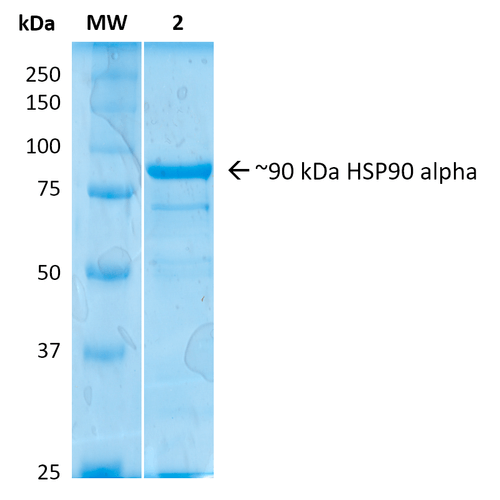
- ~90 kDa
- Purity:
- >90%
- Purification:
- Affinity Purified
- Storage Conditions:
- -20[o]C
- Supplier:
- StressMarq Biosciences
- ABP:
- No Import Docs
- Buffer:
- 50mM Tris/HCl pH7.5, 5mM Bme, 0.3M NaCl, 10% glycerol
- Immunogen:
- HSP90 alpha Protein
- Species:
- Human
- Uniprot:
- P07900
- Synonyms:
- EL52;epididymis luminal secretory protein 52;epididymis secretory sperm binding protein Li 65p;heat shock 86 kDa;heat shock 90kD protein 1, alpha;heat shock 90kD protein 1, alpha-like 4;heat shock 90kD protein, alpha-like 4;heat shock 90kDa protein 1, alpha;heat shock protein 90kDa alpha (cytosolic), class A member 1;heat shock protein 90kDa alpha family class A member 1;heat shock protein HSP 90-alpha;HEL-S-65p;HSP 86;Hsp103;HSP86;Hsp89;HSP89A;Hsp90;HSP90A;HSP90N;HSPC1;HSPCA;HSPCAL1;HSPCAL4;HSPN;LAP-2;LAP2;lipopolysaccharide-associated protein 2;LPS-associated protein 2;renal carcinoma antigen NY-REN-38
- Extra Details:
- HSP90 alpha is a highly conserved molecular chaperone that plays a central role in maintaining protein homeostasis under both normal and stress conditions. In the context of neuroscience, HSP90 alpha is increasingly recognized for its involvement in the folding, stabilization, and functional regulation of key neuronal proteins, including kinases, transcription factors, and hormone receptors. In neurodegenerative diseases such as Alzheimer's, Parkinson's, and Huntington's, the accumulation of misfolded proteins and impaired proteostasis are hallmark features. HSP90 alpha contributes to the cellular defense against these pathologies by stabilizing client proteins and preventing their aggregation. However, its chaperone activity can also inadvertently preserve the function of pathogenic proteins, such as hyperphosphorylated tau or mutant huntingtin, thereby influencing disease progression. HSP90 alpha forms dynamic complexes with co-chaperones like Cdc37 and p23, modulating the fate of its client proteins. Pharmacological inhibition of HSP90 alpha has shown promise in preclinical models by promoting the degradation of neurotoxic proteins and restoring proteostasis.
- Shipping Conditions:
- Blue Ice