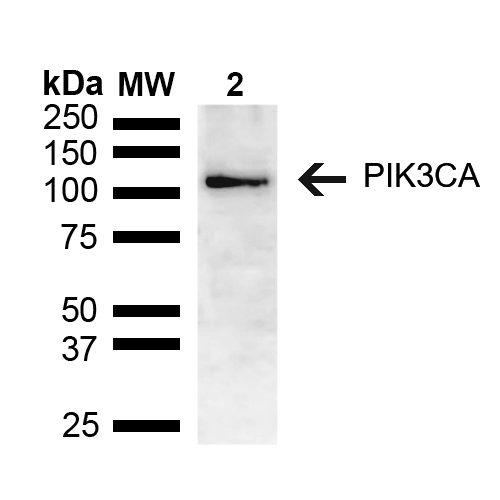
SPC-741
PIK3CA Antibody

Cannot supply to this region.
- SKU:
- SPC-741
- Additional Names:
- Phosphatidylinositol 4,5-bisphosphate 3-kinase catalytic subunit alpha isoform, PI3K alpha, PI3K-alpha, PI3K, p110 alpha, p110alpha, PI3 kinase subunit alpha, PI3 kinase p110 subunit alpha, PtdIns 3 kinase subunit p110 alpha, PtdIns-3-kinase subunit p110-alpha, PtdIns-3-kinase subunit alpha, PIK3CA, EC:2.7.1.153, EC:2.7.11.1, PI 3 Kinase catalytic subunit alpha, Phosphoinositide 3 kinase catalytic alpha polypeptide, PtdIns 3 kinase regulatory subunit alpha, Phosphatidylinositol 3 kinase
- Application:
- WB
- Concentration:
- 1 mg/ml
- Species Reactivity:
- Human
- Purification:
- Affinity Purified
- Storage Conditions:
- -20[o]C
- Supplier:
- StressMarq Biosciences
- Host:
- Rabbit
- Reactivities:
- Mouse
- ABP:
- IMP-GEN-2015-06 < 10% Serum <100ml
- Buffer:
- PBS pH 7.4, 50% glycerol, 0.09% sodium azide
- Immunogen:
- Synthetic peptide of Human PIK3CA (150-250 aa), conjugated to Keyhole Limpet Haemocyanin (KLH).
- Uniprot:
- P42336
- Synonyms:
- CLAPO;CLOVE;CWS5;MCAP;MCM;MCMTC;mutant phosphatidylinositol-4,5-bisphosphate 3-kinase catalytic subunit alpha;p110-alpha;phosphatidylinositol 3-kinase, catalytic, 110-KD, alpha;phosphatidylinositol 3-kinase, catalytic, alpha polypeptide;Phosphatidylinositol 4,5-bisphosphate 3-kinase 110 kDa catalytic subunit alpha;phosphatidylinositol 4,5-bisphosphate 3-kinase catalytic subunit alpha isoform;phosphatidylinositol-4,5-bisphosphate 3-kinase 110 kDa catalytic subunit alpha;phosphoinositide 3-kinase alpha;Phosphoinositide-3-kinase catalytic alpha polypeptide;phosphoinositide-3-kinase, catalytic, alpha polypeptide;PI3-kinase p110 subunit alpha;PI3K;PI3K-alpha;ptdIns-3-kinase subunit p110-alpha;serine/threonine protein kinase PIK3CA
- Extra Details:
- PIK3CA encodes the catalytic subunit p110A Alpha of phosphoinositide 3-kinase (PI3K), a central component of the PI3K/AKT/mTOR signaling pathway. This pathway is essential for regulating cell growth, metabolism, survival, and synaptic plasticity in the nervous system. While PIK3CA is well-characterized in oncology, its emerging role in neurodegenerative disease is gaining increasing attention. In neurons, PIK3CA activity supports axonal growth, dendritic arborization, and resistance to oxidative stress. Dysregulation of PI3K signaling-whether through genetic mutations, altered expression, or upstream receptor dysfunction-can impair neuronal survival and contribute to synaptic degeneration. In Alzheimer's disease, reduced PI3K/AKT signaling is associated with increased tau phosphorylation, amyloid-beta toxicity, and impaired autophagy. Conversely, hyperactivation of this pathway has been linked to aberrant protein synthesis and neurodevelopmental disorders. PIK3CA also modulates neuroinflammatory responses by influencing microglial activation and cytokine production. Its role in maintaining blood-brain barrier integrity and regulating neuronal-glial interactions further underscores its relevance in neurodegenerative pathology. Therapeutic strategies targeting PIK3CA and its downstream effectors are being explored to restore cellular homeostasis, enhance neuroprotection, and slow disease progression. As a master regulator of neuronal resilience, PIK3CA represents a promising biomarker and intervention point in the treatment of neurodegenerative diseases.
- Shipping Conditions:
- Blue Ice