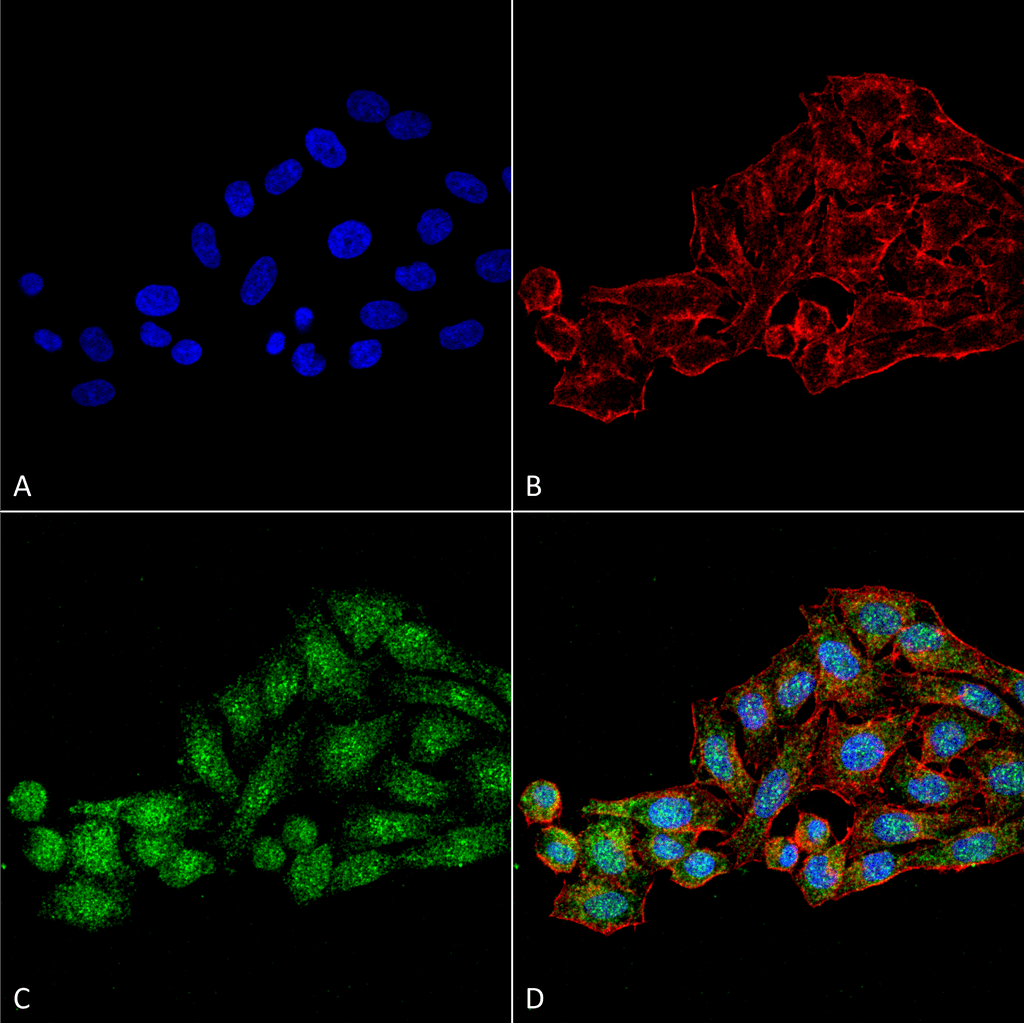
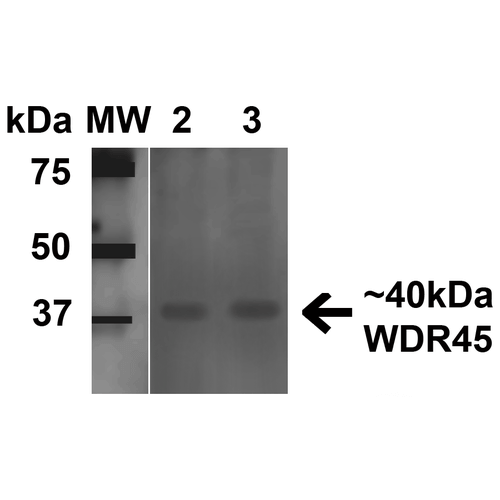
SPC-651
WDR45 Antibody

Cannot supply to this region.
- SKU:
- SPC-651
- Additional Names:
- WDR45, WD Repeat Domain 45, WIPI4, WIPI-4, WD Repeat Domain Phosphoinositide-Interacting Protein 4, WD Repeat-Containing Protein 45, WD Repeat Domain X-Linked 1, WDRX1, WDRXI4, JM5, NBIA4, NBIA5, WD45 Repeat Protein Interacting With Phosphoinositides, Progranulin-Associated Neurodegeneration Protein, MGC163339, MGC163341
- Application:
- WB, IF, ICC
- Concentration:
- 1 mg/ml
- Species Reactivity:
- Human
- Purification:
- Affinity Purified
- Storage Conditions:
- -20[o]C
- Supplier:
- StressMarq Biosciences
- Host:
- Rabbit
- Reactivities:
- Human, Rat
- ABP:
- IMP-GEN-2015-06 < 10% Serum <100ml
- Buffer:
- PBS, 50% glycerol, 0.09% sodium azide
- Immunogen:
- Synthetic peptide from the C-terminal of Human WIPI4 (aa. 312-322)
- Uniprot:
- Q9Y484
- Synonyms:
- JM5;NBIA4;NBIA5;neurodegeneration with brain iron accumulation 4;neurodegeneration with brain iron accumulation 5;WD repeat domain phosphoinositide-interacting protein 4;WD repeat domain, X-linked 1;WD repeat-containing protein 45;WD45 repeat protein interacting with phosphoinositides 4;WDRX1;WIPI-4;WIPI4
- Extra Details:
- WDR45, also known as WIPI-4, is a 360-amino acid protein containing WD40 repeats, which are structural motifs involved in protein-protein interactions. As a member of the WIPI (WD repeat domain phosphoinositide-interacting) protein family, WDR45 plays a critical role in autophagy-a cellular degradation and recycling process essential for neuronal health and homeostasis. WDR45 exists in three alternatively spliced isoforms and is ubiquitously expressed, with highest levels in heart and skeletal muscle. In the nervous system, WDR45 is vital for maintaining cellular quality control, particularly in long-lived neurons that are highly susceptible to proteotoxic stress. Dysfunction in WDR45-mediated autophagy has been directly linked to neurodegeneration with brain iron accumulation (NBIA), specifically types 4 and 5, which are characterized by progressive cognitive decline, motor dysfunction, and iron deposition in the basal ganglia. Mutations in the WDR45 gene disrupt autophagosome formation and trafficking, leading to the accumulation of damaged proteins and organelles-a hallmark of many neurodegenerative diseases, including Parkinson's and Alzheimer's. As such, WDR45 is increasingly recognized as a potential biomarker and therapeutic target in neurodegenerative disease research. Understanding the molecular mechanisms of WDR45 offers valuable insights into the intersection of autophagy, iron metabolism, and neuronal survival.
- Shipping Conditions:
- Blue Ice