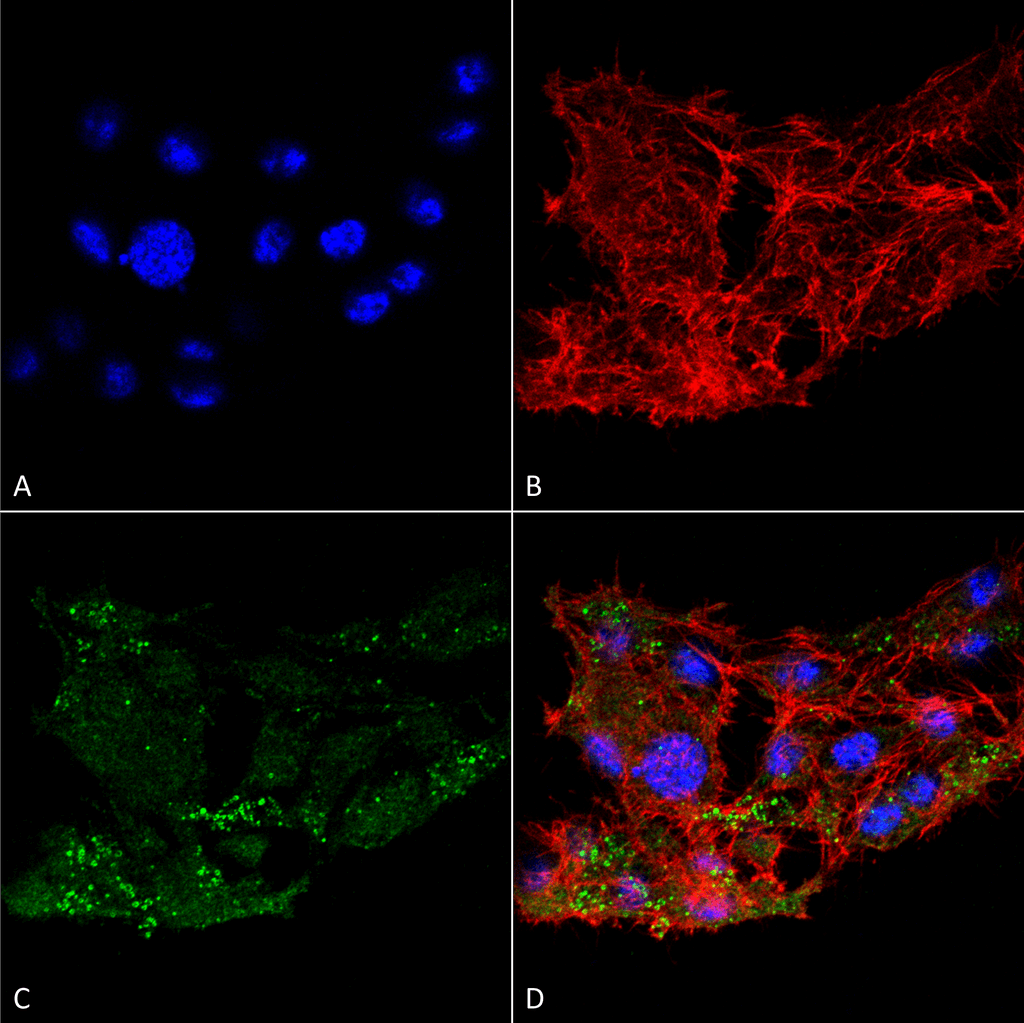
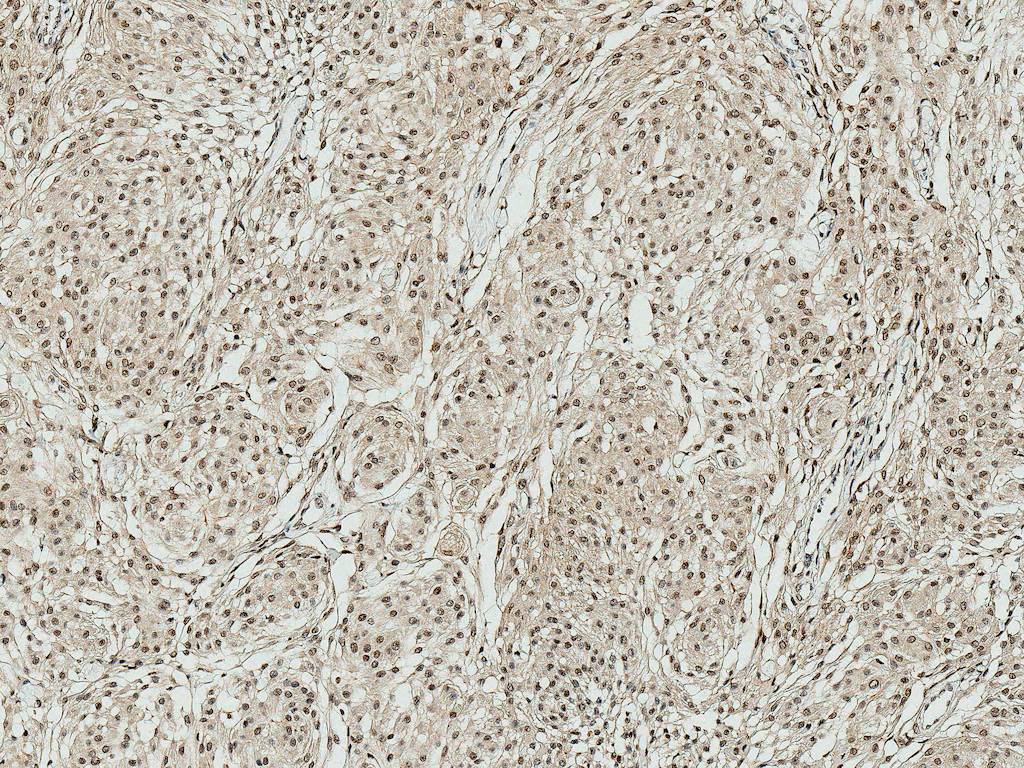
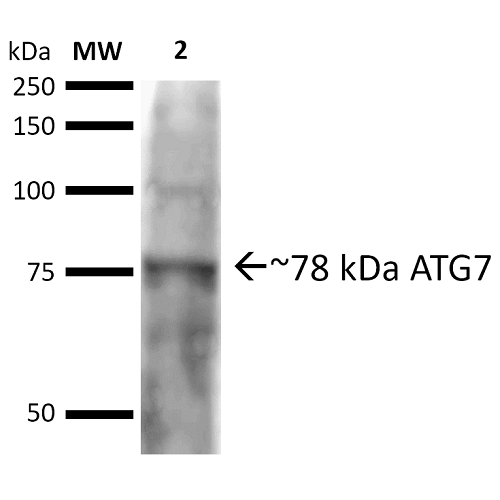
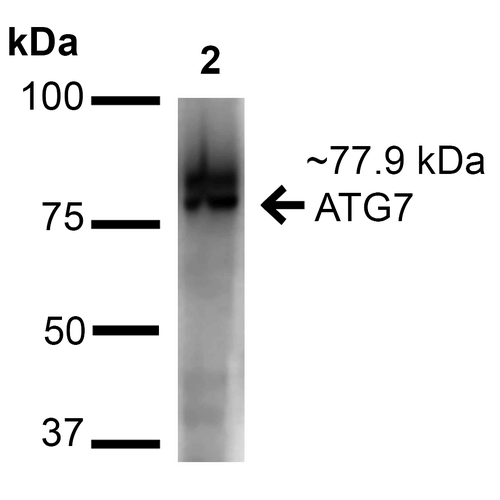
SPC-610
ATG7 Antibody

Cannot supply to this region.
- SKU:
- SPC-610
- Additional Names:
- ATG7, ATG7_HUMAN, APG7, APG7L, APG7-like, APG7 autophagy 7 like, APG7 autophagy 7-like (S. cerevisiae), ATG7 autophagy related 7 homolog, ATG7 autophagy related 7 homolog (S. cerevisiae), ATG12-activating enzyme E1 ATG7, Ubiquitin-like modifier-activating enzyme ATG7, Ubiquitin-activating enzyme E1-like protein, Ubiquitin activating enzyme E1 like protein, Autophagy-related protein 7, Autophagy related protein 7, Autophagy-related 7 (yeast), Autophagy 7 S. cerevisiae homolog of, GSA7, GSA 7,
- Application:
- IHC, WB, IF, ICC
- Concentration:
- 1 mg/ml
- Species Reactivity:
- Human
- Purification:
- Affinity Purified
- Storage Conditions:
- -20[o]C
- Supplier:
- StressMarq Biosciences
- Host:
- Rabbit
- Reactivities:
- Human, Mouse, Rat
- ABP:
- IMP-GEN-2015-06 < 10% Serum <100ml
- Buffer:
- PBS, 50% glycerol, 0.09% sodium azide
- Immunogen:
- Synthetic peptide from the N-terminal of Human ATG7
- Uniprot:
- O95352
- Synonyms:
- APG7 autophagy 7-like;APG7-LIKE;APG7L;ATG12-activating enzyme E1 ATG7;Autophagy-related protein 7;GSA7;hAGP7;SCAR31;ubiquitin-activating enzyme E1-like protein;ubiquitin-like modifier-activating enzyme ATG7
- Extra Details:
- ATG7 is a pivotal E1-like enzyme essential for autophagosome biogenesis, a core process in cellular homeostasis and neuroprotection. Functioning in concert with ATG10, ATG7 catalyzes the conjugation of ATG12 to ATG5, a critical step in the formation of the autophagosome membrane. Additionally, ATG7 activates ATG8 (LC3/GABARAP family proteins), facilitating their lipidation and incorporation into autophagosomal membranes. This dual role positions ATG7 as a master regulator of autophagic flux. In the context of neuroscience, ATG7 has emerged as a key player in the maintenance of neuronal integrity. Its activity is vital for the clearance of misfolded proteins and damaged organelles-hallmarks of neurodegenerative diseases such as Alzheimer's, Parkinson's, and Huntington's disease. Conditional knockout models have demonstrated that loss of ATG7 in neurons leads to progressive neurodegeneration, underscoring its neuroprotective function. Moreover, ATG7 is critical for metabolic adaptation, particularly in neonates, where it ensures amino acid supply through autophagy during nutrient scarcity. This metabolic role further highlights its importance in brain development and function. Given its central role in autophagy and neuronal survival, ATG7 is a promising therapeutic target in neurodegenerative disease research. Ongoing studies aim to modulate ATG7 activity to restore autophagic balance and mitigate neurodegeneration.
- Shipping Conditions:
- Blue Ice