SPC-404D-APC
ENaC beta Antibody: APC

Cannot supply to this region.
- SKU:
- SPC-404D-APC
- Additional Names:
- Amiloride sensitive sodium channel subunit beta, Amiloride-sensitive sodium channel beta-subunit, Beta ENaC, Beta NaCH, ENaC beta, ENaCB, Epithelial Na(+) channel subunit beta, Epithelial Na+ channel beta subunit, Epithelial Na+ channel subunit beta, Epithelial sodium channel beta 2 subunit, Epithelial sodium channel beta 3 subunit, Nonvoltage gated sodium channel 1 beta subunit, Nonvoltage gated sodium channel 1 subunit beta, Nonvoltage-gated sodium channel 1 beta subunit, SCNEB, SCNN 1B,
- Application:
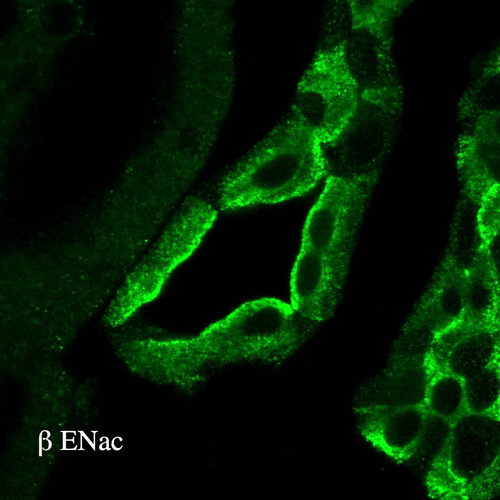
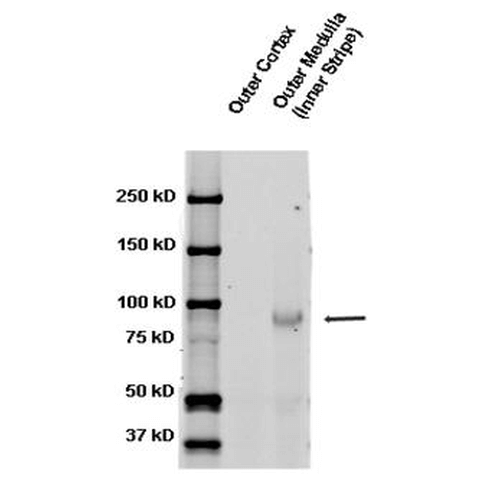
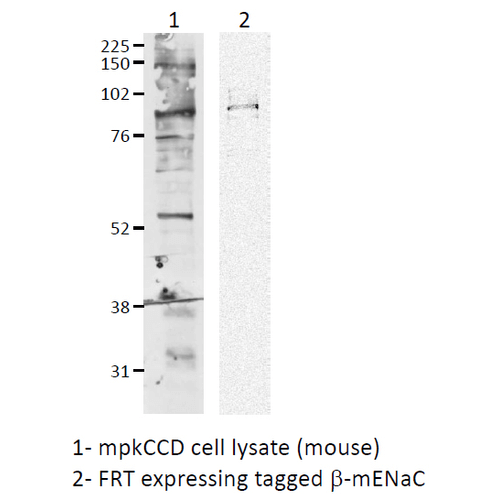
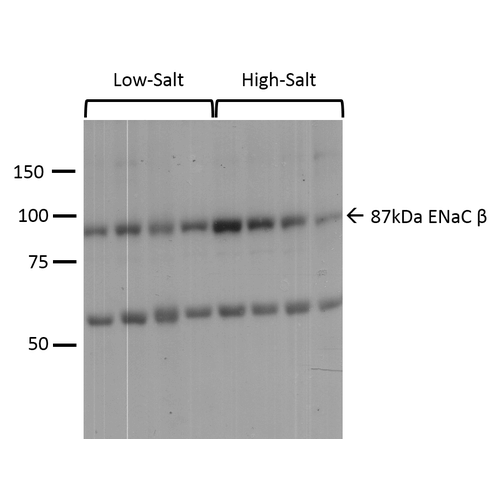
- IHC, WB, IF, ICC, IP
- Concentration:
- 1 mg/ml
- Species Reactivity:
- Rat
- Purification:
- Protein A Purified
- Storage Conditions:
- See Manual
- Supplier:
- StressMarq Biosciences
- Host:
- Rabbit
- Reactivities:
- Hamster, Human, Mouse, Rat
- ABP:
- IMP-GEN-2015-06 < 10% Serum <100ml
- Buffer:
- 95.46mM Phosphate, 2.48mM MES and 2mM EDTA
- Immunogen:
- Produced against the C-terminal tail (amino acids 617-638) of rat beta ENaC (antibody designation 3755-2)
- Uniprot:
- P37090
- Synonyms:
- amiloride-sensitive sodium channel subunit beta;beta-ENaC;beta-NaCH;epithelial Na(+) channel subunit beta;nonvoltage-gated sodium channel 1 subunit beta;RNENACB;SCNEB;sodium channel epithelial 1 beta subunit;sodium channel, non-voltage-gated 1, beta subunit;sodium channel, nonvoltage-gated, type I, beta
- Extra Details:
- The beta subunit of the epithelial sodium channel (ENaCB Beta) is essential for the functional assembly and regulation of the ENaC complex, which governs sodium absorption across epithelial surfaces. While ENaCB Beta is well-characterized in renal and pulmonary physiology, its emerging role in the nervous system is drawing increasing interest in neurodegenerative disease research. ENaCB Beta is critical for fluid clearance in distal lung epithelia, particularly in response to edema, and its expression is upregulated during keratinocyte differentiation-highlighting its involvement in cellular stress adaptation. In the retina, ENaCB Beta is differentially expressed under conditions of ocular hypertension, suggesting a role in neurovascular regulation and intraocular pressure homeostasis. These mechanisms are relevant to neurodegenerative diseases where fluid imbalance, oxidative stress, and ion dysregulation contribute to neuronal injury. Recent studies propose that ENaCB Beta may influence glial cell function, neuroinflammation, and blood-brain barrier integrity-key factors in the progression of disorders such as Parkinson's disease and ALS. As a regulator of sodium flux and tissue hydration, ENaCB Beta represents a promising target for modulating neuroimmune responses and preserving neural function. By bridging epithelial ion transport and neural health, ENaCB Beta offers a novel perspective in the search for biomarkers and therapeutic strategies in neurodegeneration.
- Shipping Conditions:
- Blue Ice