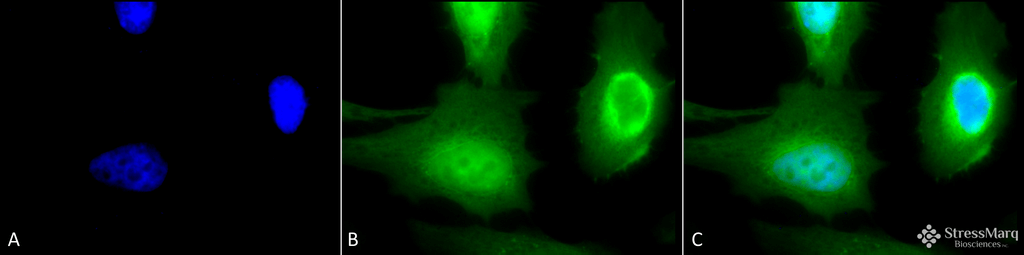
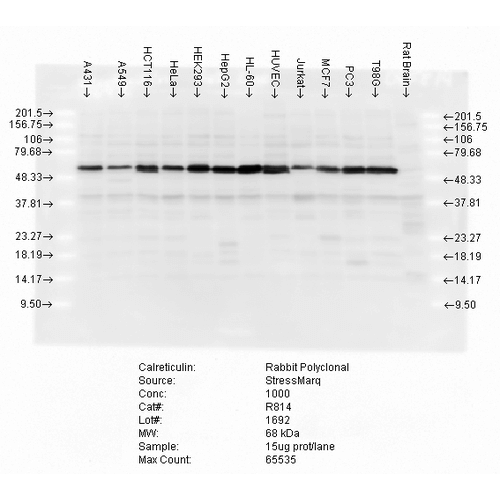
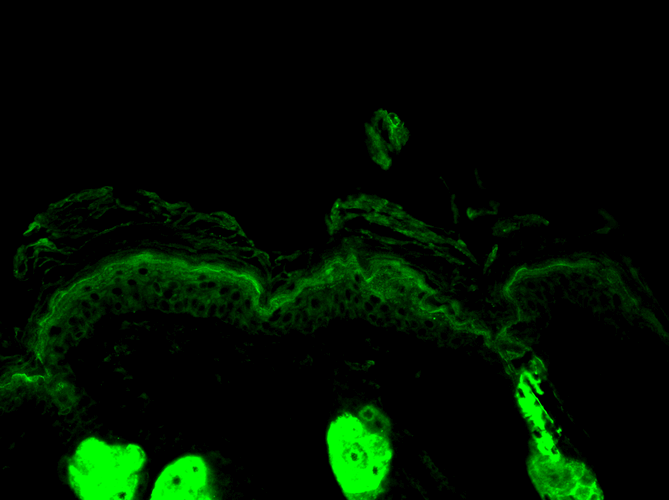
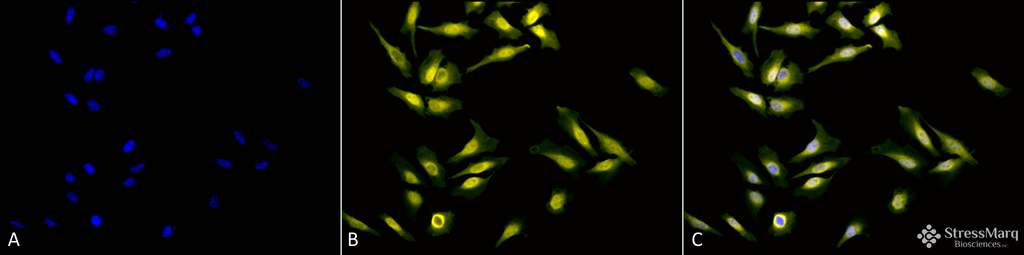
SPC-122
Calreticulin Antibody

Cannot supply to this region.
- SKU:
- SPC-122
- Additional Names:
- Calreticulin, CALR, CALR_HUMAN, Calregulin, cC1qR, CRP55, ERp60, HSCBP, RO, SSA, grp60
- Application:
- Flow Cytometry, IHC, WB, IF, ICC, IP
- Concentration:
- 1 mg/ml
- Species Reactivity:
- Human
- Purification:
- Affinity Purified
- Storage Conditions:
- -20[o]C
- Supplier:
- StressMarq Biosciences
- Host:
- Rabbit
- Reactivities:
- Bovine, Canine, Hamster, Human, Mouse, Porcine, Rabbit, Rat, Guinea Pig, Ovine
- ABP:
- IMP-GEN-2015-06 < 10% Serum <100ml
- Buffer:
- PBS pH7.4, 50% glycerol, 0.09% sodium azide
- Immunogen:
- Human calreticulin synthetic peptide with a cysteine residue added and the peptide conjugated to KLH
- Uniprot:
- P27797
- Synonyms:
- calregulin;calreticulin;cC1qR;CRP55;CRT;endoplasmic reticulum resident protein 60;epididymis secretory sperm binding protein Li 99n;ERp60;grp60;HACBP;HEL-S-99n;RO;Sicca syndrome antigen A (autoantigen Ro; calreticulin);SSA
- Extra Details:
- Calreticulin (CALR) is a highly conserved, multifunctional calcium-binding protein predominantly localized to the endoplasmic reticulum (ER), but also detected in the nucleus and nuclear envelope. It contains a C-terminal KDEL sequence that ensures ER retention, a hallmark of many ER-resident chaperones. Structurally, Calreticulin comprises three domains: a 180-residue N-terminal domain, a proline-rich P-domain (residues 189-288) with high-affinity calcium-binding capacity and homology to calnexin and calmegin, and a C-terminal domain that binds calcium with low affinity but high capacity. This architecture enables Calreticulin to function as both a calcium buffer and a molecular chaperone. In the nervous system, Calreticulin plays a critical role in protein folding, calcium signaling, and ER stress responses-processes intimately linked to neurodegenerative disease. It assists in the maturation of glycoproteins and regulates intracellular calcium dynamics, which are essential for synaptic function and neuronal survival. Dysregulation of Calreticulin has been implicated in neurodegenerative conditions such as Alzheimer's disease, Parkinson's disease, and amyotrophic lateral sclerosis (ALS), where ER stress and disrupted proteostasis are central pathological features. Beyond its chaperone role, Calreticulin influences gene expression, cytoskeletal organization, and cellular proliferation. It is also upregulated in response to various stressors, including amino acid deprivation, highlighting its role in adaptive cellular responses. Given its central position at the intersection of calcium homeostasis, protein quality control, and stress signaling, Calreticulin is a promising target in neurodegenerative disease research.
- Shipping Conditions:
- Blue Ice