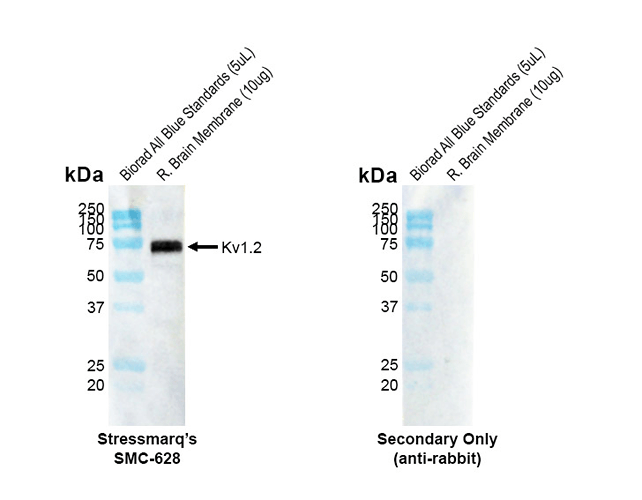
SMC-628
Kv1.2 Antibody, Clone C25

Cannot supply to this region.
- SKU:
- SMC-628
- Additional Names:
- Kv1.2, KCNA2, Potassium voltage-gated channel subfamily A member 2, Voltage-gated potassium channel subunit Kv1.2, NGK1, HBK5, HUKIV, MK2, RBK2, Kca12
- Application:
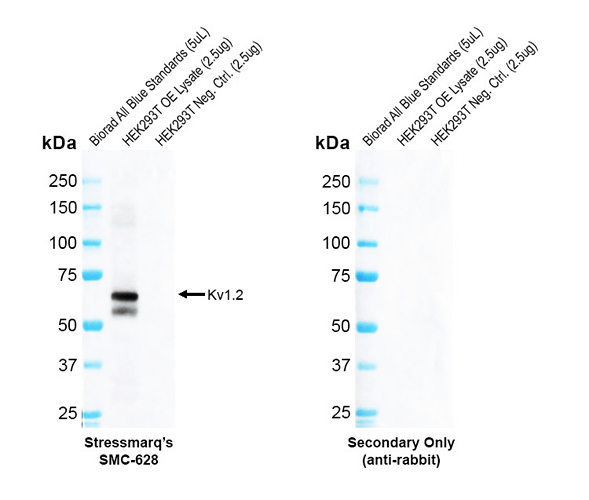
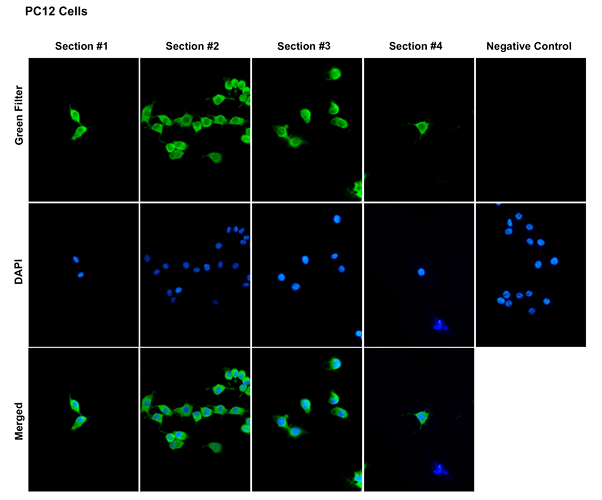
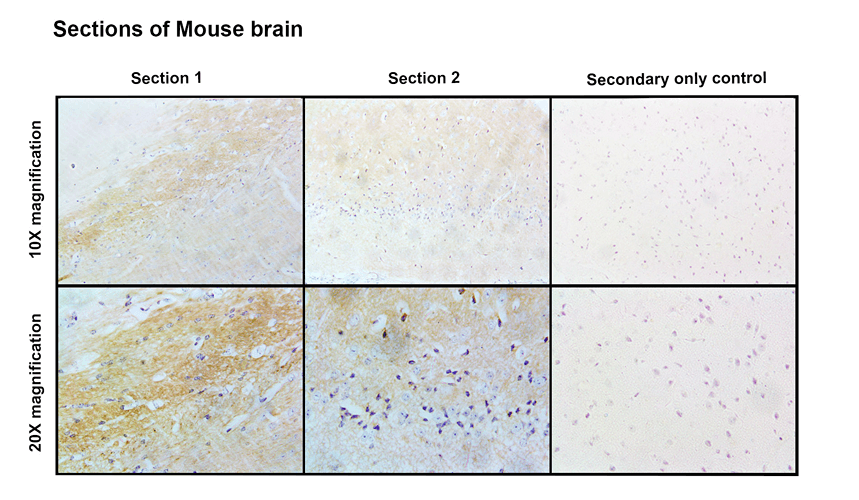
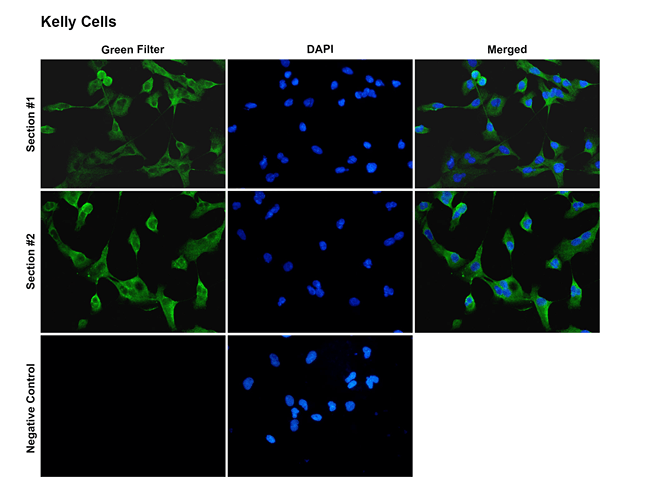
- IHC, WB, IF, ICC
- Concentration:
- 1 mg/ml
- Species Reactivity:
- Human
- Purification:
- AmMagTM Ultra AT Protein A MagBeads
- Storage Conditions:
- -20[o]C
- Supplier:
- StressMarq Biosciences
- Host:
- Rabbit
- Reactivities:
- Human, Mouse, Rat
- Buffer:
- PBS pH 7.4, 0.02% Proclin 300, 50% glycerol
- Immunogen:
- Fusion protein, AA #428-499 (cytoplasmic C-terminus) of human Kv1.2. Epitope mapped to within AA #463-480 (EGVNNSNEDFREENLKTA).
- Clone:
- C25
- Uniprot:
- P16389
- Synonyms:
- DEE32;EIEE32;HBK5;HK4;HUKIV;KV1.2;MK2;NGK1;potassium channel, voltage gated shaker related subfamily A, member 2;potassium voltage-gated channel subfamily A member 2;potassium voltage-gated channel, shaker-related subfamily, member 2;RBK2;voltage-gated K(+) channel HuKIV;voltage-gated potassium channel HBK5;voltage-gated potassium channel protein Kv1.2;voltage-gated potassium channel subunit Kv1.2
- Extra Details:
- Kv1.2, encoded by the KCNA2 gene, is a voltage-gated potassium channel subunit that plays a critical role in regulating neuronal excitability and synaptic transmission. Beyond its significance as a biophysical model for ion channel gating, Kv1.2 has emerged as a key modulator of brain function, with growing evidence linking KCNA2 mutations to a range of neurological disorders, including epilepsy, ataxia, and neurodevelopmental syndromes. A landmark crystallographic study resolved the Kv1.2 channel structure at 2.9 Å, revealing the open activation gate and tetrameric subunit architecture. This structural insight has become foundational for understanding the gating mechanisms of voltage-gated ion channels across the nervous system. Functionally, Kv1.2 channels are expressed in axons and presynaptic terminals, where they shape action potential propagation and modulate neurotransmitter release. By influencing both the timing and strength of synaptic communication, Kv1.2 contributes to the fine-tuning of neural circuit dynamics essential for cognition, motor control, and sensory processing. In the context of neurodegenerative disease, dysregulation of Kv1.2 activity may lead to aberrant neuronal firing, excitotoxicity, and impaired network stability-hallmarks of conditions such as Alzheimer's disease and multiple sclerosis. As such, Kv1.2 is increasingly recognized as a potential therapeutic target for restoring electrical balance in diseased neural circuits. Due to its recombinant nature, our Human Kv1.2 Recombinant Monoclonal IgG offers high specificity and reproducibility, making it ideal for applications in immunohistochemistry, western blotting, and ion channel research.
- Shipping Conditions:
- Blue Ice