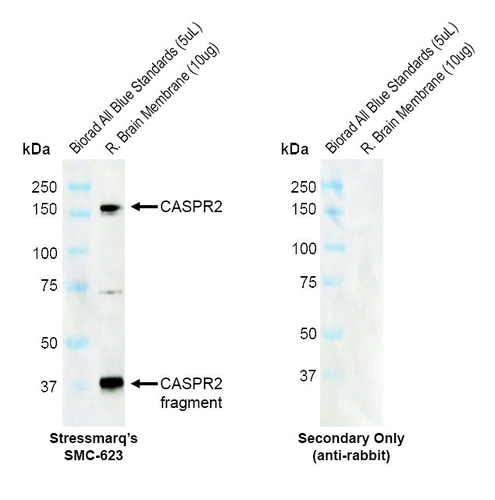
SMC-623
CASPR2 Antibody, Clone FF19

Cannot supply to this region.
- SKU:
- SMC-623
- Additional Names:
- Contactin-associated protein-like 2, CASPR2, Cell recognition molecule Caspr2, KIAA0868
- Application:
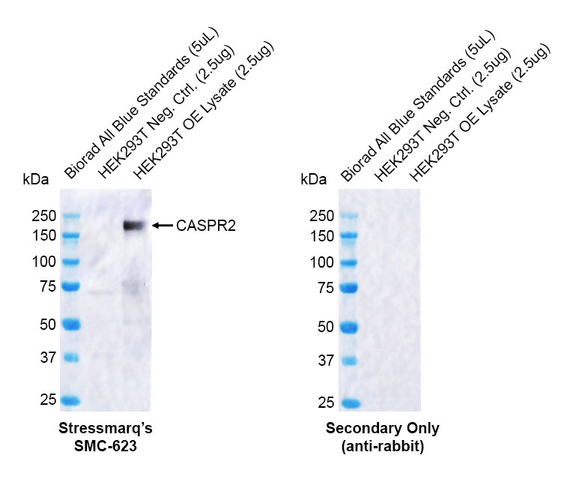
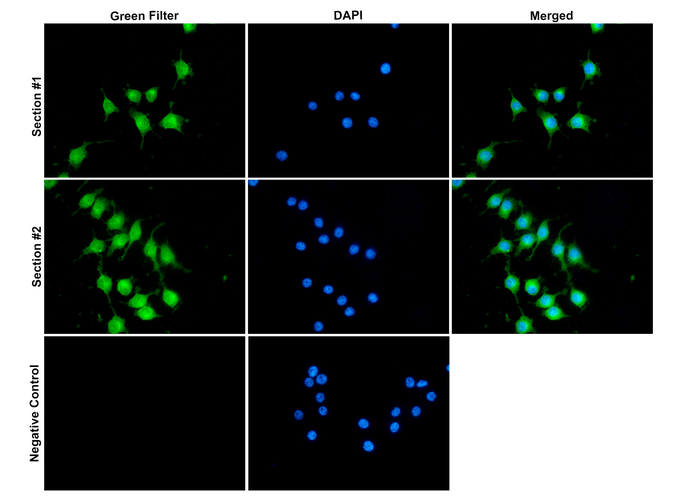
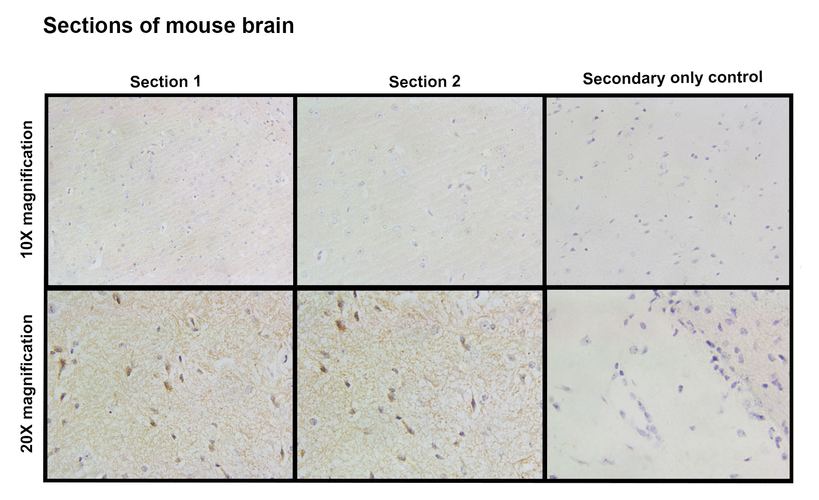
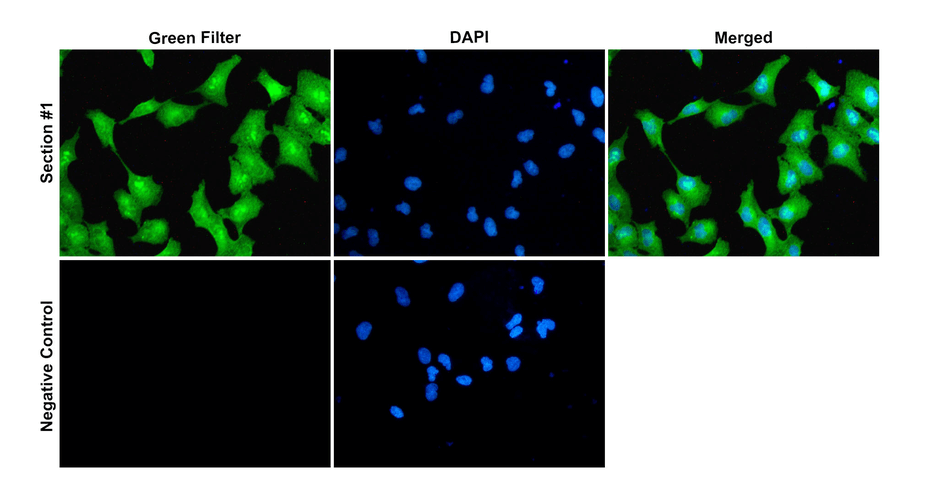
- IHC, WB, IF, ICC
- Concentration:
- 1 mg/ml
- Species Reactivity:
- Human
- Purification:
- MabSelect™ PrismA
- Storage Conditions:
- -20[o]C
- Supplier:
- StressMarq Biosciences
- Host:
- Rabbit
- Reactivities:
- Human, Mouse, Rat
- Buffer:
- PBS pH 7.4, 0.02% Proclin 300, 50% glycerol
- Immunogen:
- Fusion protein, AA #96-1265 (extracellular domain) of human CASPR2.
- Clone:
- FF19
- Uniprot:
- Q9UHC7
- Synonyms:
- AUTS15;CASPR2;CDFE;cell recognition molecule Caspr2;contactin associated protein like 2;contactin-associated protein-like 2;E3 ubiquitin-protein ligase makorin-1;homolog of Drosophila neurexin IV;NRXN4;PTHSL1;RING finger protein 61;RING-type E3 ubiquitin transferase makorin-1;RNF61
- Extra Details:
- CASPR2, a member of the neurexin superfamily, is a critical axonal membrane protein that regulates the organization of myelinated nerve fibers. Unlike CASPR, which localizes to the paranodal junction, CASPR2 is enriched at the juxtaparanodal region of the axon, where it functions as a membrane scaffold essential for clustering voltage-gated Kv1 potassium channels. This spatial arrangement is vital for maintaining axonal excitability and signal fidelity. CASPR2 interacts with contactin-2 and cytoskeletal adaptor protein 4.1B to stabilize the juxtaparanodal domain, contributing to the compartmentalization of axonal regions around the nodes of Ranvier. Disruption of CASPR2 function impairs ion channel localization and axonal conduction, leading to altered neuronal signaling. Emerging evidence links CASPR2 dysfunction to a spectrum of neurodevelopmental and neurodegenerative disorders, including epilepsy, autism spectrum disorders, and autoimmune encephalitis. In neurodegenerative disease contexts, CASPR2-associated disorganization of axonal domains may contribute to demyelination, synaptic dysfunction, and progressive neuronal loss. Given its role in maintaining axonal architecture and electrical signaling, CASPR2 is increasingly recognized as a potential biomarker and therapeutic target in diseases affecting white matter integrity and neural connectivity.
- Shipping Conditions:
- Blue Ice