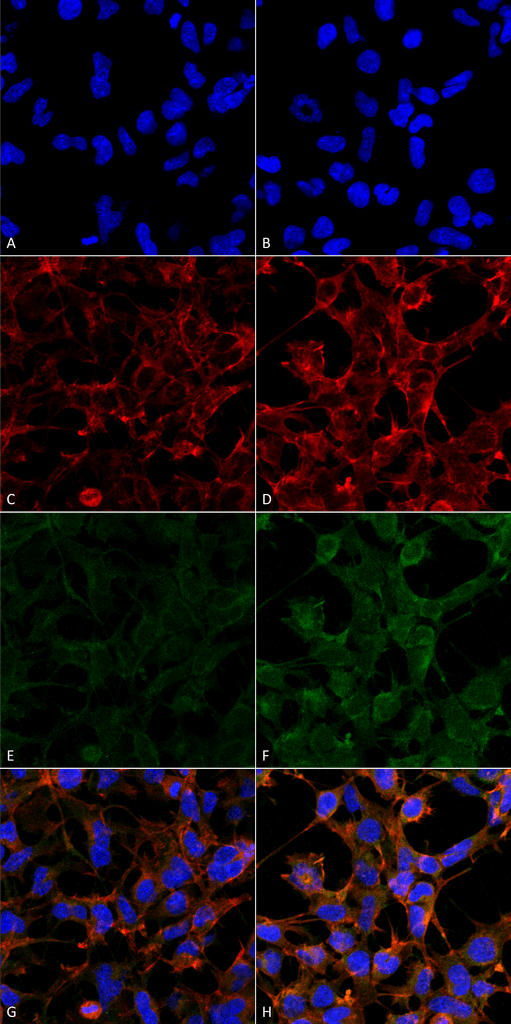
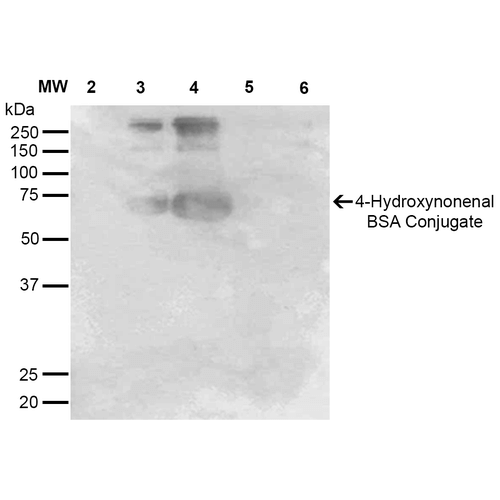
SMC-511
4-Hydroxynonenal Antibody, Clone 12F7

Cannot supply to this region.
- SKU:
- SMC-511
- Additional Names:
- 4-Hydroxynonenal, 4-Hydroxy-2-nonenal, 4-HNE, HNE, (2E)-4-Hydroxy-2-nonenal, 4-hydroxynon-2-enal, 2-Nonenal, 4-hydroxy-, 4-Hydroxy-2,3-nonenal, 4-hydroxylnonenal, non-2-enal, 4-hydroxy
- Application:
- ELISA, WB, IF, ICC
- Concentration:
- 1 mg/ml
- Purification:
- Protein G Purified
- Storage Conditions:
- -20[o]C
- Supplier:
- StressMarq Biosciences
- Host:
- Mouse
- ABP:
- IMP-GEN-2015-06 < 10% Serum <100ml
- Buffer:
- PBS pH7.4, 50% glycerol, 0.09% sodium azide
- Immunogen:
- Synthetic 4-Hydroxynonenal modified Keyhole Limpet Hemocyanin (KLH).
- Clone:
- 12F7
- Extra Details:
- 4-Hydroxynonenal (4-HNE) is a highly reactive A Alpha,B Beta-unsaturated aldehyde generated during lipid peroxidation of W Omega-6 polyunsaturated fatty acids. As a key electrophilic byproduct of oxidative stress, 4-HNE plays a dual role in cellular physiology and pathology, particularly within the central nervous system. At low concentrations, 4-HNE can activate adaptive stress responses, including the upregulation of antioxidant defense pathways. However, elevated levels of 4-HNE are cytotoxic, promoting autophagy, apoptosis, and ultimately necrosis. Its reactivity with nucleophilic amino acid residues-especially cysteine, histidine, and lysine-leads to the formation of stable protein adducts that impair enzymatic activity, disrupt signaling pathways, and compromise cellular integrity. In neuroscience, 4-HNE is increasingly recognized as a critical factor in the pathogenesis of neurodegenerative diseases. Accumulation of 4-HNE-modified proteins has been observed in Alzheimer's disease, Parkinson's disease, and other age-related neurodegenerative disorders. These modifications contribute to mitochondrial dysfunction, synaptic failure, and chronic neuroinflammation-hallmarks of progressive neuronal decline. Beyond the brain, 4-HNE is implicated in a wide range of oxidative stress-related conditions, including cancer, cardiovascular disease, diabetes, and liver disorders. Its role as both a biomarker and a mediator of oxidative damage makes 4-HNE a compelling target for therapeutic intervention and early disease detection.
- Shipping Conditions:
- Blue Ice