SMC-509
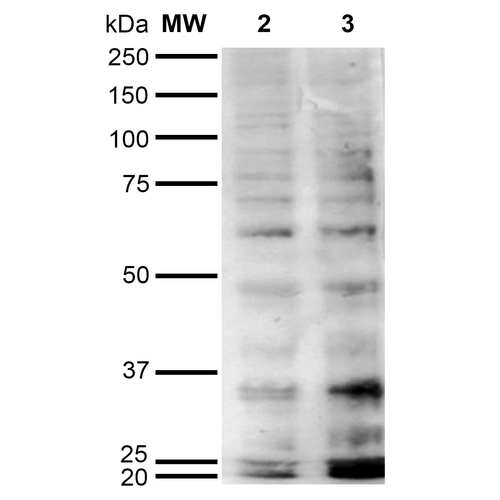
Hexanoyl-Lysine adduct Antibody, Clone 5E8

Cannot supply to this region.
- SKU:
- SMC-509
- Additional Names:
- Hexanoyl-Lysine adduct, HEL (Hexanoyl-Lysine adduct), HEL, HEL Adduct, Hexanoyl-Lys adduct, Hexanoyl-Lys, Hexanoyl-Lysine (HEL) adduct, Hexanoyl-Lys (HEL), Hexanoyl Lysine adduct, Hexanoyl-Lysine adduct-modified protein, Hexanoyl-Lysine Adduct (HEL)
- Application:
- ELISA, Flow Cytometry, WB, IF, ICC
- Concentration:
- 1 mg/ml
- Purification:
- Protein G Purified
- Storage Conditions:
- -20[o]C
- Supplier:
- StressMarq Biosciences
- Host:
- Mouse
- ABP:
- IMP-GEN-2015-06 < 10% Serum <100ml
- Buffer:
- PBS pH7.4, 50% glycerol, 0.09% sodium azide
- Immunogen:
- Synthetic Hexanoyl modified Keyhole Limpet Hemocyanin (KLH).
- Clone:
- 5E8
- Extra Details:
- Hexanoyl-lysine adduct (HEL) is a lipid peroxidation marker formed by the reaction of oxidized fatty acids with lysine residues on proteins. It serves as an early indicator of oxidative stress, a central feature in the pathogenesis of neurodegenerative diseases. In the brain, HEL accumulation reflects damage to neuronal membranes and proteins caused by reactive oxygen species (ROS). Elevated levels of HEL have been detected in models of Alzheimera's disease, Parkinsona's disease, and other neurodegenerative conditions, correlating with disease progression and cognitive decline. HEL is particularly valuable as a biomarker due to its stability and specificity for lipid peroxidation. Its presence indicates oxidative damage at an early stage, often preceding overt neurodegeneration. This makes HEL a promising candidate for early diagnosis, disease monitoring, and evaluating the efficacy of antioxidant therapies. By highlighting the oxidative component of neurodegeneration, HEL contributes to a deeper understanding of disease mechanisms and supports the development of targeted interventions aimed at reducing oxidative injury in the nervous system.
- Shipping Conditions:
- Blue Ice