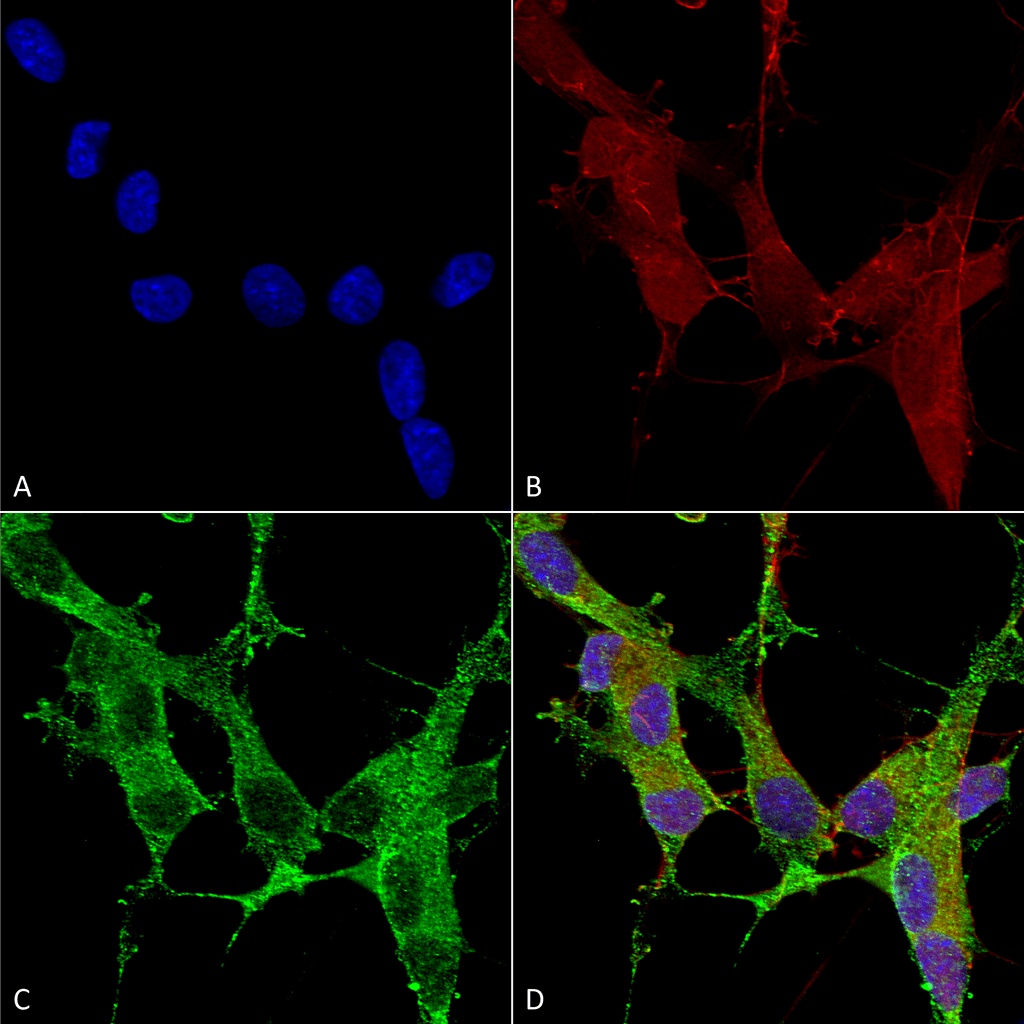

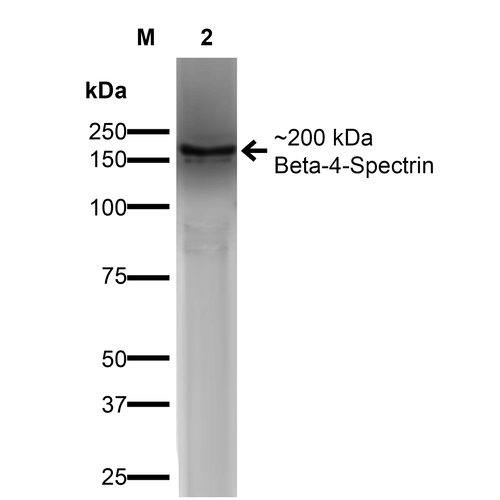
SMC-484
Beta-4 Spectrin Antibody, Clone N393/2

Cannot supply to this region.
- SKU:
- SMC-484
- Additional Names:
- Beta-IV spectrin, Spectrin beta chain, non-erythrocytic 4, Spectrin, non-erythroid beta chain 3, SPTBN4, SPTBN3, Spnb4, KIAA1642, EMBL BAB83243.1, Ensembl ENSRNOP00000028393
- Application:
- IHC, WB, IF, ICC
- Concentration:
- 1 mg/ml
- Species Reactivity:
- Human
- Purification:
- Protein G Purified
- Storage Conditions:
- -20[o]C
- Supplier:
- StressMarq Biosciences
- Host:
- Mouse
- Reactivities:
- Human, Mouse, Rat
- ABP:
- IMP-GEN-2015-06 < 10% Serum <100ml
- Buffer:
- PBS pH7.4, 50% glycerol, 0.1% sodium azide
- Immunogen:
- Fusion protein amino acids 1621-1832 (C-terminal repeats 14 to 15) of human Beta4-spectrin
- Clone:
- N393/2 (Formerly sold as S393-2)
- Uniprot:
- Q9H254
- Synonyms:
- beta-IV spectrin;CMND;NEDHND;QV;spectrin beta chain, brain 3;spectrin beta chain, non-erythrocytic 4;spectrin, non-erythroid beta chain 3;SPNB4;SPTBN3
- Extra Details:
- Beta IV spectrin (SPTBN4) is a non-erythrocytic member of the spectrin family, a group of cytoskeletal proteins essential for maintaining cell shape, membrane integrity, and the spatial organization of intracellular components. While spectrins are best known for their role in red blood cells, beta IV spectrin is predominantly expressed in the nervous system, particularly in the cerebellum, spinal cord, and brain, as well as in pancreatic islets. In neurons, beta IV spectrin localizes to the nuclear matrix, cytoplasmic vesicles, and promyelocytic leukemia (PML) nuclear bodies. It plays a critical role in stabilizing membrane domains and organizing ion channels at the nodes of Ranvier-specialized axonal segments essential for saltatory conduction. This structural role is vital for maintaining the fidelity of neuronal signaling. Disruption of beta IV spectrin function has been linked to neurodevelopmental and neurodegenerative disorders. Mutations in the SPTBN4 gene are associated with severe neurological phenotypes, including motor dysfunction, intellectual disability, and epilepsy. Given its role in axonal architecture and signal propagation, beta IV spectrin is emerging as a key player in the pathophysiology of diseases such as multiple sclerosis, peripheral neuropathies, and potentially ALS. As a cytoskeletal scaffold critical for neural connectivity and excitability, beta IV spectrin represents a promising target for research into the mechanisms underlying neurodegeneration and for the development of neuroprotective strategies.
- Shipping Conditions:
- Blue Ice