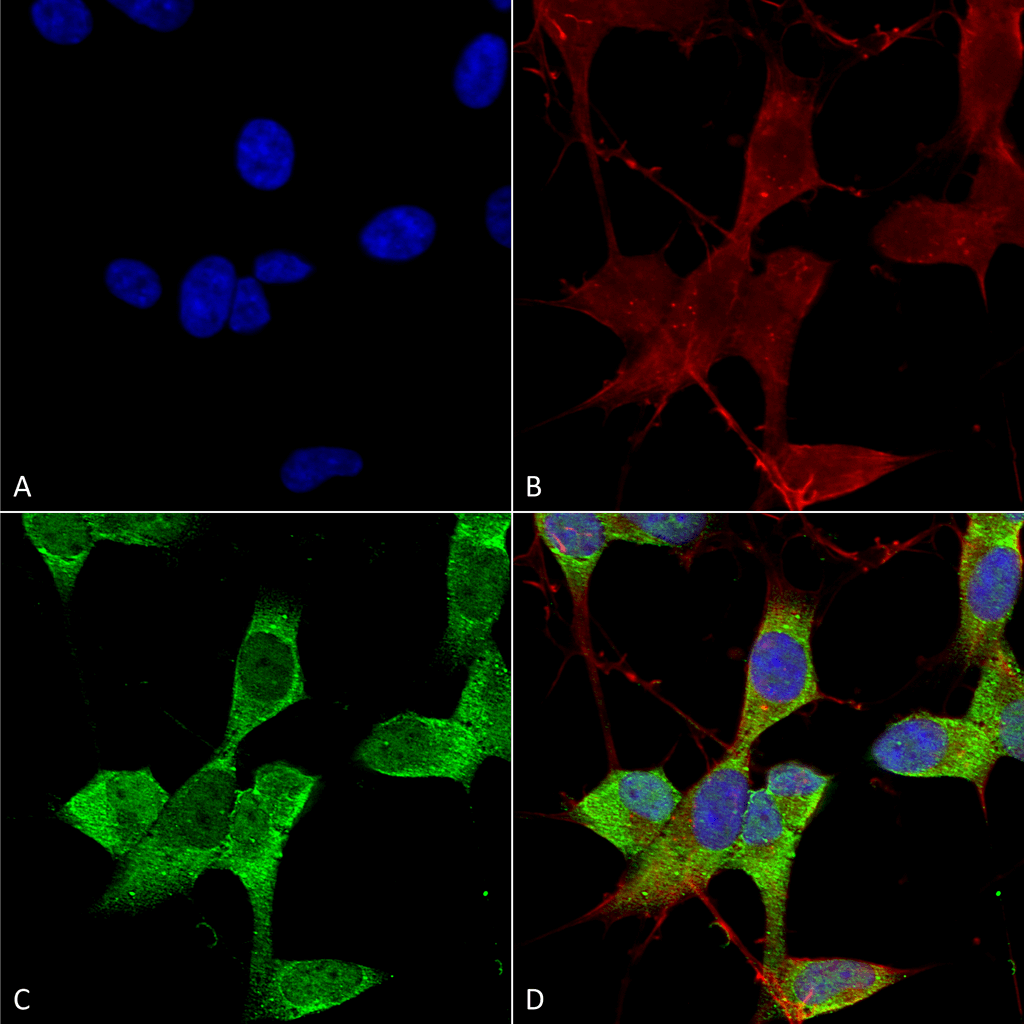

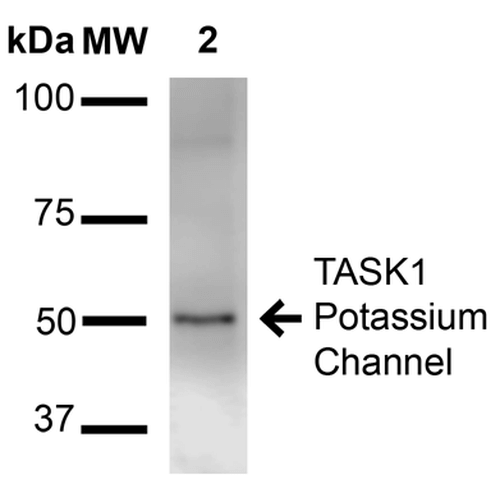
SMC-473
TASK-1 Antibody, Clone N374/48

Cannot supply to this region.
- SKU:
- SMC-473
- Additional Names:
- Potassium channel subfamily K member 3, KCNK3, Acid sensitive potassium channel protein TASK 1, Cardiac two pore background K(+) channel, cTBAK 1, K2p3.1, KCNK9, OAT1, rTASK, TASK 1, TBAK1, TWIK related acid sensitive K+ channel, Two pore potassium channel KT3.1, Two pore K(+) channel KT3.1
- Application:
- IHC, WB, IF, ICC
- Concentration:
- 1 mg/ml
- Species Reactivity:
- Rat
- Purification:
- Protein G Purified
- Storage Conditions:
- -20[o]C
- Supplier:
- StressMarq Biosciences
- Host:
- Mouse
- Reactivities:
- Human, Mouse, Rat
- ABP:
- IMP-GEN-2015-06 < 10% Serum <100ml
- Buffer:
- PBS pH7.4, 50% glycerol, 0.1% sodium azide
- Immunogen:
- Fusion protein amino acids 251-411 (cytoplasmic C-terminus) of rat Acid-sensitive potassium channel protein TASK or TASK1. Mouse: 96% identity (156/161 amino acids identical). Human: 76% identity (163/161 amino acids identical). <30% identity with TASK3.
- Clone:
- N374/48 (Formerly sold as S374-48)
- Uniprot:
- O54912
- Synonyms:
- acid-sensitive potassium channel protein TASK-1;potassium channel subfamily K member 3;potassium channel, subfamily K, member 3;potassium channel, two pore domain subfamily K, member 3;rTASK;Task-1;TWIK-related acid-sensitive K(+) channel 1;TWIK-related acid-sensitive K+ channel;two pore K(+) channel KT3.1;two pore potassium channel KT3.1
- Extra Details:
- TASK-1 (TWIK-related acid-sensitive K+ channel 1) is a member of the two-pore domain potassium (K2P) channel family, characterized by four transmembrane segments and two pore-forming domains. These channels contribute to background (leak) potassium currents that stabilize the resting membrane potential and regulate neuronal excitability. TASK-1 is highly sensitive to extracellular pH within the physiological range, making it a dynamic modulator of neuronal activity in response to metabolic and environmental changes. TASK-1 is prominently expressed in the brain and heart, with particularly high levels in the right atrium and various central nervous system regions. Its ability to respond to subtle shifts in pH positions TASK-1 as a key player in maintaining ionic homeostasis and protecting neurons under stress conditions, such as ischemia, inflammation, and oxidative damage-hallmarks of neurodegenerative diseases. Recent research suggests that dysregulation of TASK-1 may contribute to altered neuronal excitability, impaired synaptic transmission, and neuroinflammation in disorders such as Alzheimer's disease, Parkinson's disease, and epilepsy. Moreover, TASK-1's role in modulating glial cell function and neurovascular coupling further underscores its relevance in brain health and disease. As a pH-sensitive ion channel with broad regulatory functions, TASK-1 represents a promising therapeutic target for restoring neuronal stability and mitigating neurodegenerative processes.
- Shipping Conditions:
- Blue Ice