

SMC-471
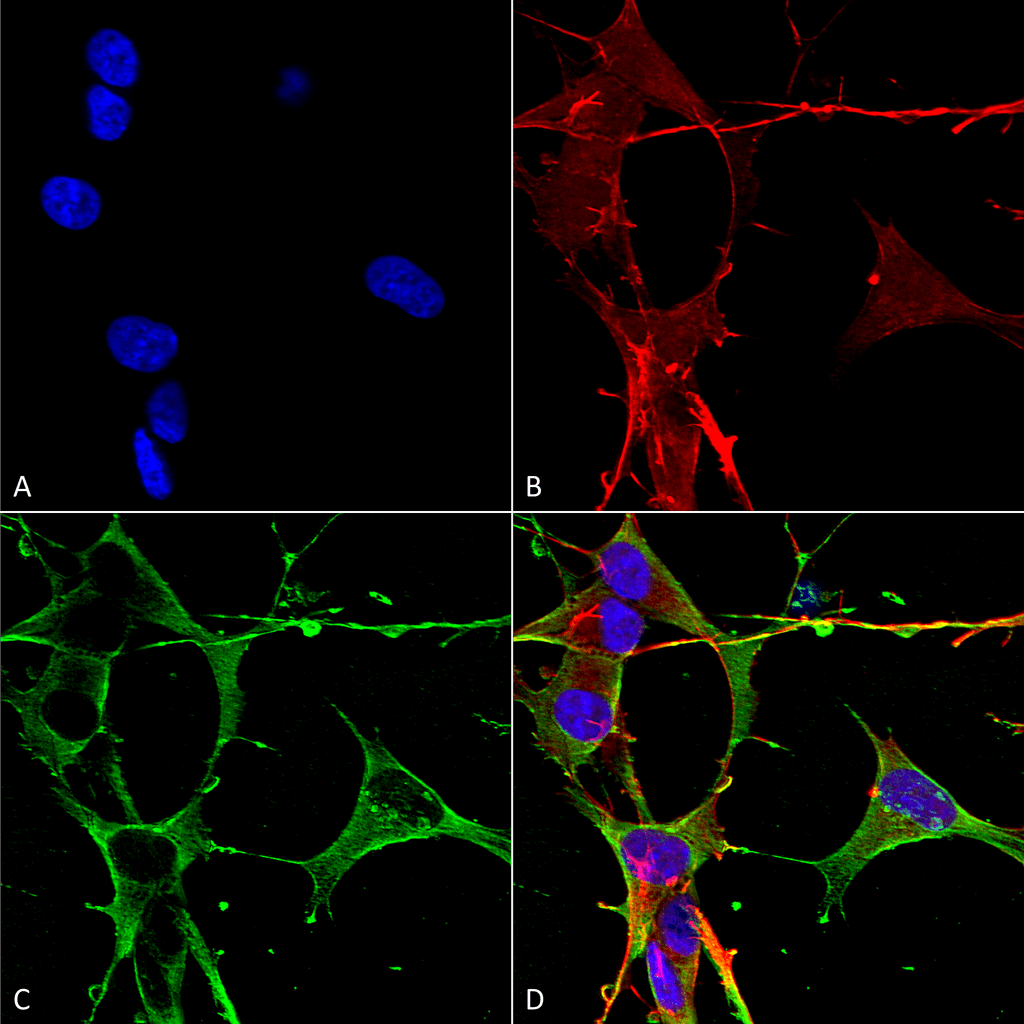
Neuroligin-3 Antibody, Clone N110/29

Cannot supply to this region.
- SKU:
- SMC-471
- Additional Names:
- Gliotactin homolog, Neuroligin-3, Nlgn3, NLGN3_HUMAN
- Application:
- IHC, WB, IF, ICC
- Concentration:
- 1 mg/ml
- Species Reactivity:
- Rat
- Purification:
- Protein G Purified
- Storage Conditions:
- -20[o]C
- Supplier:
- StressMarq Biosciences
- Host:
- Mouse
- Reactivities:
- Human, Mouse, Rat
- Buffer:
- PBS pH7.4, 50% glycerol, 0.1% sodium azide
- Immunogen:
- Fusion protein amino acids 730-848 (intracellular C-terminus) of rat Neuroligin-3. Mouse: 99% identity (118/119 amino acids identical). Human: 98% identity (116/119 amino acids identical) ~60% identity with Neuroligin-1. ~40% identity with Neuroligin-2.
- Clone:
- N110/29 (Formerly sold as S110-29)
- Uniprot:
- Q62889
- Synonyms:
- gliotactin homolog;neuroligin-3
- Extra Details:
- Neuroligin 3 (NLGN3) is a postsynaptic adhesion molecule involved in the formation and maintenance of both excitatory and inhibitory synapses. It interacts with presynaptic neurexins to mediate synaptic specificity and function. NLGN3 is enriched in synaptic membranes and plays a key role in synaptic plasticity and neuronal communication. Mutations in NLGN3 have been associated with autism spectrum disorders and altered synaptic transmission. In the context of neurodegeneration, NLGN3 dysregulation may contribute to synaptic loss, impaired neurotransmission, and cognitive decline. Its dual role in excitatory and inhibitory synapse formation positions NLGN3 as a critical modulator of neural circuit balance. NLGN3 also interacts with scaffolding proteins such as PSD-95, influencing receptor localization and synaptic strength. Disruption of these interactions may exacerbate synaptic vulnerability in diseases like Alzheimer's and Parkinson's. Given its central role in synaptic architecture, NLGN3 is a promising target for understanding and potentially reversing synaptic dysfunction in neurodegenerative conditions.
- Shipping Conditions:
- Blue Ice