

SMC-462
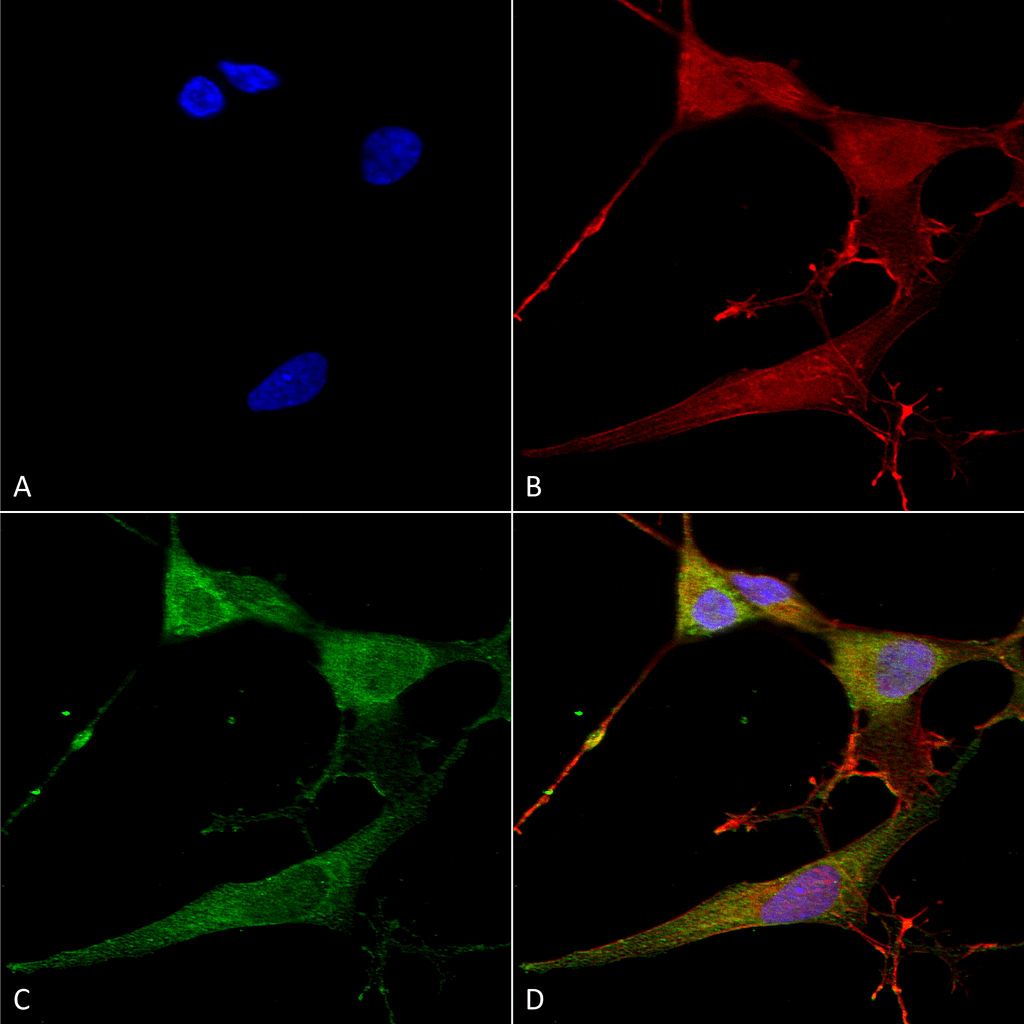
NrCAM Antibody, Clone N364/51

Cannot supply to this region.
- SKU:
- SMC-462
- Additional Names:
- Neuronal cell adhesion molecule, Bravo, hBravo, KIAA0343, MGC138845, MGC138846, Neuronal surface protein Bravo, Ng CAM related, Ng-CAM-related, NgCAM related cell adhesion molecule, NgCAM-related cell adhesion molecule, Nr CAM, Nr-CAM
- Application:
- WB, IF, ICC
- Concentration:
- 1 mg/ml
- Species Reactivity:
- Mouse
- Purification:
- Protein G Purified
- Storage Conditions:
- -20[o]C
- Supplier:
- StressMarq Biosciences
- Host:
- Mouse
- Reactivities:
- Human, Mouse, Rat
- ABP:
- IMP-GEN-2015-06 < 10% Serum <100ml
- Buffer:
- PBS pH7.4, 50% glycerol, 0.1% sodium azide
- Immunogen:
- Fusion protein amino acids 30-845 (extracellular domain) of mouse NrCAM. Rat: 96% identity (795/822 amino acids identical). Human: 91% identity (753/822 amino acids identical) ~50% identity with Neurofascin.
- Clone:
- N364/51 (Formerly sold as S364-51)
- Uniprot:
- Q810U4
- Synonyms:
- B;Bravo;C030017F07Rik;C130076O07Rik;mBravo;mKIAA0343;neuron-glia-CAM-related cell adhesion molecule;neuronal cell adhesion molecule;neuronal surface protein Bravo;ng-CAM-related;ngCAM-related cell adhesion molecule;nr-CAM
- Extra Details:
- Neuronal Cell Adhesion Molecule (NrCAM) is a member of the immunoglobulin superfamily involved in axon guidance, synaptic stability, and neural circuit formation. It contains six Ig-like domains, five fibronectin type III repeats, and an intracellular domain that interacts with cytoskeletal and signaling proteins. NrCAM is expressed in the brain, spinal cord, and peripheral nervous system, where it mediates cell-cell interactions critical for axon pathfinding and synaptic targeting. It serves as a ligand for axonin-1 and F3/contactin, influencing growth cone motility and axon crossing at the midline. In neurodegenerative disease research, NrCAM has been linked to synaptic disassembly, neuroinflammation, and glioma progression. Its interaction with ankyrin-G and voltage-gated sodium channels at the node of Ranvier suggests a role in maintaining neuronal excitability and conduction. Dysregulation of NrCAM expression has been observed in Alzheimer's disease and high-grade gliomas, highlighting its dual role in neurodevelopment and pathology. NrCAM is also implicated in neuropsychiatric conditions such as autism and schizophrenia, making it a potential biomarker and therapeutic target for disorders involving synaptic dysfunction and neural connectivity.
- Shipping Conditions:
- Blue Ice