

SMC-460
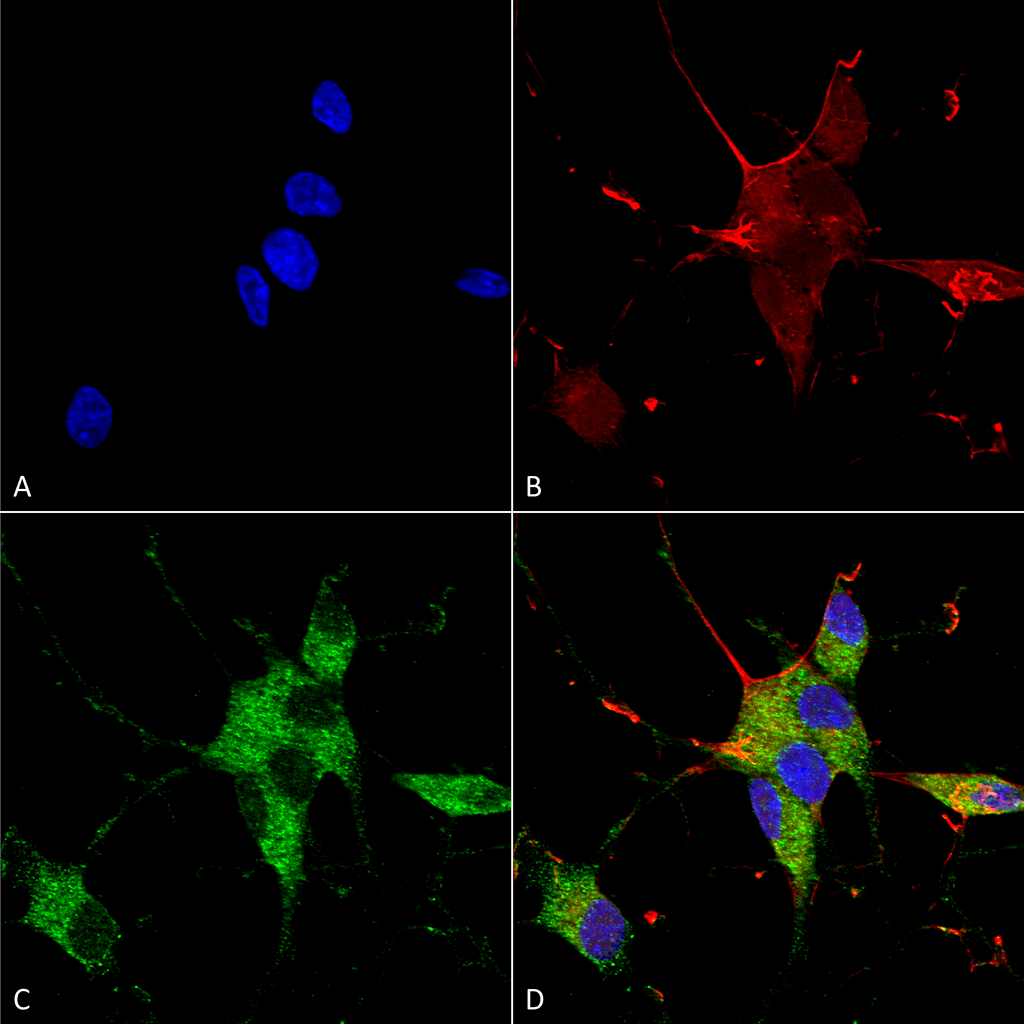
SHANK1/SHANK3 Antibody, Clone N367/51

Cannot supply to this region.
- SKU:
- SMC-460
- Additional Names:
- AI841104, DEL22q13.3, KIAA1650, Proline rich synapse associated protein 2, Proline-rich synapse-associated protein 2, ProSAP2, PSAP2, SH3 and multiple ankyrin repeat domains 3, SH3 and multiple ankyrin repeat domains protein 3, SH3/ankyrin domain gene 3, SHAN3_HUMAN, Shank postsynaptic density protein, Shank3, Shank3b, SPANK 2, SPANK2
- Application:
- IHC, WB, IF, ICC
- Concentration:
- 1 mg/ml
- Species Reactivity:
- Rat
- Purification:
- Protein G Purified
- Storage Conditions:
- -20[o]C
- Supplier:
- StressMarq Biosciences
- Host:
- Mouse
- Reactivities:
- Human, Mouse, Rat
- ABP:
- IMP-GEN-2015-06 < 10% Serum <100ml
- Buffer:
- PBS pH7.4, 50% glycerol, 0.1% sodium azide
- Immunogen:
- Fusion protein amino acids 538-626 (SH3 domain) of rat SHANK3. Mouse: 100% identity (89/89 amino acids identical). Human: 97% identity (87/89 amino acids identical). ~70% identity with SHANK1 and SHANK2.
- Clone:
- N367/51 (Formerly sold as S367-51)
- Uniprot:
- Q9JLU4
- Synonyms:
- proline-rich synapse-associated protein 2;Prosap2;SH3 and multiple ankyrin repeat domains protein 3;SH3/ankyrin domain gene 3;Shank postsynaptic density protein 3a;Spank-2
- Extra Details:
- SHANK1 and SHANK3 are critical scaffolding proteins within the postsynaptic density (PSD), where they orchestrate the assembly of multiprotein complexes essential for synaptic signaling and plasticity. As members of the SHANK/ProSAP family, these proteins anchor neurotransmitter receptors-both ionotropic and metabotropic-to the cortical actin cytoskeleton, thereby stabilizing synaptic architecture and function. SHANK proteins play a pivotal role in recruiting key signaling molecules such as B BetaPIX and PAK to dendritic spines, modulating spine morphology and synaptic strength. Their interactions with glutamate receptor complexes position them as central regulators of excitatory synaptic transmission. Importantly, alternative splicing of SHANK transcripts diversifies their interaction networks across developmental stages and brain regions. This molecular versatility is essential for normal neurodevelopment and synaptic maturation. Emerging evidence links SHANK1 and SHANK3 dysregulation to a spectrum of neurodevelopmental and neurodegenerative disorders, including autism spectrum disorder (ASD), schizophrenia, and Alzheimer's disease. Their involvement in synaptic integrity and plasticity makes them promising targets for therapeutic intervention and biomarkers for early disease detection. Understanding SHANK1/3 function is therefore crucial for advancing neuroscience and developing strategies to combat synaptic dysfunction in brain disorders.
- Shipping Conditions:
- Blue Ice