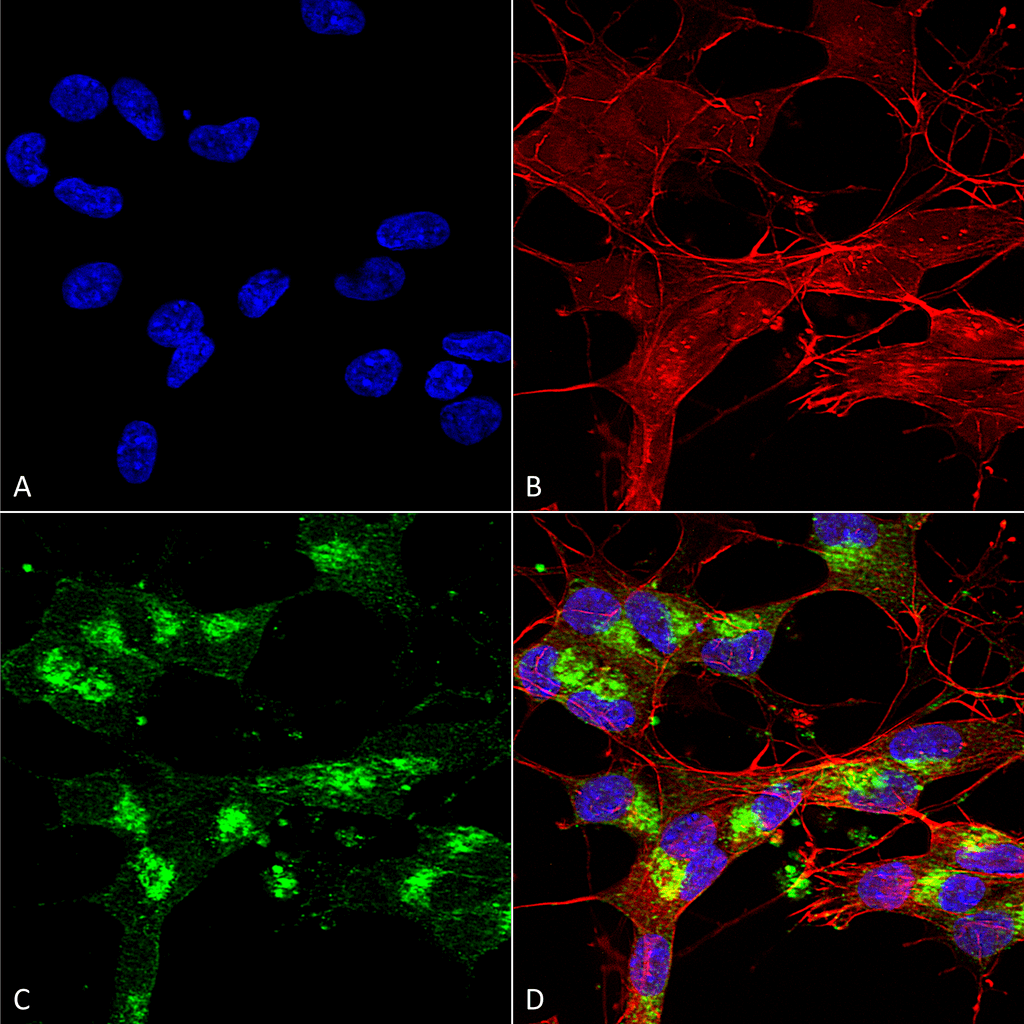

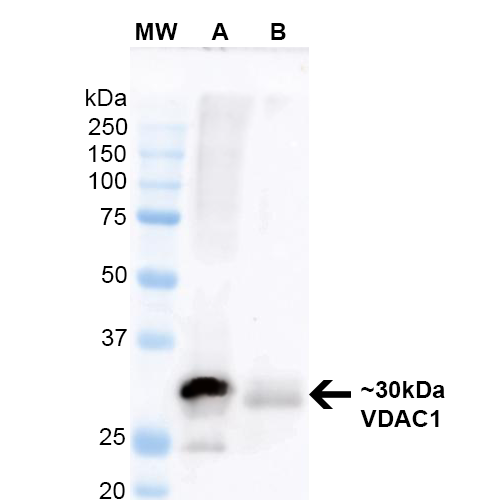
SMC-456
VDAC1 Antibody, Clone N152B/23

Cannot supply to this region.
- SKU:
- SMC-456
- Additional Names:
- Voltage Dependent Anion Channel 1, Porin, Voltage dependent anion selective channel protein 1, Voltage-dependent anion-selective channel protein 1, hVDAC1, MGC111064, Mitochondrial Porin, Outer mitochondrial membrane protein porin 1, Plasmalemmal porin, Porin 31HL, Porin 31HM, PORIN-31-HL, VDAC 1, VDAC, VDAC-1
- Application:
- IHC, WB, IF, ICC
- Concentration:
- 1 mg/ml
- Species Reactivity:
- Human
- Purification:
- Protein G Purified
- Storage Conditions:
- -20[o]C
- Supplier:
- StressMarq Biosciences
- Host:
- Mouse
- Reactivities:
- Human, Mouse, Rat
- ABP:
- IMP-GEN-2015-06 < 10% Serum <100ml
- Buffer:
- PBS pH7.4, 50% glycerol, 0.1% sodium azide
- Immunogen:
- Fusion protein amino acids 1-283 (full-length) of human VDAC1. Mouse: 98% identity (279/283 amino acids identical). Rat: 98% identity (279/283 amino acids identical) >60% identity with VDAC2 and VDAC3.
- Clone:
- N152B/23 (Formerly sold as S152B-23)
- Uniprot:
- P21796
- Synonyms:
- outer mitochondrial membrane protein porin 1;plasmalemmal porin;PORIN;porin 31HL;porin 31HM;sperm binding protein 1a;VDAC-1;voltage-dependent anion-selective channel protein 1
- Extra Details:
- Voltage-dependent anion-selective channel protein 1 (VDAC1), also known as mitochondrial porin 1, is a pivotal protein embedded in the outer mitochondrial membrane. It serves as the primary gateway for the exchange of ions and metabolites between mitochondria and the cytosol, playing a critical role in cellular energy metabolism, calcium homeostasis, and apoptosis. VDAC1 also functions as a docking site for key regulatory proteins, including hexokinase and BCL2L1, linking mitochondrial activity to glycolysis and cell survival pathways. In the context of neurodegenerative diseases, VDAC1 has emerged as a key player in mitochondrial dysfunction-a hallmark of disorders such as Alzheimer's, Parkinson's, and Huntington's disease. Its involvement in the formation of the mitochondrial permeability transition pore complex (PTPC) facilitates the release of pro-apoptotic factors, triggering neuronal cell death. Dysregulation of VDAC1 expression or function has been associated with increased oxidative stress, impaired bioenergetics, and neuroinflammation. Given its central role in mitochondrial physiology and apoptosis, VDAC1 is increasingly recognized as a promising therapeutic target in neuroscience and neurodegeneration research. Understanding its molecular interactions and regulatory mechanisms may unlock new strategies for mitigating neuronal loss and preserving cognitive function.
- Shipping Conditions:
- Blue Ice