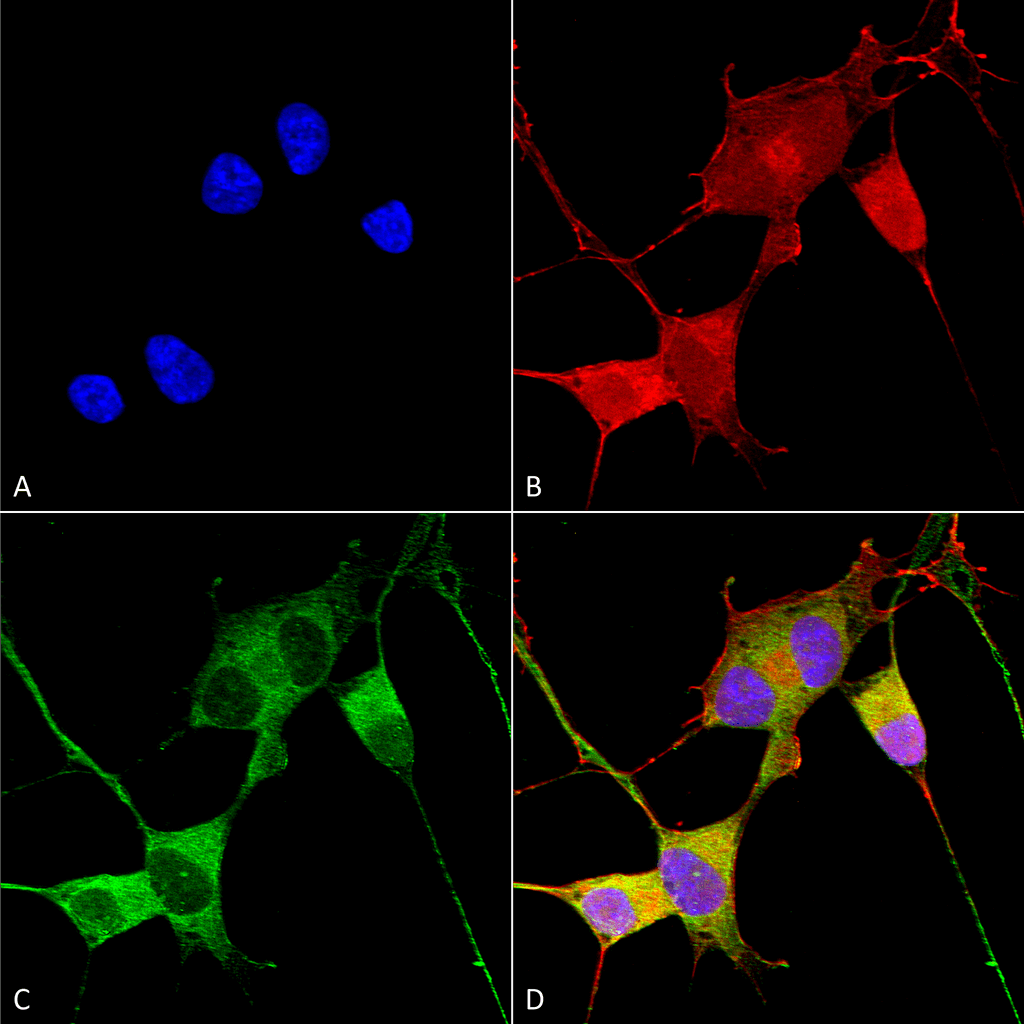
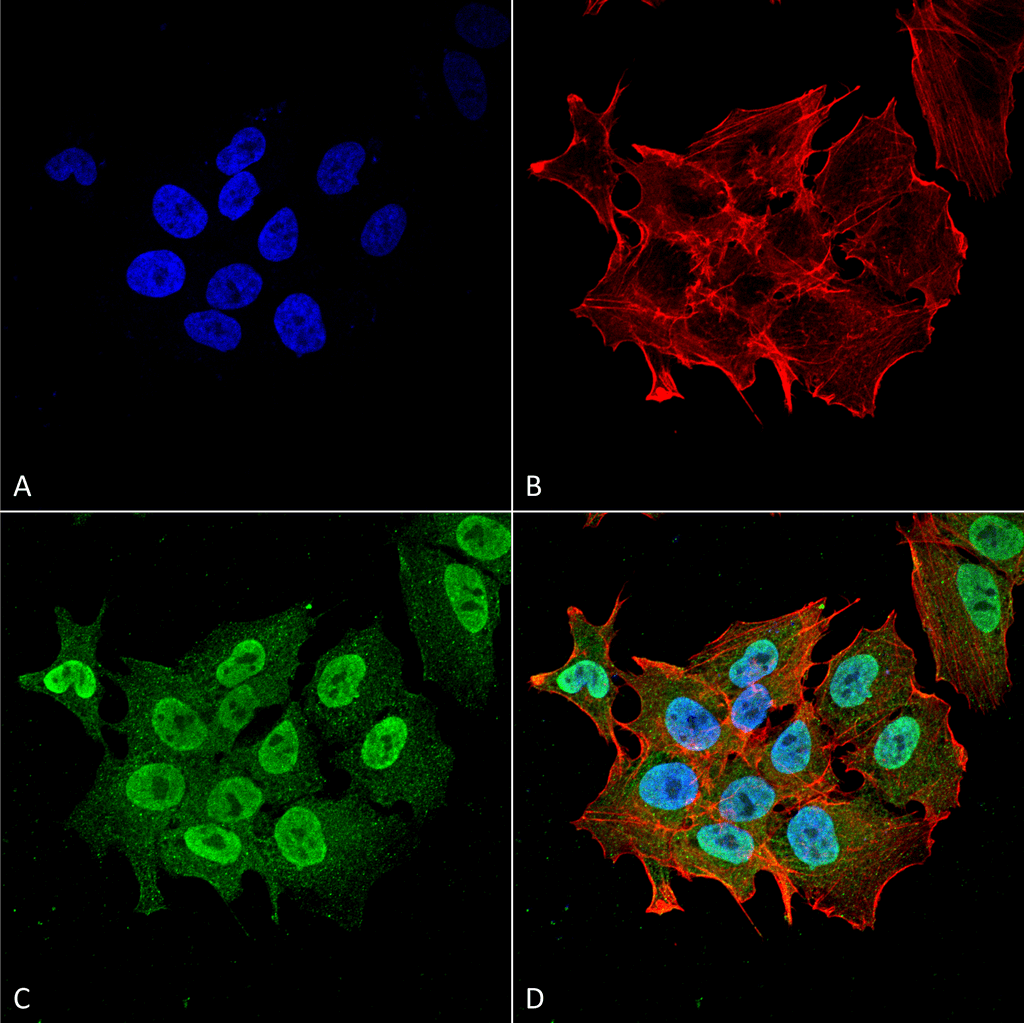

SMC-455
Ataxin-1 Antibody, Clone N76/8

Cannot supply to this region.
- SKU:
- SMC-455
- Additional Names:
- Ataxin 1, Ataxin-1, ATX1, Atxn1, D6S504E, OTTHUMP00000016065, SCA1, Spinocerebellar ataxia type 1 protein
- Application:
- IHC, WB, IF, ICC, IP
- Concentration:
- 1 mg/ml
- Species Reactivity:
- Mouse
- Purification:
- Protein G Purified
- Storage Conditions:
- -20[o]C
- Supplier:
- StressMarq Biosciences
- Host:
- Mouse
- Reactivities:
- Human, Mouse, Rat
- ABP:
- IMP-GEN-2015-06 < 10% Serum <100ml
- Buffer:
- PBS pH7.4, 50% glycerol, 0.1% sodium azide
- Immunogen:
- Synthetic peptide amino acids 164-197 (ATTPSQRSQLEAYSTLLANMGSLSQAPGHKVEPP) of mouse Ataxin-1. Rat: 100% identity (34/34 amino acids identical). Human: 88% identity (30/34 amino acids identical).
- Clone:
- N76/8 (Formerly sold as S76-8)
- Uniprot:
- P54254
- Synonyms:
- 2900016G23Rik;ataxin-1;Atx;Atx1;C85907;Gm10786;Sc;Sca1;spinocerebellar ataxia 1 homolog;Spinocerebellar ataxia type 1 protein homolog
- Extra Details:
- Ataxin-1 (ATXN1) is a critical protein in neurodegenerative disease research, particularly for its role in spinocerebellar ataxia type 1 (SCA1), a progressive, autosomal dominant disorder. SCA1 primarily affects Purkinje cells in the cerebellum and brainstem, leading to motor dysfunction and neuronal degeneration. Ataxin-1 belongs to the ATXN1 protein family and contains a conserved AXH domain, which is implicated in RNA binding and transcriptional regulation. Emerging evidence suggests that Ataxin-1 plays a pivotal role in RNA metabolism and nuclear function. It localizes to RNA- and transcription-dependent nuclear inclusions, indicating its involvement in gene expression regulation. While Ataxin-1 is broadly expressed across tissues, its expression in the brain is neuron-specific, underscoring its specialized function in the central nervous system. Mutations in the ATXN1 gene, particularly polyglutamine (polyQ) expansions, drive the pathogenic mechanisms of SCA1 by altering protein conformation, disrupting normal protein interactions, and impairing neuronal homeostasis. As such, Ataxin-1 serves as a valuable model for understanding protein misfolding, RNA dysregulation, and selective neuronal vulnerability in neurodegenerative diseases. Research into Ataxin-1 continues to illuminate fundamental processes in neuroscience and offers promising avenues for therapeutic intervention in SCA1 and related disorders.
- Shipping Conditions:
- Blue Ice