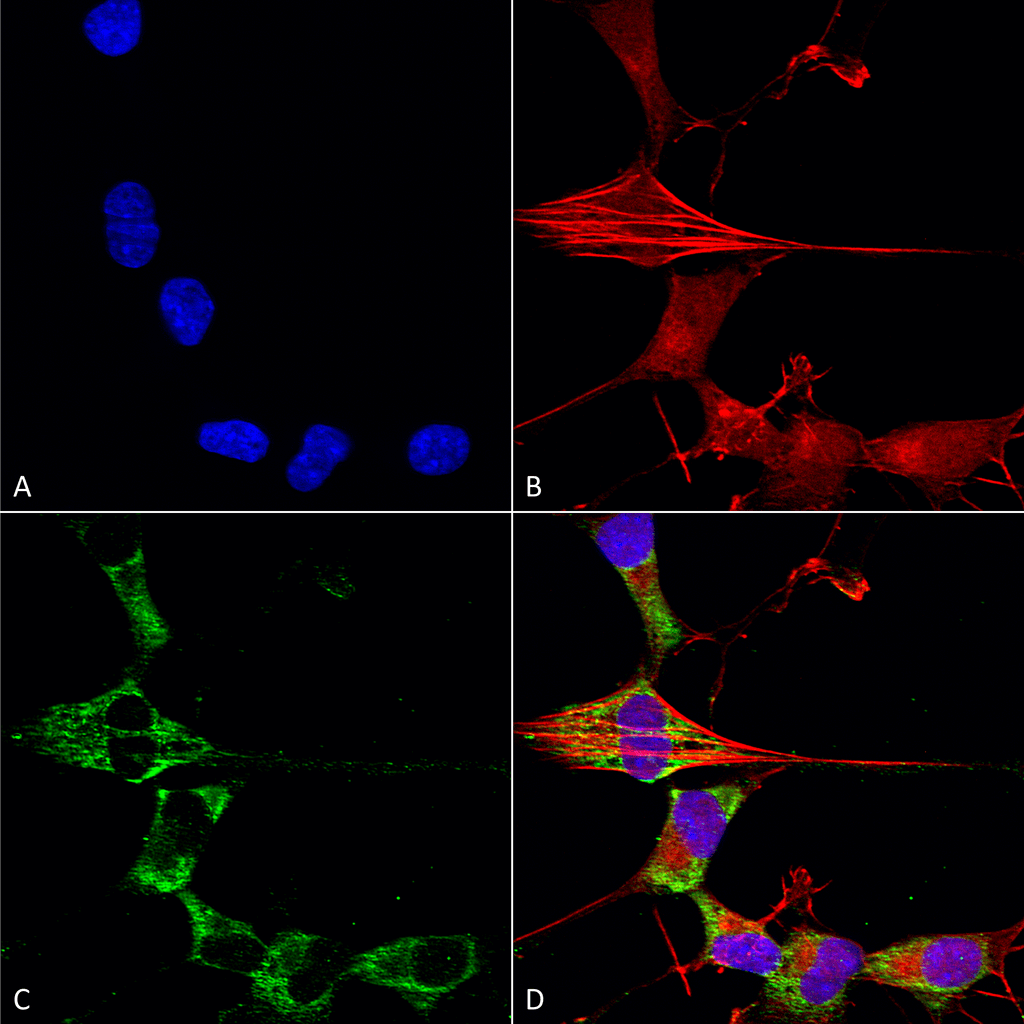


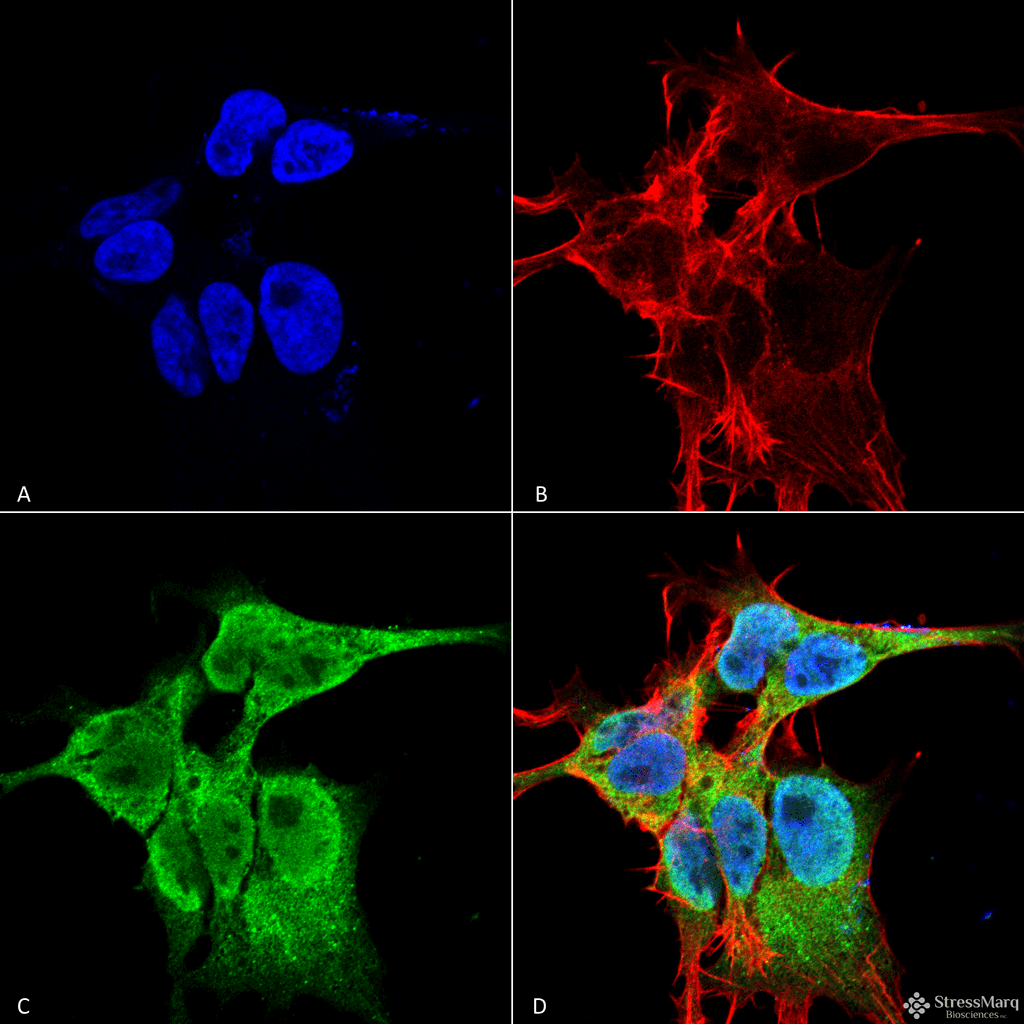
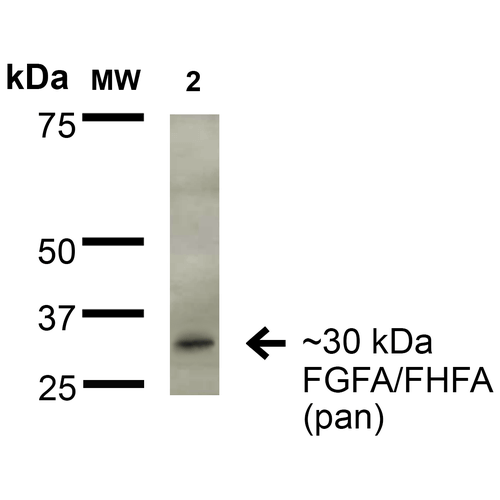
SMC-448
FHF2A (FGF13) Antibody, Clone N235/22

Cannot supply to this region.
- SKU:
- SMC-448
- Additional Names:
- FGF-13, FHF-2, FGF13, FHF2, Fibroblast growth factor homologous factor 2A, Fibroblast growth factor 13A, FGF13A
- Application:
- IHC, WB, IF, ICC
- Concentration:
- 1 mg/ml
- Species Reactivity:
- Human
- Purification:
- Protein G Purified
- Storage Conditions:
- -20[o]C
- Supplier:
- StressMarq Biosciences
- Host:
- Mouse
- Reactivities:
- Human, Mouse, Rat
- ABP:
- IMP-GEN-2015-06 < 10% Serum <100ml
- Buffer:
- PBS pH7.4, 50% glycerol, 0.1% sodium azide
- Immunogen:
- Synthetic peptide amino acids 2-18 (AAAIASSLIRQKRQARE) of human FHF2A. 100% identical to rat, 94% identical to mouse. >80% identity with FGF12A/FHF1A, FGF14A/FHF4A and FGF11A/FHF3A.
- Clone:
- N235/22
- Uniprot:
- Q92913
- Synonyms:
- DEE90;FGF-13;FGF2;FHF-2;FHF2;fibroblast growth factor 13;fibroblast growth factor homologous factor 2;LINC00889
- Extra Details:
- Fibroblast growth factor 13 (FGF13) is a non-secreted member of the FGF family that functions intracellularly to regulate neuronal excitability, microtubule stabilization, and axonal development. Unlike classical FGFs, FGF13 does not act through FGF receptors but instead modulates ion channel activity and cytoskeletal dynamics. In the central nervous system, FGF13 is essential for proper neuronal migration and synaptic function. Mutations or altered expression of FGF13 have been linked to epilepsy, intellectual disability, and neurodevelopmental disorders. Recent studies suggest that FGF13 may also play a role in neurodegenerative diseases by influencing axonal transport and mitochondrial dynamics-processes disrupted in Alzheimer's and ALS. FGF13's unique intracellular functions make it a compelling candidate for targeted therapies aimed at preserving neuronal integrity and function in neurodegenerative conditions.
- Shipping Conditions:
- Blue Ice