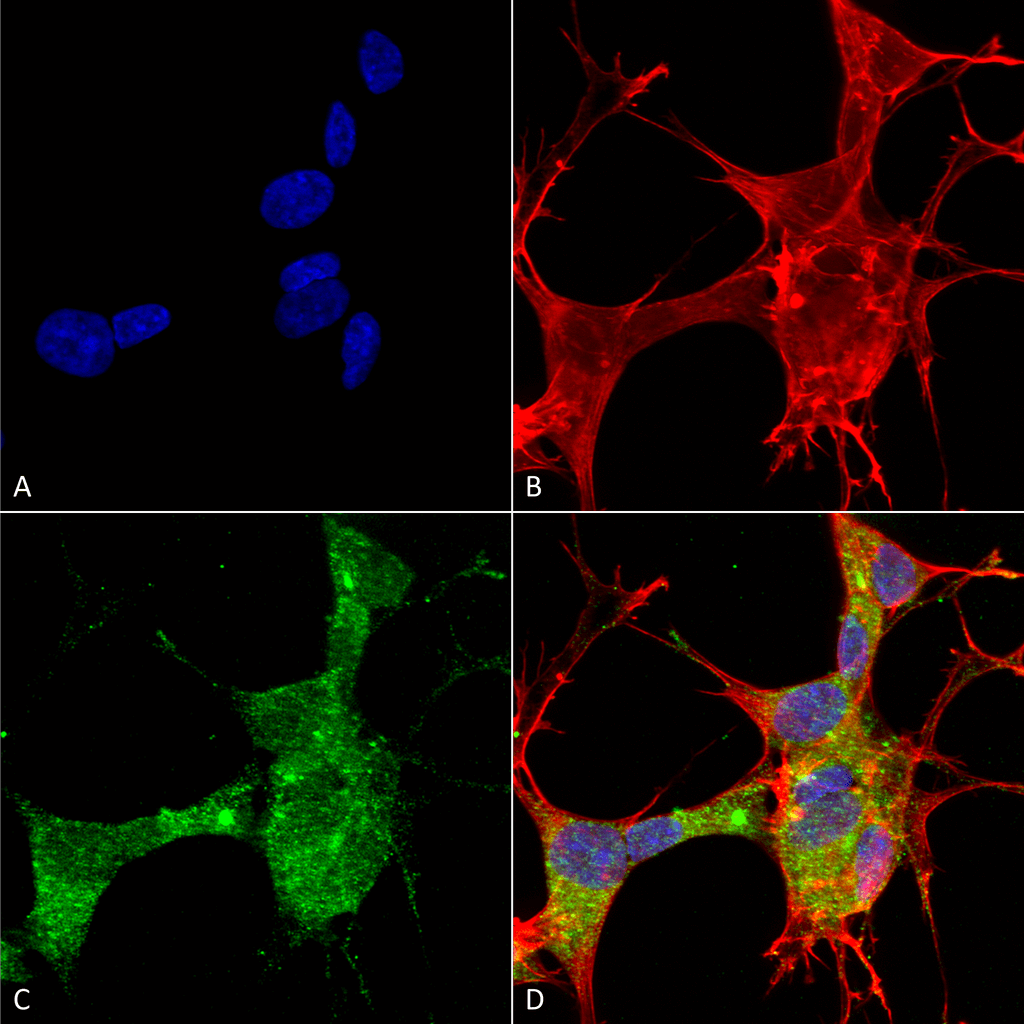

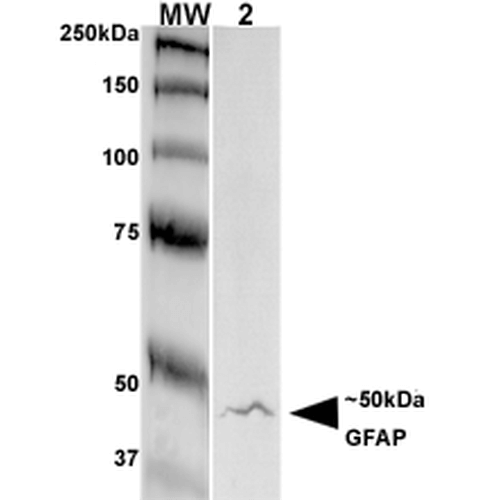
SMC-441
GFAP Antibody, Clone N206A/8

Cannot supply to this region.
- SKU:
- SMC-441
- Additional Names:
- GFAP, Glial fibrillary acidic protein, Intermediate filament protein, Astrocyte, GFAPL, DKFZp459C0729, MGC139638, FLJ45472, AI836096
- Application:
- IHC, WB, IF, ICC
- Concentration:
- 1 mg/ml
- Species Reactivity:
- Human
- Purification:
- Protein G Purified
- Storage Conditions:
- -20[o]C
- Supplier:
- StressMarq Biosciences
- Host:
- Mouse
- Reactivities:
- Human, Mouse, Rat
- ABP:
- IMP-GEN-2015-06 < 10% Serum <100ml
- Buffer:
- PBS pH7.4, 50% glycerol, 0.1% sodium azide
- Immunogen:
- Synthetic peptide amino acids 411-422 (KTVEMRDGEVIK) of human GFAP; 100% identical in rat and mouse
- Clone:
- N206A/8 (Formerly sold as S206A-8)
- Uniprot:
- P14136
- Synonyms:
- ALXDRD;glial fibrillary acidic protein
- Extra Details:
- Glial fibrillary acidic protein (GFAP) is a 50 kDa type III intermediate filament protein that serves as a major structural component of astrocytes in the central nervous system. GFAP plays a critical role in maintaining astrocyte integrity and function, particularly during responses to neural injury and disease. Its polymerization is tightly regulated through phosphorylation and interactions with calcium-binding proteins such as annexin II-p2 and S-100. One of the earliest cellular responses to brain injury is astrogliosis, a process marked by astrocyte proliferation and increased GFAP expression. Elevated GFAP levels are a hallmark of reactive astrocytes and are commonly observed in neurodegenerative conditions including Alzheimer's disease, Parkinson's disease, and multiple sclerosis. Notably, GFAP upregulation reflects both structural remodeling and inflammatory signaling within the diseased brain. Emerging evidence also suggests that autoantibodies targeting GFAP may be present in individuals with dementia and other neurodegenerative disorders, indicating a potential role in neuroimmune interactions and disease progression. Due to its specificity and dynamic expression, GFAP is widely used as a biomarker for astrocyte activation and neuroinflammation. Its involvement in glial responses makes it a valuable target for understanding the cellular mechanisms underlying neurodegeneration and for developing diagnostic and therapeutic strategies aimed at modulating glial function.
- Shipping Conditions:
- Blue Ice