
SMC-428
Brevican Antibody, Clone N294A/6

Cannot supply to this region.
- SKU:
- SMC-428
- Additional Names:
- Brevican, BCAN, BEHAB, CSPG7, Brain-enriched hyaluronan-binding protein, Brevican core protein, Brevican core protein isoform 1, Brevican core protein isoform 2, Brevican proteoglycan, Chondroitin sulfate proteoglycan 7, Chondroitin sulfate proteoglycan BEHAB, MGC13038
- Application:
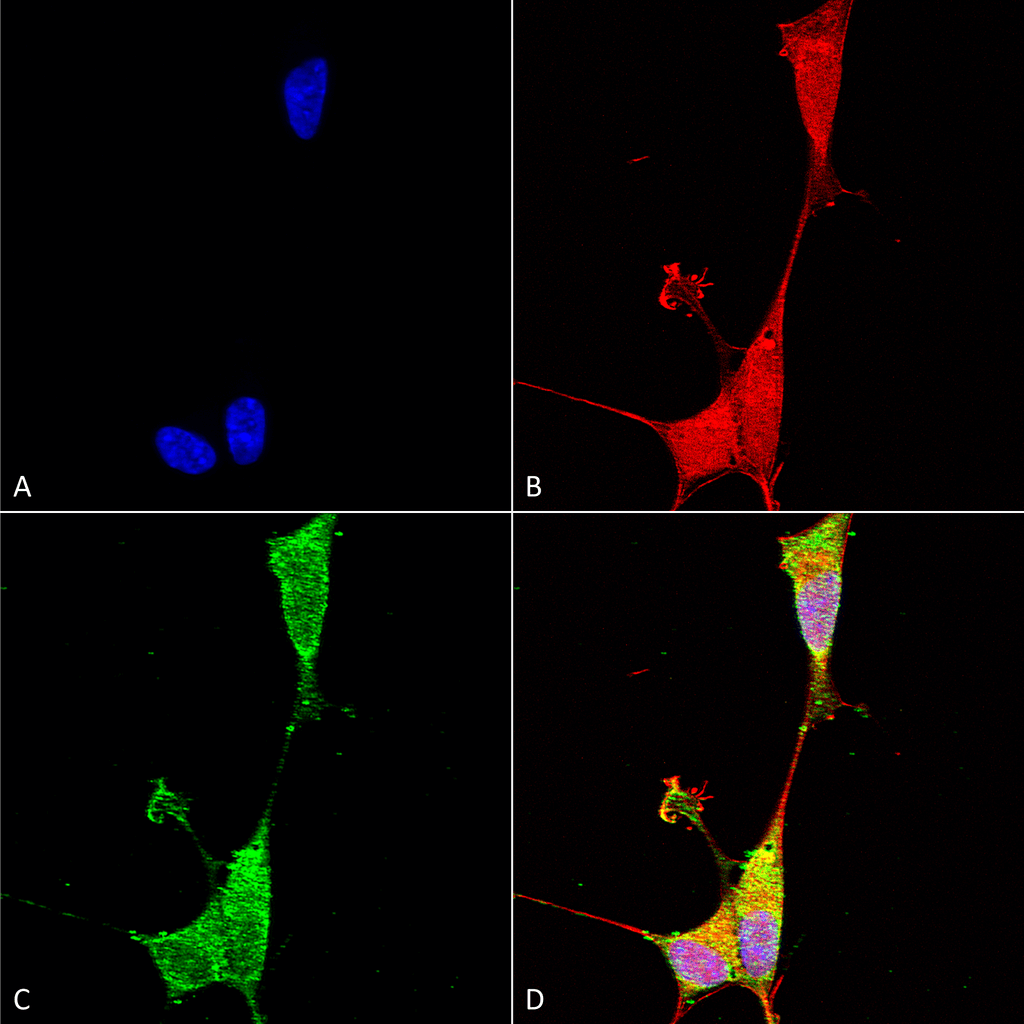
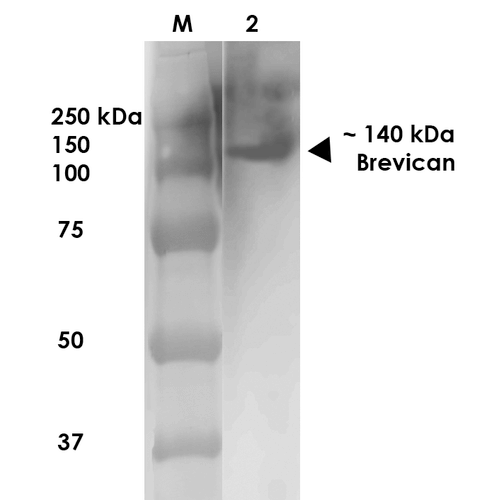
- WB, IF, ICC
- Concentration:
- 1 mg/ml
- Species Reactivity:
- Rat
- Purification:
- Protein G Purified
- Storage Conditions:
- -20[o]C
- Supplier:
- StressMarq Biosciences
- Host:
- Mouse
- Reactivities:
- Human, Mouse, Rat
- ABP:
- IMP-GEN-2015-06 < 10% Serum <100ml
- Buffer:
- PBS pH7.4, 50% glycerol, 0.09% sodium azide
- Immunogen:
- Fusion protein amino acids 219-655 of rat Brevican
- Clone:
- N294A/6 (Formerly sold as S294A-6)
- Uniprot:
- P55068
- Synonyms:
- ALPBRE;BEHAB;brain-enriched hyaluronan-binding protein;brevican (brain specific proteoglycan in the aggrecan family);brevican core protein;brevican core protein-like
- Extra Details:
- Brevican is the most abundant chondroitin sulfate proteoglycan (CSPG) in the adult brain's extracellular matrix and a prominent member of the lectican family. Highly enriched in the central nervous system, Brevican plays a critical role in maintaining synaptic architecture and modulating neural plasticity. It is secreted by both astrocytes and neurons as a 145 kDa core protein, either with or without covalently attached chondroitin sulfate (CS) chains. Functionally, Brevican contributes to the formation and stabilization of perineuronal nets (PNNs), specialized extracellular matrix structures that regulate synaptic signaling and restrict plasticity in the mature brain. This inhibitory role is essential for preserving neural circuitry but may also limit regenerative capacity following injury or in neurodegenerative conditions. Importantly, Brevican is proteolytically cleaved by ADAMTS (a disintegrin and metalloproteinase with thrombospondin motifs) family enzymes, generating a 55 kDa N-terminal fragment containing the disease-relevant EAMESE epitope. This cleavage event is associated with synaptic remodeling and has been implicated in pathological processes such as gliosis, epilepsy, and Alzheimer's disease. Given its dual role in synaptic stabilization and plasticity inhibition, Brevican is emerging as a key molecular target in neurodegenerative disease research. Modulating its expression or cleavage may offer novel therapeutic strategies to enhance neural repair and cognitive resilience in aging and disease.
- Shipping Conditions:
- Blue Ice