
SMC-422D-APC
Stargazin Antibody, Clone N245/36: APC

Cannot supply to this region.
- SKU:
- SMC-422D-APC
- Additional Names:
- CACNG2, Calcium channel voltage dependent gamma subunit 2, CaV gamma 2, Ipr328, MGC123981, MGC138502, MGC138504, Voltage-dependent calcium channel gamma-2 subunit, Neuronal voltage-gated calcium channel gamma-2 subunit, Stargazin, Stg, Stargazer, TARP, TARP gamma-2, Transmembrane AMPAR regulatory protein gamma-2, AW060990, B230105C07Rik, B930041E13Rik, Wag, Waggler
- Application:
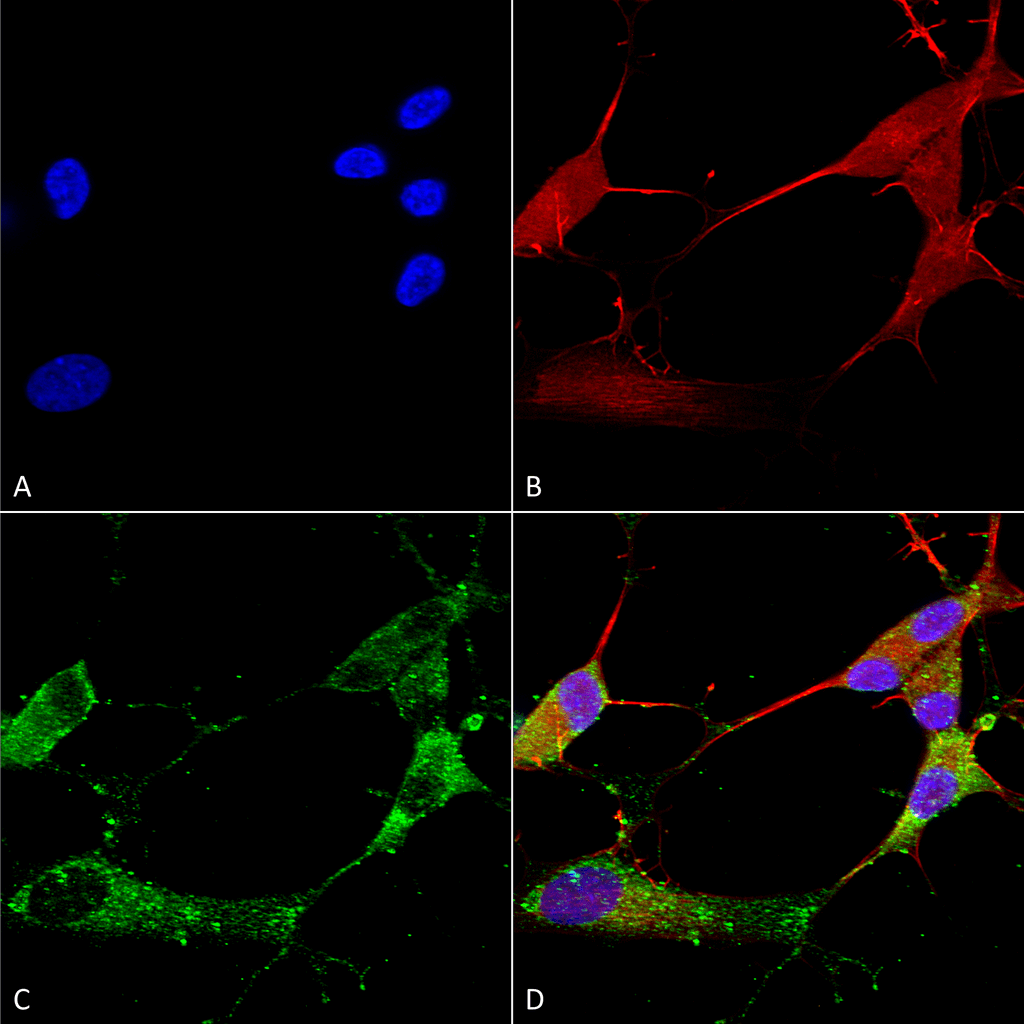
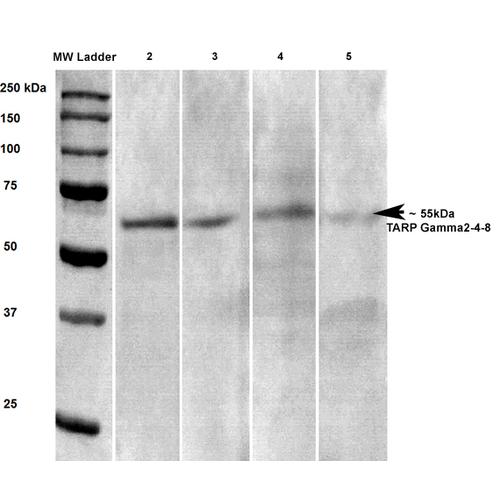
- WB, IF, ICC
- Concentration:
- 1 mg/ml
- Species Reactivity:
- Rat
- Purification:
- Protein G Purified
- Storage Conditions:
- See Manual
- Supplier:
- StressMarq Biosciences
- Host:
- Mouse
- Reactivities:
- Human, Mouse, Rat
- Buffer:
- 95.46mM Phosphate, 2.48mM MES and 2mM EDTA
- Immunogen:
- Fusion protein amino acids 203-323 (Cytoplasmic C-terminus) of rat TARPGamma2
- Clone:
- N245/36 (Formerly sold as S245-36)
- Uniprot:
- Q71RJ2
- Synonyms:
- calcium channel, voltage-dependent, gamma subunit 2;Ipr328;neuronal voltage-gated calcium channel gamma-2 subunit;stargazin;TARP gamma-2;transmembrane AMPAR regulatory protein gamma-2;voltage-dependent calcium channel gamma-2 subunit
- Extra Details:
- Stargazin, also known as CACNG2, is a transmembrane protein originally classified as a subunit of voltage-gated calcium channels (VGCCs). While it was first thought to stabilize VGCCs in an inactivated state, Stargazin is now recognized for its pivotal role in regulating AMPA-type glutamate receptors (AMPARs) at excitatory synapses. In the central nervous system, Stargazin anchors AMPARs to the postsynaptic membrane and modulates their trafficking, gating, and synaptic localization. This regulation is essential for synaptic plasticity, learning, and memory-processes that are often disrupted in neurodegenerative diseases. Dysfunction of Stargazin or its interaction with AMPARs has been implicated in several neurological disorders, including epilepsy, intellectual disability, and Alzheimer's disease. Altered Stargazin expression or phosphorylation can impair synaptic strength and contribute to excitotoxicity, a key driver of neuronal death in neurodegeneration. Moreover, Stargazin's role in maintaining calcium homeostasis and modulating excitatory neurotransmission positions it as a potential therapeutic target for restoring synaptic balance in neurodegenerative conditions. As a critical link between ion channel regulation and synaptic signaling, Stargazin continues to gain attention in neuroscience for its contributions to both normal brain function and disease pathology.
- Shipping Conditions:
- Blue Ice