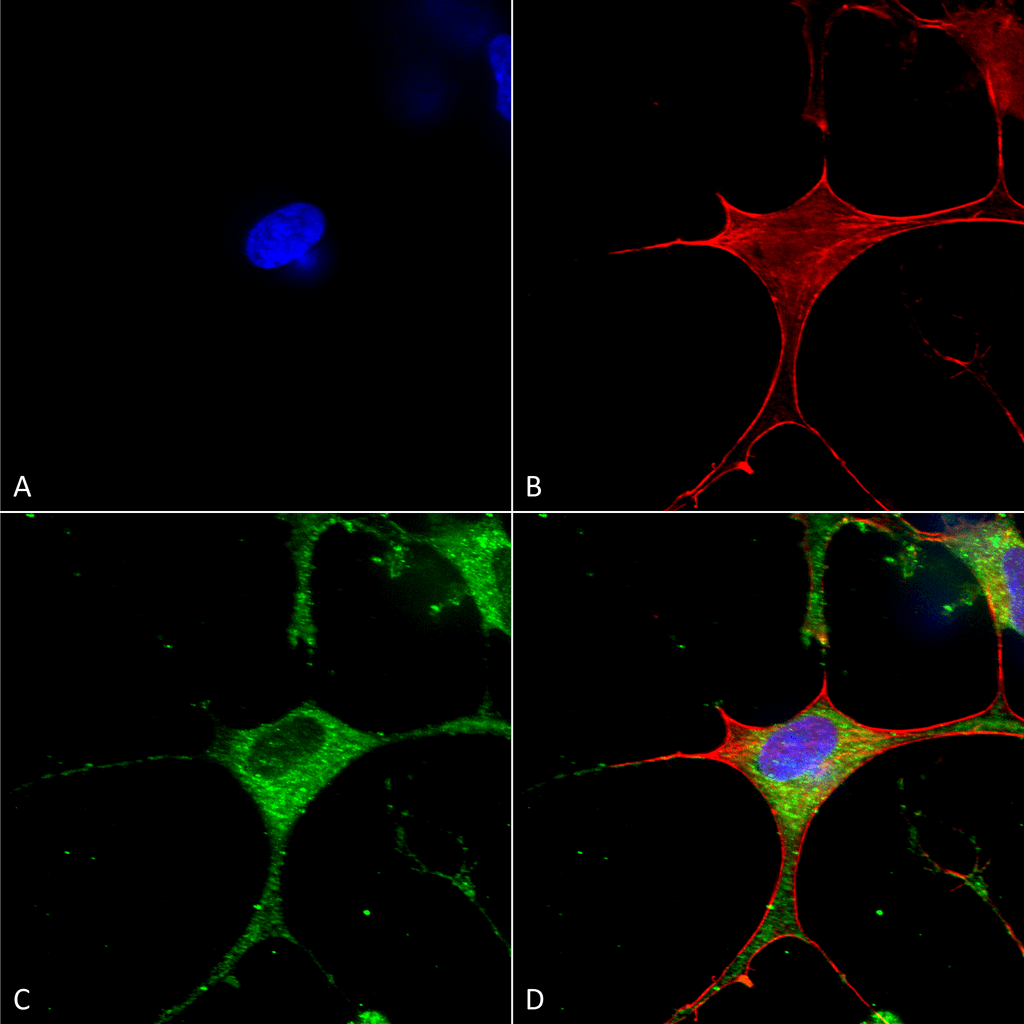


SMC-408
Clcn3 Antibody, Clone N258/5

Cannot supply to this region.
- SKU:
- SMC-408
- Additional Names:
- CIC3, CLC3, CLCN 3, Chloride channel 3, Chloride channel protein 3, Chloride channel, voltage-sensitive 3, Chloride transporter ClC 3, DKFZp564I0463, H(+)/Cl(-) exchange transporter 3, Chloride transporter ClC-3, ClC-3
- Application:
- IHC, WB, IF, ICC
- Concentration:
- 1 mg/ml
- Species Reactivity:
- Rat
- Purification:
- Protein G Purified
- Storage Conditions:
- -20[o]C
- Supplier:
- StressMarq Biosciences
- Host:
- Mouse
- Reactivities:
- Human, Mouse, Rat
- ABP:
- IMP-GEN-2015-06 < 10% Serum <100ml
- Buffer:
- PBS pH7.4, 50% glycerol, 0.09% sodium azide
- Immunogen:
- Synthetic peptide amino acids 98-115 (cytoplasmic N-terminus) of rat Clcn3
- Clone:
- N258/5 (Formerly sold as S258-5)
- Uniprot:
- P51792
- Synonyms:
- chloride channel 3;chloride channel protein 3;chloride channel, voltage-sensitive 3;chloride transporter ClC-3;ClC-3;H(+)/Cl(-) exchange transporter 3;protein kinase C-regulated chloride channel
- Extra Details:
- ClC-3 (ClCN3) is a voltage-gated chloride/proton exchanger that plays a critical role in regulating endosomal and synaptic vesicle acidification. By mediating Cl-/H⁺ exchange, ClC-3 contributes to vesicle trafficking, neurotransmitter release, and membrane excitability-key processes in neuronal communication and plasticity. In the brain, ClC-3 is expressed in neurons and glial cells, where it influences synaptic vesicle cycling and endolysosomal function. Dysregulation of ClC-3 has been linked to impaired short-term memory, altered neuronal excitability, and neurodegenerative phenotypes in animal models. Its modulation by protein kinase C suggests a role in activity-dependent signaling pathways. Given its involvement in vesicle dynamics and ion homeostasis, ClC-3 is emerging as a potential target in neurodegenerative disease research, particularly in disorders characterized by synaptic dysfunction and lysosomal impairment.
- Shipping Conditions:
- Blue Ice