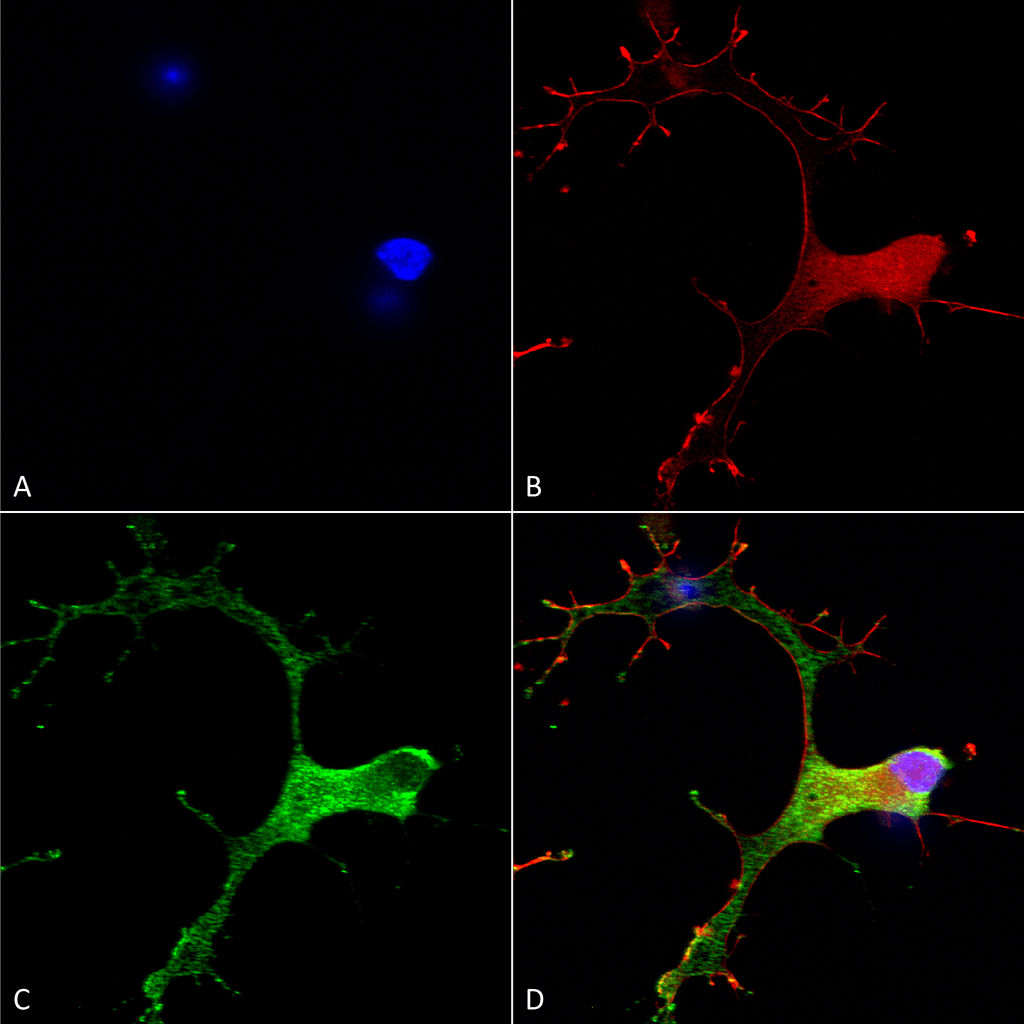

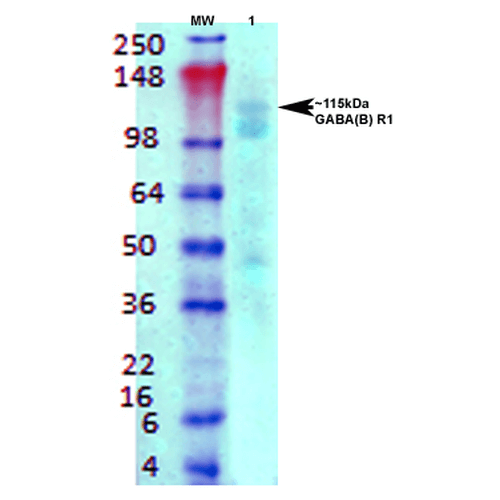
SMC-403
GABAB Receptor 1 Antibody, Clone N93A/49

Cannot supply to this region.
- SKU:
- SMC-403
- Additional Names:
- GABA-B receptor 1, GABA-B-R1, GABR1_HUMAN, Gamma aminobutyric acid receptor 1, GB1, GPRC3A, Gamma-aminobutyric acid type B receptor subunit 1, GABBR1
- Application:
- WB, IF, ICC
- Concentration:
- 1 mg/ml
- Species Reactivity:
- Rat
- Purification:
- Protein G Purified
- Storage Conditions:
- -20[o]C
- Supplier:
- StressMarq Biosciences
- Host:
- Mouse
- Reactivities:
- Human, Mouse, Rat
- ABP:
- IMP-GEN-2015-06 < 10% Serum <100ml
- Buffer:
- PBS pH7.4, 50% glycerol, 0.09% sodium azide
- Immunogen:
- Fusion protein amino acids 873-977 (cytoplasmic C-terminus) of rat GABA(B)R1
- Clone:
- N93A/49 (Formerly sold as S93A-49)
- Uniprot:
- Q9Z0U4
- Synonyms:
- GABA-B receptor 1;GABA-B-R1;GABA-BR1;GABABR1;gamma-aminobutyric acid (GABA) B receptor 1;gamma-aminobutyric acid type B receptor subunit 1;gb1
- Extra Details:
- GABA (G Gamma-aminobutyric acid) is the brain's primary inhibitory neurotransmitter, acting through three receptor types: GABA-A, GABA-B, and GABA-C. While GABA-A and GABA-C receptors are ionotropic and mediate fast synaptic inhibition, GABA-B receptors are metabotropic, G protein-coupled receptors that regulate slow, prolonged inhibitory signaling. The functional GABA-B receptor is a heterodimer composed of GABA-B Receptor 1 (GABBR1), which binds the ligand, and GABA-B Receptor 2 (GABBR2), which couples to intracellular G proteins. GABBR1 exists in two isoforms-GABBR1a and GABBR1b-each contributing to distinct signaling dynamics. Upon activation, GABA-B receptors inhibit adenylate cyclase, reduce calcium influx at presynaptic terminals, and activate inwardly rectifying potassium channels postsynaptically, thereby modulating neurotransmitter release and neuronal excitability. GABBR1 plays a critical role in maintaining synaptic balance and has been implicated in key neurological processes such as hippocampal long-term potentiation, slow-wave sleep, and motor control. Importantly, dysregulation of GABA-B signaling-particularly involving GABBR1-has been linked to neurodegenerative diseases including Alzheimer's disease, Parkinson's disease, and Huntington's disease. Altered GABBR1 expression or function may contribute to excitotoxicity, impaired synaptic plasticity, and cognitive decline. As a result, GABBR1 is emerging as a promising therapeutic target and biomarker in neurodegeneration research, offering new avenues for modulating inhibitory tone and preserving neural function in aging and disease.
- Shipping Conditions:
- Blue Ice