
SMC-402
GABAB Receptor 2 Antibody, Clone N81/2

Cannot supply to this region.
- SKU:
- SMC-402
- Additional Names:
- GABA B receptor 2, GABA-B receptor 2, GABA-B-R2, GABA-BR2, GABAB R2, GABABR2, GABBR 2, GABBR2, GABR2_HUMAN, Gamma aminobutyric acid (GABA) B receptor 2, Gamma aminobutyric acid B receptor 2, Gamma aminobutyric acid GABA B receptor 2, Gamma aminobutyric acid type B receptor subunit 2, Gb 2, Gb2, GPR 51, GPR51, G protein coupled receptor 51, G-protein coupled receptor 51, GPRC 3B, GPRC3B, HG 20, HG20, HRIHFB2099, Metabotropic GABA B receptor subtype 2, BcDNA:GH07312, CG6706, CT20836, D
- Application:
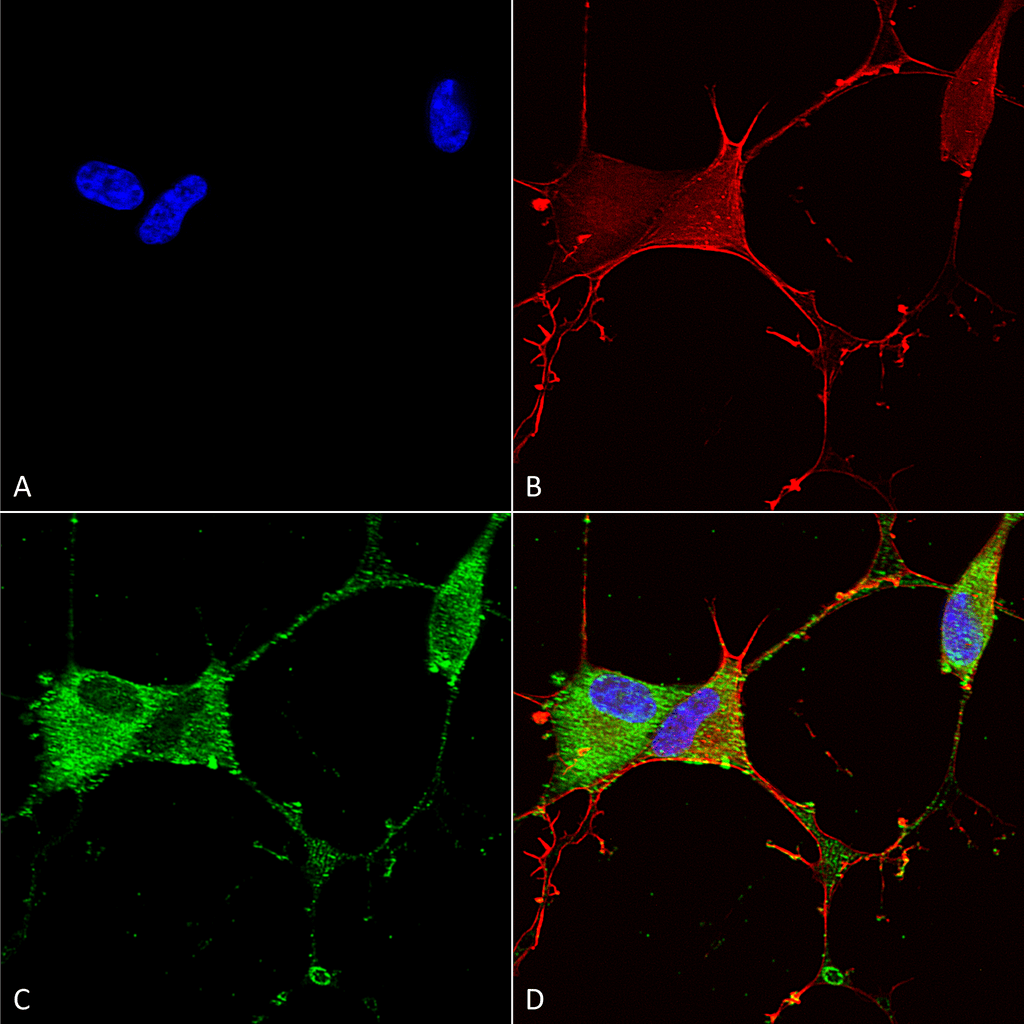
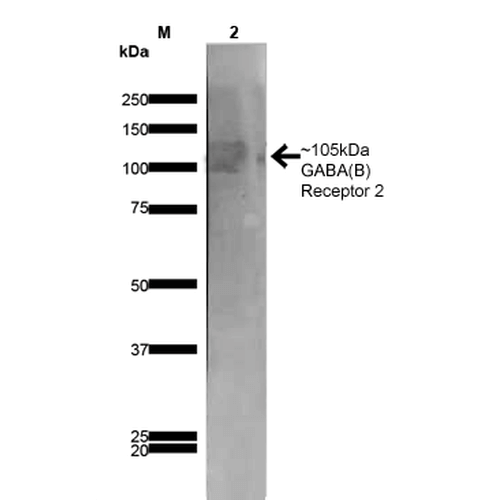
- IHC, WB, IF, ICC
- Concentration:
- 1 mg/ml
- Species Reactivity:
- Rat
- Purification:
- Protein G Purified
- Storage Conditions:
- -20[o]C
- Supplier:
- StressMarq Biosciences
- Host:
- Mouse
- Reactivities:
- Human, Mouse, Rat
- ABP:
- IMP-GEN-2015-06 < 10% Serum <100ml
- Buffer:
- PBS pH7.4, 50% glycerol, 0.09% sodium azide
- Immunogen:
- Fusion protein amino acids 861-912 of rat GABA(B)R2
- Clone:
- N81/2 (Formerly sold as S81-2)
- Uniprot:
- O88871
- Synonyms:
- G-protein coupled receptor 51;GABA-B R2 receptor;GABA-B receptor 2;GABA-B-R2;GABA-BR2;GABABR2;gamma-aminobutyric acid (GABA) B receptor 2;gamma-aminobutyric acid type B receptor subunit 2;gb2;Gpr51
- Extra Details:
- GABA (G Gamma-aminobutyric acid) is the primary inhibitory neurotransmitter in the central nervous system, acting through three receptor types: GABA-A, GABA-B, and GABA-C. While GABA-A and GABA-C receptors are ionotropic and mediate rapid synaptic inhibition, GABA-B receptors are metabotropic, G protein-coupled receptors that regulate slower, prolonged inhibitory signaling. Functional GABA-B receptors are obligate heterodimers composed of GABA-B Receptor 1 (GABBR1), which binds GABA, and GABA-B Receptor 2 (GABBR2), which is essential for G protein coupling and intracellular signaling. GABBR2 plays a pivotal role in activating downstream pathways that inhibit adenylate cyclase, suppress voltage-gated calcium channels, and activate inwardly rectifying potassium channels. These mechanisms contribute to both presynaptic inhibition-by reducing neurotransmitter release-and postsynaptic inhibition-by hyperpolarizing neurons. Beyond its role in synaptic inhibition, GABBR2 is involved in regulating hippocampal long-term potentiation, sleep architecture, and motor control. Dysregulation of GABBR2 has been increasingly implicated in neurodegenerative diseases such as Alzheimer's, Parkinson's, and Huntington's disease. Altered GABBR2 expression or function may disrupt inhibitory tone, contribute to excitotoxicity, and impair synaptic plasticity-key features of neurodegeneration. As a result, GABBR2 is emerging as a promising therapeutic target and biomarker in neuroscience, offering new opportunities for modulating GABAergic signaling to preserve cognitive and neural function in aging and disease.
- Shipping Conditions:
- Blue Ice