KPA-3913
Sheep Hemagglutination Kit

Cannot supply to this region.
- SKU:
- KPA-3913
- Additional Names:
- Sheep hemagglutination (HA) assay, Sheep HA kit, Sheep haemagglutination kit, Hemagglutination kit, Sheep hemagglutinins test kit, Lectins hemagglutination assay kit, Virus hemagglutination assay kit, Antibody titer assay kit, Hemagglutination inhibition assay, Haemagglutination-inhibition (HAI) assay kit, HAI assay kit, Sheep HAI kit
- Species Reactivity:
- Sheep
- Storage Conditions:
- Please refer to datasheet
- Supplier:
- Rockland Inc
- ABP:
- IMP-GEN-2004-10 -> Test Kits
- Extra Details:
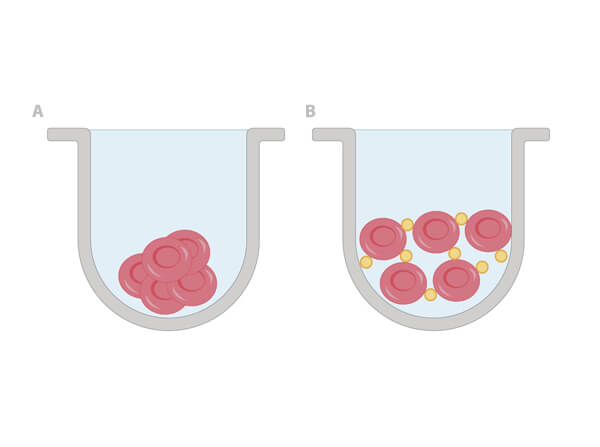
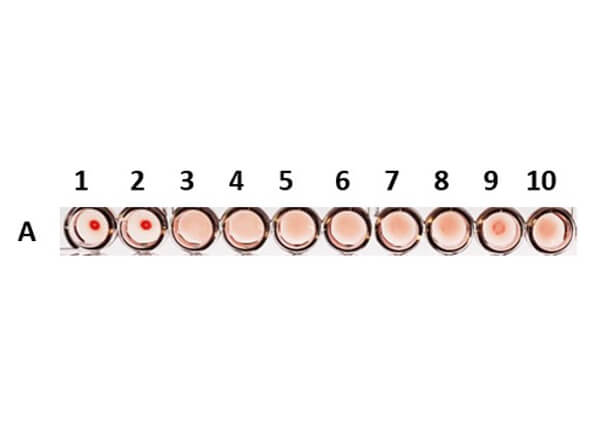
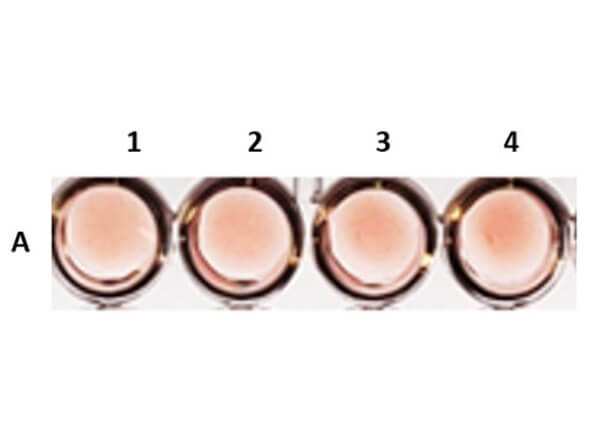
- Hemagglutination method is used for titer evaluation of viruses (e.g. Influenza, COVID-19 etc.), bacteria (e.g. Staphylococci, Shigella etc.), proteins (e.g. certain glycoproteins such as Lectins) and other agents which have the ability to attach to red blood cells (RBC)'s surface molecules. For example, the influenza viruses agglutinate RBCs through their interaction with sialic acid receptors on the host cells. At a molecular level, viral hemagglutinins bind to sialic acid linked to galactose residues through alpha 2.3 or 2.6 linkage, which varies from species to species. Once a hemagglutinin agglutinates the RBCs, each of the agglutinating molecule attaches to RBCs to form a lattice-structure or a meshwork. This prevents RBCs from settling down from suspension in a round bottom 96 well plate. Visually, a hemagglutinated sample will generate a uniform red colored suspension while a sample lacking hemagglutination will lead to settling down of RBCs to the bottom of wells to form button or dot shape. In viral hemagglutination assay, a virus dilution (e.g. 2-fold from 1:4 to 1:4096) will be applied to an RBC dilution (e.g. 0.05% -0.1%) for 30 minutes to an hour at room temperature or 4° C. Thereafter, lattice formation is observed and the titer of a hemagglutination assay can be determined by the last viable "lattice" structure found. If diluted further, the amount of Virus particles will be less than the RBCs and thus not be able to agglutinate them. A Hemagglutination-inhibition (HAI) assay will involve titration of the viral hemagglutination with an anti-viral antibody (often from serum of human or animal infected with that virus) for inhibition of hemagglutination (i.e. neutralization of virus). HAI is one of the most commonly used methods to quantify immunity from influenza and other respiratory viral disease vaccines and is considered the gold standard as a correlate of vaccination mediated protection.
- Shipping Conditions:
- Blue Ice