KOA0430
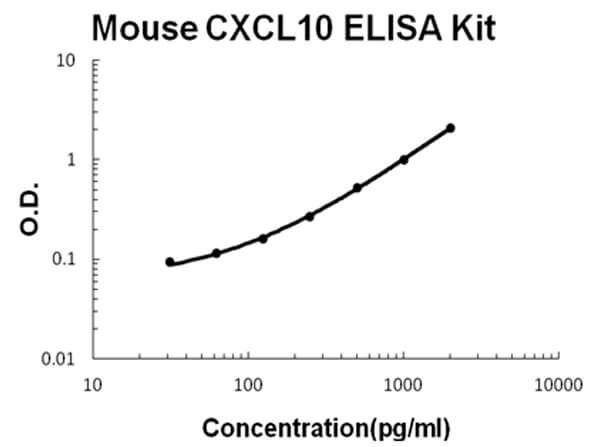
Mouse CXCL10 - IP-10 ELISA Kit

Cannot supply to this region.
- SKU:
- KOA0430
- Additional Names:
- 11 kDa interferon gamma-induced protein, C7, Chemokine CXC motif ligand 10, Crg 2, CRG2, CXCL10, CXL10_HUMAN, Gamma IP10, gIP 10, GIP10, IFI10, INP 10, Interferon activated gene 10, Interferon gamma induced cell line, Interferon inducible cytokine IP10, I10, IP-10, MOB1, SCYB10, Small inducible cytokine B10, Small inducible cytokine B10 precursor, Small inducible cytokine subfamily B (Cys X Cys) member 10, Small inducible cytokine subfamily B CXC member 10, Small-inducible cytokine B101|CXCL10
- Application:
- ELISA
- Storage Conditions:
- Please refer to datasheet
- Supplier:
- Rockland Inc
- Reactivities:
- Mouse
- Immunogen:
- Expression system for standard: E.coli; Immunogen sequence: I22-P98
- Species:
- Mouse
- Uniprot:
- P17515
- Synonyms:
- 10 kDa interferon gamma-induced protein;C-X-C motif chemokine 10;C7;CRG-;CRG-2;gamma-IP10;gIP-;gIP-10;Ifi;Ifi10;IN;INP10;interferon activated gene 10;interferon-gamma induced protein CRG-2;IP;IP-;IP-10;IP10;mob-;mob-1;Scyb1;Scyb10;small inducible cytokine B subfamily (Cys-X-Cys), member 10;small-inducible cytokine B10
- Extra Details:
- Chemokine(C-X-C motif) ligand 10(CXCL10) or IP-10 is a small cytokine belonging to the CXC chemokine family that is also known as 10 kDa interferon-gamma-induced protein(gamma-IP10 or IP-10). CXCL10 is secreted by several cell types in response to IFN-gamma. These cell types include monocytes, endothelial cells and fibroblasts. CXCL10 has been attributed to several roles, such as chemoattraction for monocytes/macrophages, T cells, NK cells, and dendritic cells, promotion of T cell adhesion to endothelial cells, antitumor activity, and inhibition of bone marrow colony formation and angiogenesis. It is a potent inhibitor of angiogenesis in vivo. The gene for CXCL10 is located on human chromosome 4 in a cluster among several other CXC chemokines. It is a RAS target gene and is overexpressed in the majority of colorectal cancers. This chemokine elicits its effects by binding to the cell surface chemokine receptor CXCR3.
- Shipping Conditions:
- Blue Ice