KOA0256
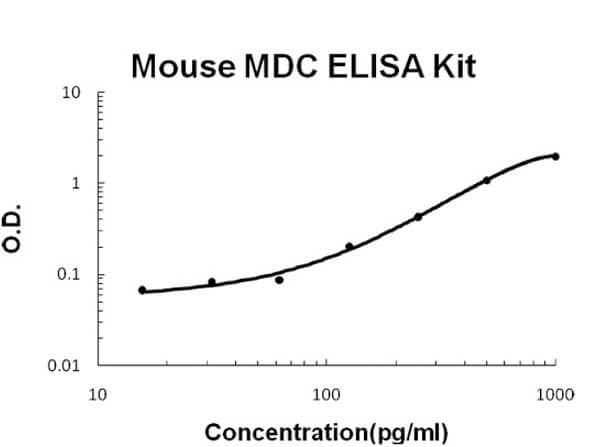
Mouse MDC ELISA Kit

Cannot supply to this region.
- SKU:
- KOA0256
- Additional Names:
- A-152E5.1, ABCD 1, ABCD1, C-C motif chemokine 22, CC chemokine STCP-1, Ccl22, CCL22_HUMAN, Chemokine (C-C motif) ligand 22, DC/B-CK, Macrophage-derived chemokine, MDC(1-69), MDC(7-69), MGC34554, SCYA22, Small inducible cytokine A22, Small inducible cytokine subfamily A (Cys-Cys), member 22, Small-inducible cytokine A22, STCP 1, STCP1, Stimulated T cell chemotactic protein 1, Stimulated T-cell chemotactic protein 1|CCL22
- Application:
- ELISA
- Storage Conditions:
- Please refer to datasheet
- Supplier:
- Rockland Inc
- Reactivities:
- Mouse
- Immunogen:
- Expression system for standard: E.coli; Immunogen sequence: G25-S92
- Species:
- Mouse
- Uniprot:
- O88430
- Synonyms:
- ABCD-;ABCD-1;activated B and dendritic cell-derived;C-C motif chemokine 22;CC chemokine ABCD-1;DCBCK;dendritic cell and B cell derived chemokine;MDC;Scya;Scya22;SMALL INDUCIBLE CYTOKINE A22 PRECURSOR (CC CHEMOKINE ABCD-1) (ACTIVATED B AND DENDRITIC CELL-DERIVED);small inducible cytokine subfamily A, member 22;small inducible cytokine subfamily A22;small-inducible cytokine A22
- Extra Details:
- Macrophage-derived chemokine(MDC), also called Chemokine, cc motif, ligand 22(CCL22) or Small inducible cytokine subfamily A, member 22(SCY22). MDC is a recently identified member of the CC chemokine family. It is not closely related to other chemokines, sharing most similarity with thymus- and activation-regulated chemokine(TARC), which contains 37% identical amino acids. In addition, MDC gene is mapped to chromosome 16q13, the same position reported for the TARC gene. MDC has the four-cysteine motif and other highly conserved residues characteristic of CC chemokines, but it shares<35% identity with any of the known chemokines. Recombinant MDC was expressed in Chinese hamster ovary cells and purified by heparin-Sepharose chromatography. MDC is highly expressed in macrophages and in monocyte-derived dendritic cells, but not in monocytes, natural killer cells, or several cell lines of epithelial, endothelial, or fibroblast origin. High expression was also detected in normal thymus and less expression in lung and spleen. MDC is thus a unique member of the CC chemokine family that may play a fundamental role in the function of dendritic cells, natural killer cells, and monocytes.
- Shipping Conditions:
- Blue Ice