600-401-Y50
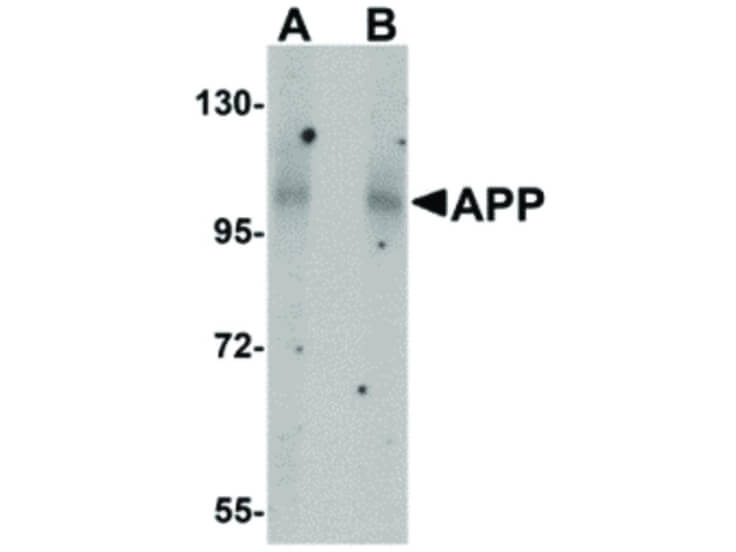
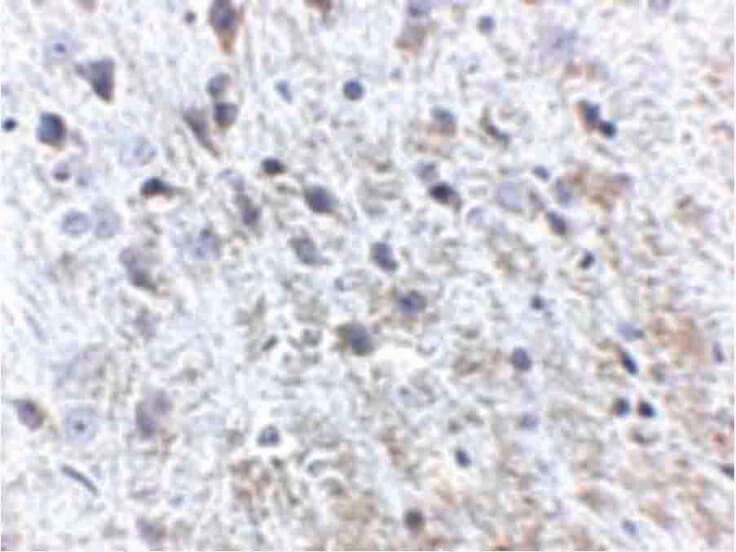
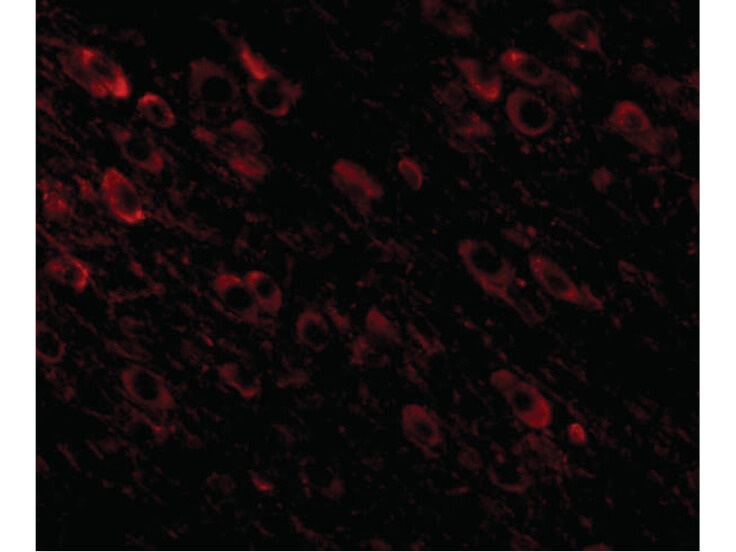
APP Antibody

Cannot supply to this region.
- SKU:
- 600-401-Y50
- Additional Names:
- APP|APP Antibody, AAA, AD1, PN2, ABPP, APPI, CVAP, ABETA, PN-II, CTFgamma, A4, Amyloid beta A4 protein, APP
- Application:
- ELISA, IHC, WB, IF
- Concentration:
- 1 mg/ml
- Physical State:
- Liquid
- Species Reactivity:
- Human
- Storage Conditions:
- -20[o]C aliquoted. Aliquot. Avoid freeze/thaw cycles., 2-8[o]C diluted. Aliquot. Avoid freeze/thaw cycles.
- Supplier:
- Rockland Inc
- Host:
- Rabbit
- Reactivities:
- Human, Mouse, Rat
- Buffer:
- 0.01 M Sodium Phosphate, 0.25 M Sodium Chloride
- Immunogen:
- Anti-APP antibody was prepared from whole rabbit serum produced by repeated immunizations with an 18 amino acid synthetic peptide near the N-terminus of human APP.
- Formulation:
- 0.01 M Sodium Phosphate, 0.25 M Sodium Chloride, pH 7.2
- Uniprot:
- P05067
- Synonyms:
- AAA;ABETA;ABPP;AD1;alpha-sAPP;alzheimer disease amyloid protein;amyloid beta (A4) precursor protein;amyloid beta A4 protein;amyloid precursor protein;amyloid-beta precursor protein;APPI;beta-amyloid peptide;beta-amyloid peptide(1-40);beta-amyloid peptide(1-42);beta-amyloid precursor protein;cerebral vascular amyloid peptide;CTFgamma;CVAP;peptidase nexin-II;PN-II;PN2;preA4;protease nexin-II;testicular tissue protein Li 2
- Extra Details:
- Accumulation of the amyloid-beta peptide (Abeta) in the cerebral cortex is a critical event in the pathogenesis of Alzheimer's disease. The beta-amyloid protein precursor (APP) is cleaved by one of two beta-secretases (BACE and BACE2), producing a soluble derivative of the protein and a membrane anchored 99-amino acid carboxy-terminal fragment (C99). The C99 fragment serves as substrate for gamma-secretase to generate the 4 kDa amyloid-beta peptide (Abeta), which is deposited in the Alzheimer's disease patient's brains. Recently, Death Receptor 6 (DR6) was found to interact with an amino-terminal fragment of the beta-amyloid protein (N-APP) in neurons, activating a caspase 6-dependent apoptotic event leading to axonal degeneration and pruning during development, suggesting that these two proteins are involved in neural development and may possibly play a role in Alzheimer's disease.
- Shipping Conditions:
- Dry Ice