600-401-X89
AIM Antibody

Cannot supply to this region.
- SKU:
- 600-401-X89
- Additional Names:
- AIM Antibody, AIM, API6, PRO229, Spalpha, SP-ALPHA, UNQ203/PRO229, CD5 antigen-like, CT-2|CD5L
- Application:
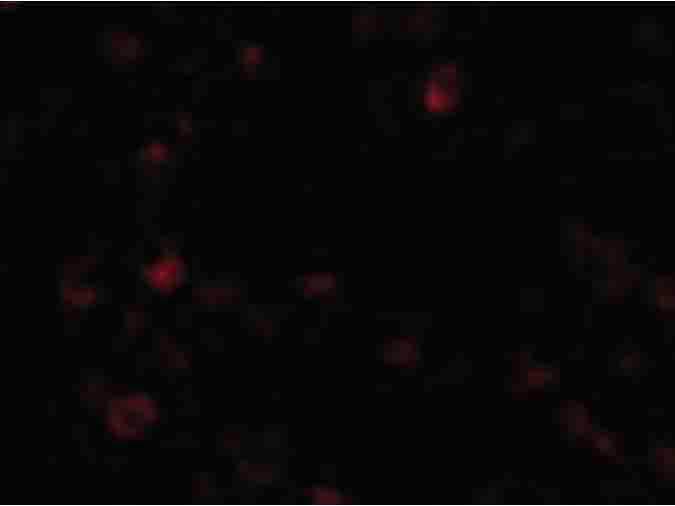
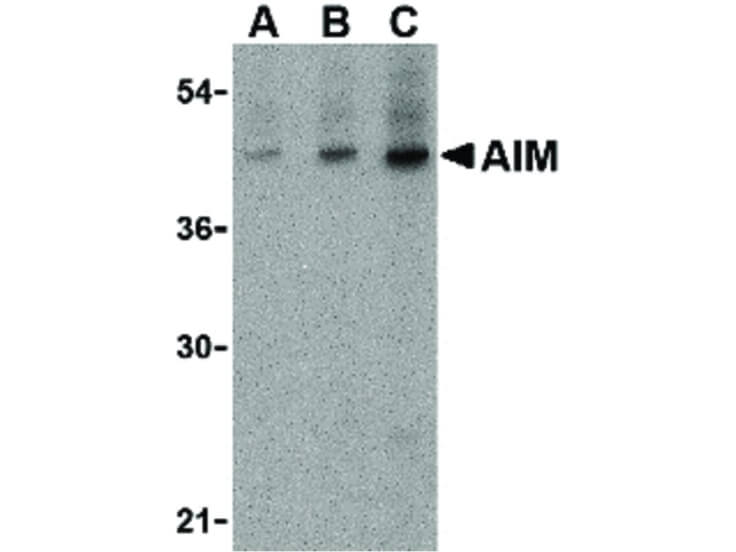
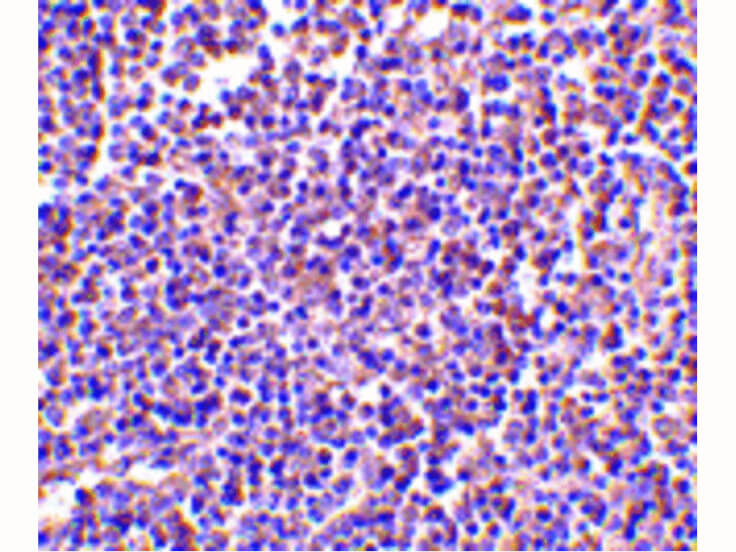
- ELISA, IHC, WB, IF
- Concentration:
- 1 mg/ml
- Physical State:
- Liquid
- Species Reactivity:
- Human
- Storage Conditions:
- -20[o]C aliquoted. Aliquot. Avoid freeze/thaw cycles., 2-8[o]C diluted. Aliquot. Avoid freeze/thaw cycles.
- Supplier:
- Rockland Inc
- Host:
- Rabbit
- Reactivities:
- Human, Mouse
- Buffer:
- 0.01 M Sodium Phosphate, 0.25 M Sodium Chloride
- Immunogen:
- Anti-AIM antibody was prepared from whole rabbit serum produced by repeated immunizations with a 16 amino acid synthetic peptide near the N-terminus of human AIM.
- Formulation:
- 0.01 M Sodium Phosphate, 0.25 M Sodium Chloride, pH 7.2
- Uniprot:
- O43866
- Synonyms:
- AIM;API6;apoptosis inhibitor 6;apoptosis inhibitor expressed by macrophages;apoptosis inhibitor of macrophage;CD5 antigen-like;CD5 antigen-like (scavenger receptor cysteine rich family);CT-2;hAIM;igM-associated peptide;PRO229;SP-ALPHA;Spalpha
- Extra Details:
- Apoptosis inhibitor of macrophages (AIM) is a member of the scavenger receptor cysteine-rich domain superfamily (SRCR-SF) initially identified as an inducible cell surface ligand of CD5. It was shown that AIM functions in the thymus as the inducer of resistance to apoptosis within CD4+/CD8+ thymocytes and as the supporter of the viability of these cells before thymic selection. AIM was also shown to support macrophage survival and enhance their phagocytic function. More recent experiments using recombinant AIM significantly inhibited apoptosis of NKT and T cells obtained from C. parvum-stimulated livers in vitro, suggesting that AIM functions to induce resistance to apoptosis in these cells and supports host defense against inflammation during infection.
- Shipping Conditions:
- Dry Ice