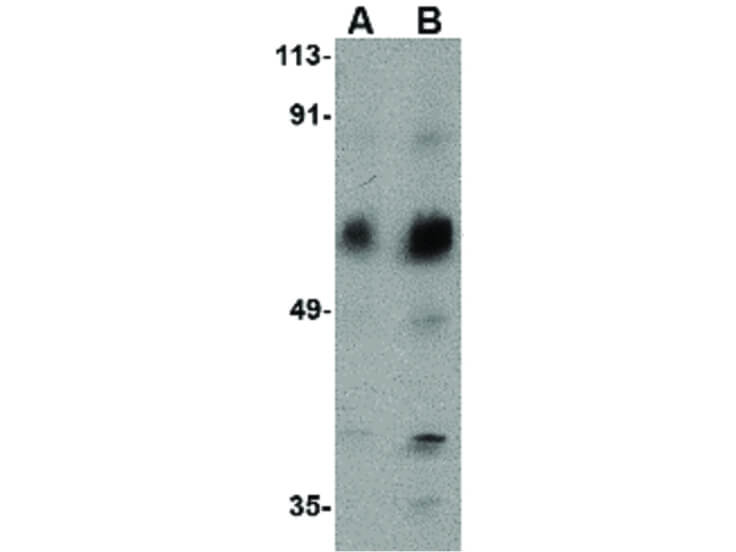
600-401-X68
ACVR1C Antibody

Cannot supply to this region.
- SKU:
- 600-401-X68
- Additional Names:
- ACVR1|ACVR1C Antibody, FOP, ALK2, SKR1, TSRI, ACTRI, ACVR1A, ACVRLK2, Activin receptor type-1, Activin receptor type I, ACTR-I
- Application:
- ELISA, WB
- Concentration:
- 1 mg/ml
- Physical State:
- Liquid
- Species Reactivity:
- Human
- Storage Conditions:
- -20[o]C aliquoted. Aliquot. Avoid freeze/thaw cycles., 2-8[o]C diluted. Aliquot. Avoid freeze/thaw cycles.
- Supplier:
- Rockland Inc
- Host:
- Rabbit
- Reactivities:
- Human, Mouse, Rat
- Buffer:
- 0.01 M Sodium Phosphate, 0.25 M Sodium Chloride
- Immunogen:
- Anti-ACVR1C antibody was prepared from whole rabbit serum produced by repeated immunizations with a 15 amino acid synthetic peptide near the N-terminus of the human ACVR1C.
- Formulation:
- 0.01 M Sodium Phosphate, 0.25 M Sodium Chloride, pH 7.2
- Uniprot:
- Q04771
- Synonyms:
- activin A receptor, type I;activin A receptor, type II-like kinase 2;activin receptor type I;activin receptor type-1;activin receptor-like kinase 2;ACTRI;ACVR1A;ACVRLK2;ALK2;FOP;hydroxyalkyl-protein kinase;serine/threonine-protein kinase receptor R1;SKR1;TGF-B superfamily receptor type I;TSRI
- Extra Details:
- Activins are dimeric growth and differentiation factors which belong to the transforming growth factor-beta (TGF-beta) superfamily of structurally related signaling proteins. Activins signal through a heteromeric complex of receptor serine kinases which include at least two type I and two type II receptors. ACVR1C, also known as ALK7, is a type I activin receptor and plays a role in cell differentiation, growth arrest and apoptosis. ACVR1C can mediate signaling by ligans such as Nodal, GDF-1/3, activin B and activin AB, all of which can also signal through the ubiquitous activin type I receptor ACVR1B (also known as ALK4). ACVR1C is a novel marker specifically expressed during the late phase of adipocyte differentiation. ACVR1C is dispensable for mouse embryogenesis, which suggests alternative functions for this receptor in postnatal development and tissue homeostasis. ACVR1C plays an important role in regulating the functional plasticity of pancreatic islets, negatively affecting beta-cell function by mediating the effects of activin B on Ca2+ signaling.
- Shipping Conditions:
- Dry Ice