600-401-MK6
TBK1 Antibody

Cannot supply to this region.
- SKU:
- 600-401-MK6
- Additional Names:
- Rabbit Anti-TRK1 Antibody, Rabbit Anti-TANK Binding Kinase 1 Antibody, NF-Kappa-B-Activating Kinase, TANK-Binding Kinase 1, NAK, T2K, Serine/Threonine-Protein Kinase TBK1, NF-KB-Activating Kinase, EC 2.7.11.1, FTDALS4, IIAE8|TBK1
- Application:
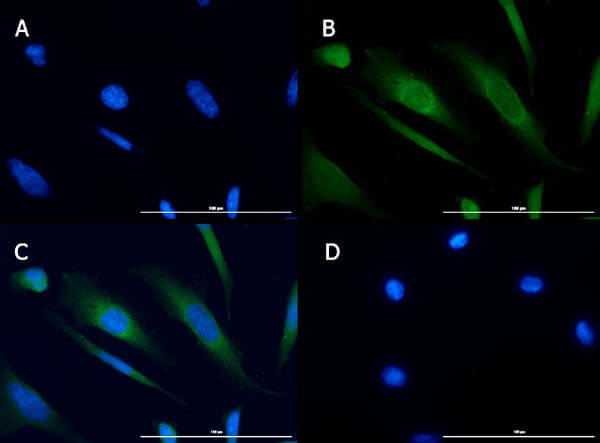
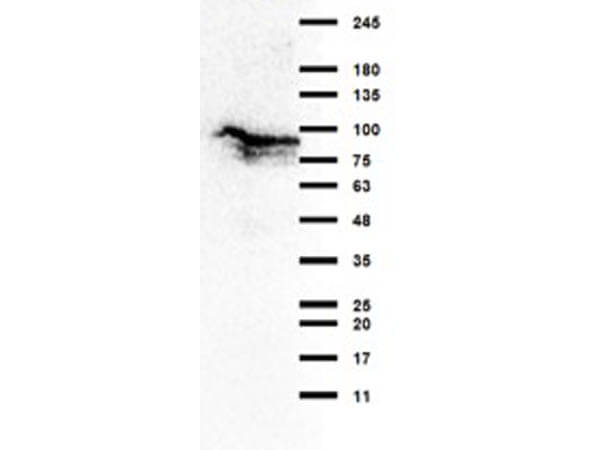
- ELISA, IHC, WB, IF
- Concentration:
- 1 mg/ml
- Physical State:
- Liquid
- Species Reactivity:
- Human
- Storage Conditions:
- -20[o]C aliquoted. Aliquot. Avoid freeze/thaw cycles., 2-8[o]C diluted. Aliquot. Avoid freeze/thaw cycles.
- Supplier:
- Rockland Inc
- Host:
- Rabbit
- Reactivities:
- Human, Mouse
- Buffer:
- 0.02 M Potassium Phosphate, 0.15 M Sodium Chloride
- Immunogen:
- Anti-TBK1 antibody was prepared from whole rabbit serum produced by repeated immunizations with a synthetic peptide corresponding to a C-terminal portion of human TBK1 conjugated to Keyhole Limpet Hemocyanin (KLH).
- Formulation:
- 0.02 M Potassium Phosphate, 0.15 M Sodium Chloride, pH 7.2
- Uniprot:
- Q9UHD2
- Synonyms:
- FTDALS4;IIAE8;MCT 3;MCT 4;MCT-3;MCT-4;MCT3;MCT4;monocarboxylate transporter 3;monocarboxylate transporter 4;NAK;NF-kappa-B-activating kinase;NF-kB-activating kinase;serine/threonine-protein kinase TBK1;solute carrier family 16 (monocarboxylate transporter), member 3;solute carrier family 16 (monocarboxylic acid transporters), member 3;solute carrier family 16, member 3 (monocarboxylic acid transporter 4);T2K;TANK-binding kinase 1
- Extra Details:
- TBK1 (TANK Binding Kinase 1) is a serine/threonine kinase that plays an essential role in regulating inflammatory responses to foreign agents. Following activation of toll-like receptors by viral or bacterial components, it associates with TRAF3 and TANK and phosphorylates interferon regulatory factors (IRFs) IRF3 and IRF7 as well as DDX3X. This activity allows subsequent homodimerization and nuclear translocation of the IRFs leading to transcriptional activation of pro-inflammatory and antiviral genes including IFNA and IFNB. In order to establish such an antiviral state, TBK1 forms several different complexes whose composition depends on the type of cell and cellular stimuli. Thus, several scaffolding molecules including FADD, TRADD, MAVS, AZI2, TANK or TBKBP1/SINTBAD can be recruited to the TBK1-containing-complexes. Under particular conditions, it functions as a NF-kappa-B effector by phosphorylating NF-kappa-B inhibitor alpha/NFKBIA, IKBKB, or RELA to translocate NF-Kappa-B to the nucleus. It restricts bacterial proliferation by phosphorylating the autophagy receptor OPTN/Optineurin on Ser-177, thus enhancing LC3 binding affinity and antibacterial autophagy. TKB1 phosphorylates the SMCR8 component of the C9orf72-SMCR8 complex, promoting autophagosome maturation. And it phosphorylates and activates AKT1. Seems to play a role in energy balance regulation by sustaining a state of chronic, low-grade inflammation in obesity, which leads to a negative impact on insulin sensitivity. Attenuates retroviral budding by phosphorylating the endosomal sorting complex required for transport-I (ESCRT-I) subunit VPS37C. And it phosphorylates Borna disease virus (BDV) P protein. Anti-TBK1 Antibody is useful for researchers interested in Frontotemporal Dementia and/or Amyotrophic Lateral Sclerosis 4, acute Infection-Induced 8 Encephalopathy, Toll-like Receptor Signaling Pathway, TNFR1 Pathway, nucleic acid binding, and protein kinase activity.
- Shipping Conditions:
- Dry Ice