600-401-GY2
MUC4 Antibody

Cannot supply to this region.
- SKU:
- 600-401-GY2
- Additional Names:
- MUC4|Rabbit Anti-MUC4 Antibody, Rabbit Anti-Mucin 4 Antibody, MUC4, Mucin-4, Ascites sialoglycoprotein, ASGP, Pancreatic adenocarcinoma mucin, Testis mucin, Tracheobronchial mucin, Mucin-4 alpha chain, Ascites sialoglycoprotein 1, ASGP-1, Mucin-4 beta chain, Ascites sialoglycoprotein 2, ASGP-2, MUC
- Application:
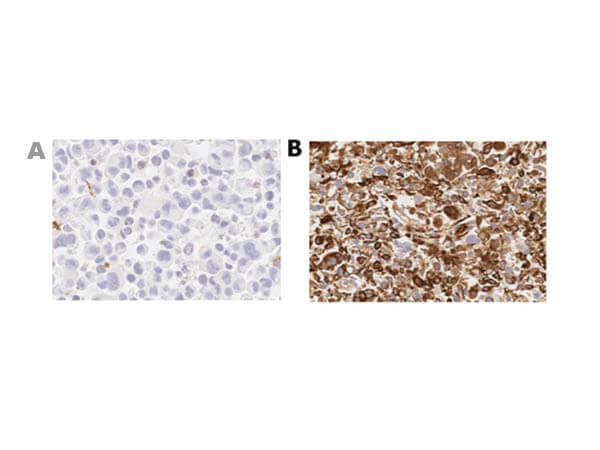
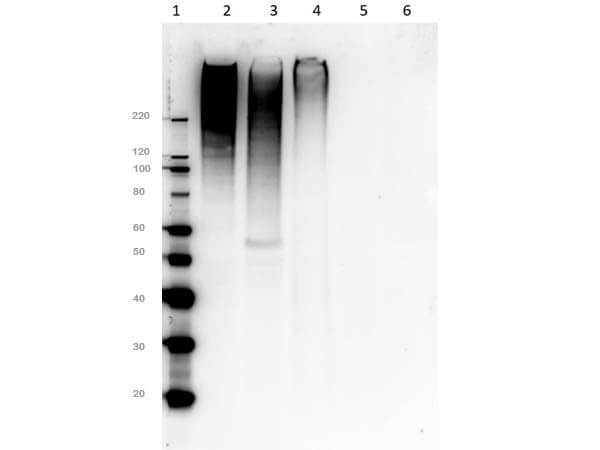
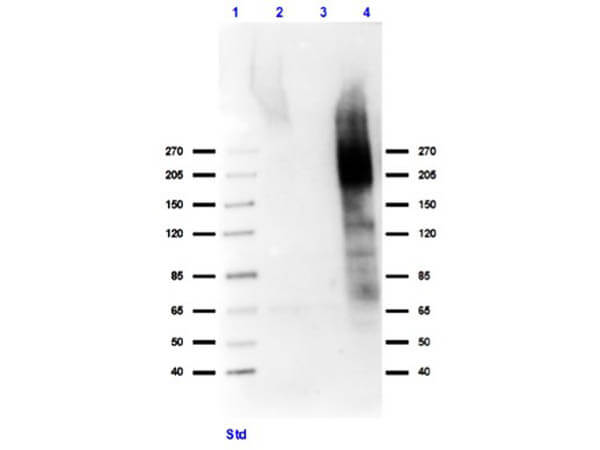
- ELISA, IHC, WB, Microarray
- Concentration:
- 1 mg/ml
- Physical State:
- Liquid
- Species Reactivity:
- Human
- Storage Conditions:
- -20[o]C aliquoted. Aliquot. Avoid freeze/thaw cycles., 2-8[o]C diluted. Aliquot. Avoid freeze/thaw cycles.
- Supplier:
- Rockland Inc
- Host:
- Rabbit
- Reactivities:
- Human
- Buffer:
- 0.02 M Potassium Phosphate, 0.15 M Sodium Chloride
- Immunogen:
- This affinity purified antibody was prepared from whole rabbit serum produced by repeated immunizations with a peptide corresponding to an internal portion of human Mucin-4.
- Formulation:
- 0.02 M Potassium Phosphate, 0.15 M Sodium Chloride, pH 7.2
- Uniprot:
- Q99102
- Synonyms:
- ascites sialoglycoprotein;ASGP;HSA276359;MUC-4;mucin 4, tracheobronchial;mucin-4;pancreatic adenocarcinoma mucin;testis mucin;tracheobronchial mucin
- Extra Details:
- This antibody is designed, produced, and validated as part of a collaboration between Rockland and the National Cancer Institute (NCI). MUC4 (Mucin 4, Cell Surface Associated) is a Protein Coding gene. This gene encodes an integral membrane glycoprotein found on the cell surface, although secreted isoforms may exist. At least two dozen transcript variants of this gene have been found, although for many of them the full-length transcript has not been determined or they are found only in tumor tissues. Highly glycosylated proteins called mucins, are the major constituents of mucus; the viscous secretion that covers epithelial surfaces such as those in the trachea, colon, and cervix. MUC4's ability to promote tumor growth may be mainly due to repression of apoptosis as opposed to proliferation. MUC4 seems to alter cellular behavior through both anti-adhesive effects on cell-cell and cell-extracellular matrix interactions and in its ability to act as an intramembrane ligand for ERBB2. These glycoproteins play an important role in cell proliferation and differentiation of epithelial cells by inducing specific phosphorylation of ERBB2. The MUC4-ERBB2 complex causes site-specific phosphorylation of the ERBB2 Tyr-1248. In polarized epithelial cells segregates ERBB2 and other ERBB receptors and prevents ERBB2 from acting as a co-receptor. The interaction with ERBB2 leads to enhanced expression of CDKN1B. The formation of a MUC4-ERBB2-ERBB3-NRG1 complex leads to down-regulation of CDKN1B, resulting in repression of apoptosis and stimulation of proliferation. May play a role in tumor progression. MUC4 is associated with diseases such as bile duct cancer, keratitis, adenosquamous carcinoma, and pancreatic adenocarcinomas. Anti-MUC4 Antibody is useful for researchers interested in digestion, cancer research, and extracellular matrix Antibodies.
- Shipping Conditions:
- Dry Ice