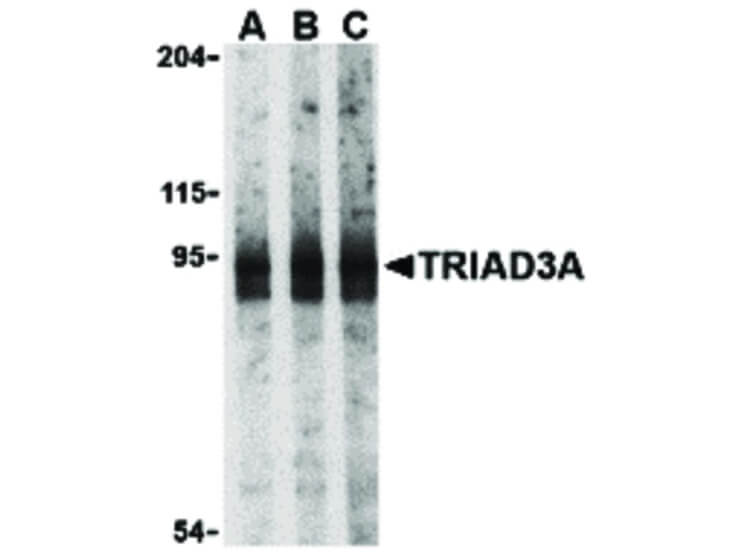
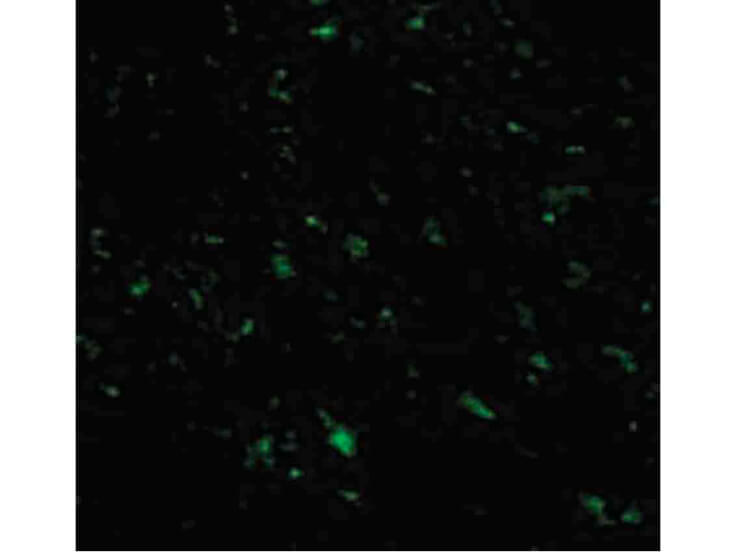
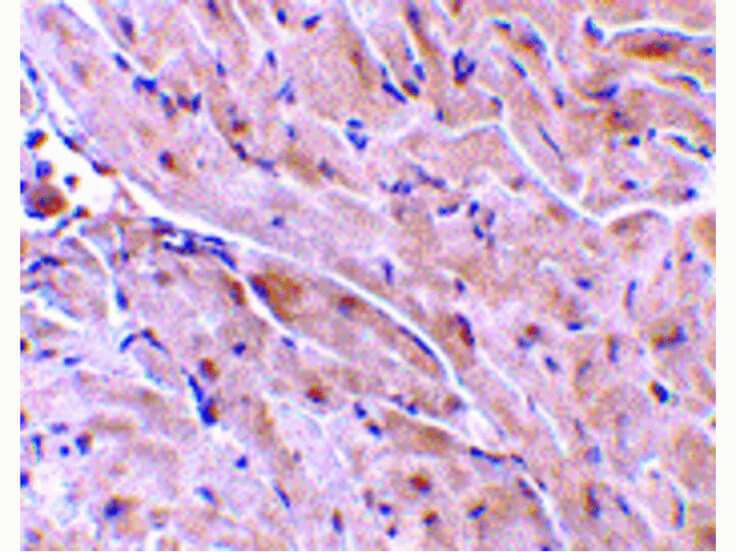
600-401-FN7
TRIAD3A Antibody

Cannot supply to this region.
- SKU:
- 600-401-FN7
- Additional Names:
- E3 ubiquitin-protein ligase RNF216, RING finger protein 216, RING-type E3 ubiquitin transferase RNF216, Triad domain-containing protein 3, UbcM4-interacting protein 83, Ubiquitin-conjugating enzyme 7-interacting protein 1, Rnf216, Triad3, Ubce7ip1, Uip83, Zin|Rnf216
- Application:
- ELISA, IHC, WB, IF
- Concentration:
- 1 mg/ml
- Physical State:
- Liquid
- Species Reactivity:
- Mouse
- Storage Conditions:
- -20[o]C aliquoted. Aliquot. Avoid freeze/thaw cycles., 2-8[o]C diluted. Aliquot. Avoid freeze/thaw cycles.
- Supplier:
- Rockland Inc
- Host:
- Rabbit
- Reactivities:
- Human, Mouse
- Buffer:
- 0.01 M Sodium Phosphate, 0.25 M Sodium Chloride
- Immunogen:
- Anti-TRIAD3A antibody was prepared from whole rabbit serum produced by repeated immunizations with a peptide corresponding to 15 amino acids near the amino-terminus of mouse TRIAD3A.
- Formulation:
- 0.01 M Sodium Phosphate, 0.25 M Sodium Chloride, pH 7.2
- Uniprot:
- P58283
- Synonyms:
- 2810055G22Rik;AI647468;AU019462;C86502;E3 ubiquitin ligase;E3 ubiquitin-protein ligase RNF216;F830018F18Rik;RING finger protein 216;RING-type E3 ubiquitin transferase RNF216;triad domain-containing protein 3;TRIAD3;Ubce7i;Ubce7ip1;ubcM4-interacting protein 83;ubiquitin-conjugating enzyme 7-interacting protein 1;UIP;UIP83
- Extra Details:
- Activation of NF-kB as a result of Toll-like receptor (TLR) and IL-1 receptor signaling is a major component of innate immune responses. Signals from these receptors are relayed by a number of adapter molecules such as TRIF, TIRAP, and MyD88. Several regulatory mechanisms exist to control TLR signal transduction, including the inhibition of TLR expression and signaling by molecules such as ST2 and SIGIRR. Another mechanism is by the ubi-quitinization of selected TLRs by TRIAD3A, an E3 ubiquitin-protein ligase. TRIAD3A is a RING finger protein that can bind to TLR4 and TLR9, and to a lesser extent TLR3 and TLR5, catalyzing the ubiquitization of these molecules. Overexpression of TRIAD3A promoted the nearly complete degradation of TLR4 and TLR9; this reduction was reflected in the decreased signal-specific activation by ligands specific for these TLRs. Conversely, depletion of TRIAD3A resulted in enhanced TLR activation.
- Shipping Conditions:
- Dry Ice