600-401-EN5
SLAMF3 Antibody

Cannot supply to this region.
- SKU:
- 600-401-EN5
- Additional Names:
- LY9|SLAMF3 Antibody, hly9, mLY9, CD229, SLAMF3, T-lymphocyte surface antigen Ly-9, Cell surface molecule Ly-9
- Application:
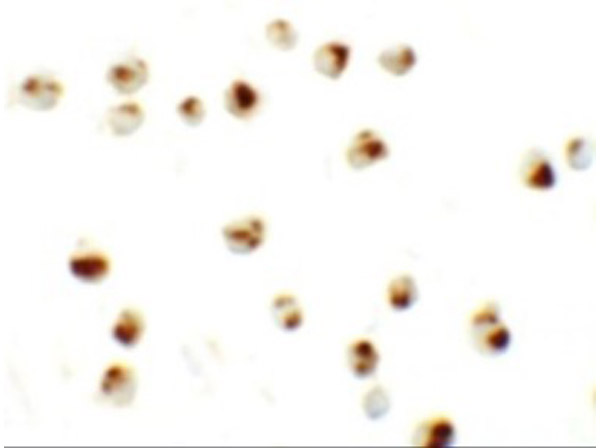
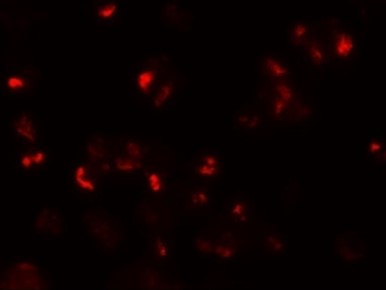
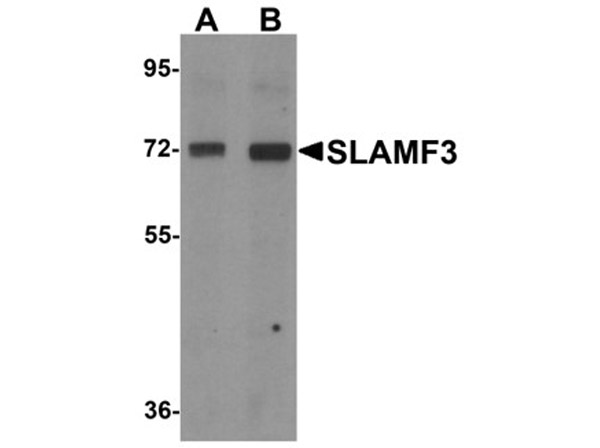
- ELISA, IHC, WB, IF
- Concentration:
- 1 mg/ml
- Physical State:
- Liquid
- Species Reactivity:
- Human
- Storage Conditions:
- -20[o]C aliquoted. Aliquot. Avoid freeze/thaw cycles., 2-8[o]C diluted. Aliquot. Avoid freeze/thaw cycles.
- Supplier:
- Rockland Inc
- Host:
- Rabbit
- Reactivities:
- Human, Mouse, Rat
- Buffer:
- 0.01 M Sodium Phosphate, 0.25 M Sodium Chloride
- Immunogen:
- Anti-SLAMF3 antibody was prepared from whole rabbit serum produced by repeated immunizations with an 18 amino acid synthetic peptide near the C-terminus of human SLAMF3.
- Formulation:
- 0.01 M Sodium Phosphate, 0.25 M Sodium Chloride, pH 7.2
- Uniprot:
- Q9HBG7
- Synonyms:
- CD229;cell surface molecule Ly-9;hly9;Lymphocyte antigen 9;mLY9;signaling lymphocytic activation molecule 3;SLAM family member 3;SLAMF3;T-lymphocyte surface antigen Ly-9
- Extra Details:
- The signaling lymphocyte-activation molecule family member 3 (SLAMF3), also known as LY9, is a cell surface receptor that is expressed on T and B lymphocytes and belongs to the CD150/SLAMF1 receptor family. SLAMF3 was identified through a yeast two-hybrid screening in which SLAMF3 bound to the X-linked lymphoproliferative disease gene product SAP, suggesting that in activated T cells, SLAMF3 signaling can be triggered SAP. Its expression on the cell surface appears to be regulated via its interaction with the clathrin-associated adaptor complex 2 (AP-2). Despite its similarity to SLAMF1 in structure and interactions with SAP, SLAMF3-deficient mice do not exhibit phenotypic characteristics associated with SLAMF1- and SAP-deficient mice, suggesting that SLAMF3 plays other roles in T cell activation.
- Shipping Conditions:
- Dry Ice