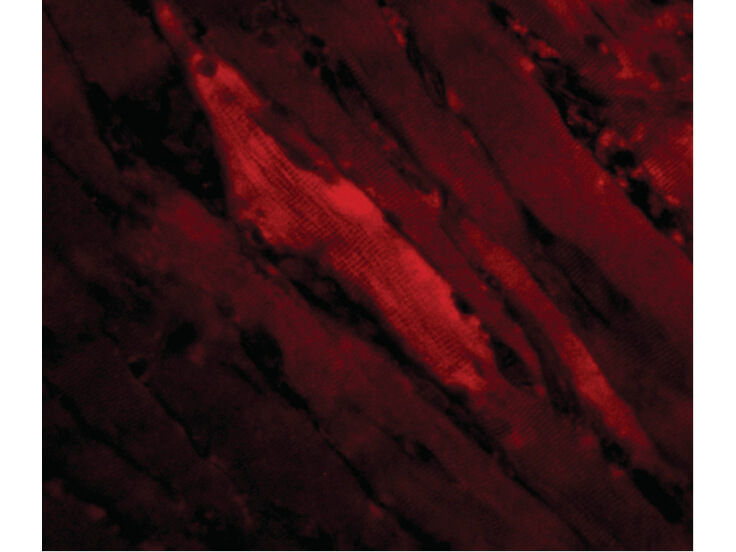
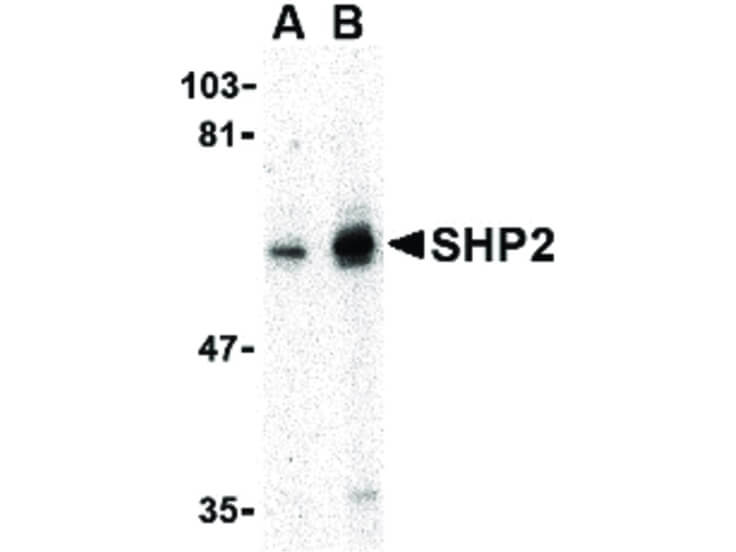
600-401-EJ6
SHP2 Antibody

Cannot supply to this region.
- SKU:
- 600-401-EJ6
- Additional Names:
- PTPN11|SHP2 Antibody, CFC, NS1, SHP2, BPTP3, PTP2C, PTP-1D, SH-PTP2, SH-PTP3, SHPTP2, Tyrosine-protein phosphatase non-receptor type 11, Protein-tyrosine phosphatase 1D
- Application:
- ELISA, WB, IF
- Concentration:
- 1 mg/ml
- Physical State:
- Liquid
- Species Reactivity:
- Human
- Storage Conditions:
- -20[o]C aliquoted. Aliquot. Avoid freeze/thaw cycles., 2-8[o]C diluted. Aliquot. Avoid freeze/thaw cycles.
- Supplier:
- Rockland Inc
- Host:
- Rabbit
- Reactivities:
- Human, Mouse, Rat
- Buffer:
- 0.01 M Sodium Phosphate, 0.25 M Sodium Chloride
- Immunogen:
- Anti-SHP2 antibody was prepared from whole rabbit serum produced by repeated immunizations with a 14 amino acid synthetic peptide from near the N-terminus of human SHP2.
- Formulation:
- 0.01 M Sodium Phosphate, 0.25 M Sodium Chloride, pH 7.2
- Uniprot:
- Q06124
- Synonyms:
- BPTP3;CFC;JMML;METCDS;NS1;protein-tyrosine phosphatase 1D;protein-tyrosine phosphatase 2C;PTP-1D;PTP2C;SH-PTP2;SH-PTP3;SH2 domain-containing protein tyrosine phosphatase 2;SHP2;tyrosine-protein phosphatase non-receptor type 11
- Extra Details:
- Src homology-2 domain containing protein (SHP2) is a member of the protein tyrosine phosphatase (PTP) family, a protein family that contains signaling molecules that regulate a variety of cellular processes including cell growth, differentiation, mitotic cycle, and oncogenic transformation. SHP2 contains two tandem Src homology-2 (SH2) domains, which function as phosphotyrosine binding domains either directly or through scaffolding intermediates such as the insulin-receptor substrate 1 (IRS-1). These SH2 domains mediate the interaction of SHP2 with its substrates, allowing SHP2 to dephosphorylate proteins that inhibit signaling kinases such as ERK1 and AKT. SHP2 is widely expressed in most tissues and plays a regulatory role in various cell signaling events that are important for a diversity of cell functions, such as mitogenic activation, metabolic control, transcription regulation, and cell migration. Recent experiments have shown SHP2 plays a significant role in hepatoprotection and liver regeneration.
- Shipping Conditions:
- Dry Ice