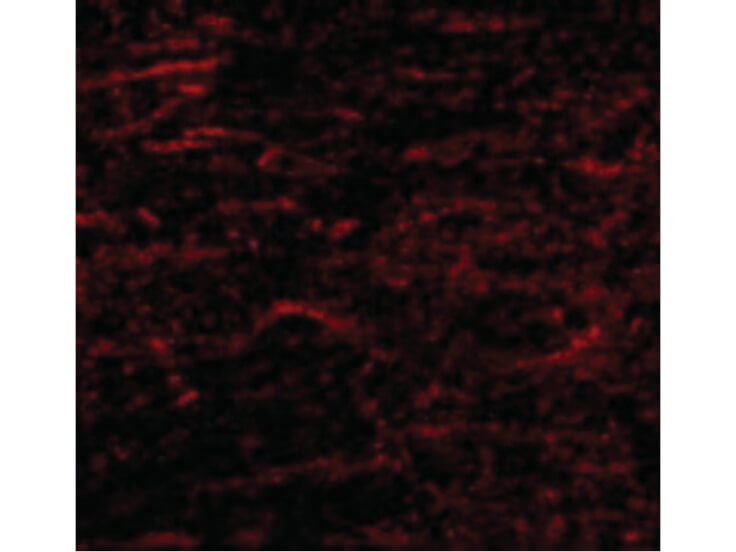
600-401-ED5
S1P1 Antibody

Cannot supply to this region.
- SKU:
- 600-401-ED5
- Additional Names:
- S1P1 Antibody, EDG1, S1P1, CD363, ECGF1, EDG-1, CHEDG1, D1S3362, EDG1, Sphingosine 1-phosphate receptor 1, Endothelial differentiation G-protein coupled receptor 1, S1P receptor 1|S1PR1
- Application:
- ELISA, IHC, WB, IF
- Concentration:
- 1 mg/ml
- Physical State:
- Liquid
- Species Reactivity:
- Human
- Storage Conditions:
- -20[o]C aliquoted. Aliquot. Avoid freeze/thaw cycles., 2-8[o]C diluted. Aliquot. Avoid freeze/thaw cycles.
- Supplier:
- Rockland Inc
- Host:
- Rabbit
- Reactivities:
- Human, Mouse, Rat
- Buffer:
- 0.01 M Sodium Phosphate, 0.25 M Sodium Chloride
- Immunogen:
- Anti-S1P1 antibody was prepared from whole rabbit serum produced by repeated immunizations with a 14 amino acid synthetic peptide near the C-terminus of the human S1P1.
- Formulation:
- 0.01 M Sodium Phosphate, 0.25 M Sodium Chloride, pH 7.2
- Uniprot:
- P21453
- Synonyms:
- CD363;CHEDG1;D1S3362;ECGF1;EDG-1;EDG1;endothelial differentiation G-protein coupled receptor 1;endothelial differentiation, sphingolipid G-protein-coupled receptor, 1;S1P receptor 1;S1P receptor Edg-1;S1P1;sphingosine 1-phosphate receptor 1;sphingosine 1-phosphate receptor Edg-1;sphingosine 1-phosphate receptor EDG1
- Extra Details:
- Movement of lymphocytes through lymphoid organs is required for generating immunity. Their migration into lymph nodes follows a series of events including integrin activation through chemokine signaling, adhesion and diapedis. The release of lymphocytes from lymph nodes is regulated by the phospholipid sphingosine-1-phosphate (S1P). One of its receptors S1P1 binds S1P with high specificity and affinity; agonism of this receptor by the immunosuppressive agent FTY720 inhibits the entry of tissue T cells into afferent lymphatics in homeostatic and inflammatory conditions. Recent experiments have indicated that CCR7-deficient T cells left lymph nodes more rapidly than wild-type cells did and these cells where also less effectively retained after treatment with FTY720, and that egress competence could be restored by inactivating G alpha i-protein-coupled receptor signaling. These results suggest that S1P1 acts in the lymphocyte to promote lymph node egress by overcoming retention signals mediated by CCR7 and G alpha i-protein-coupled receptor signaling.
- Shipping Conditions:
- Dry Ice