600-401-DL9
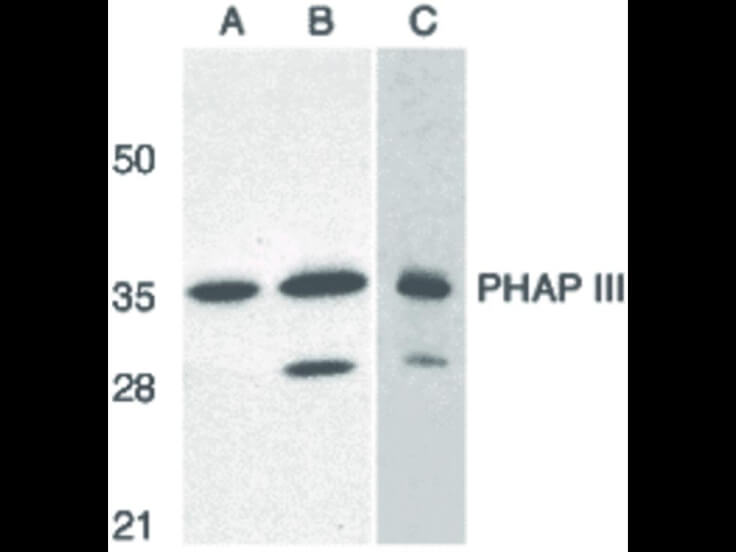
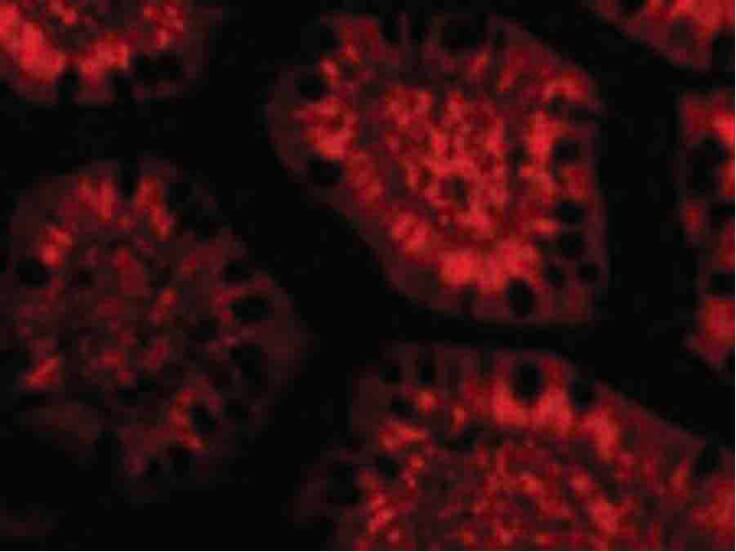
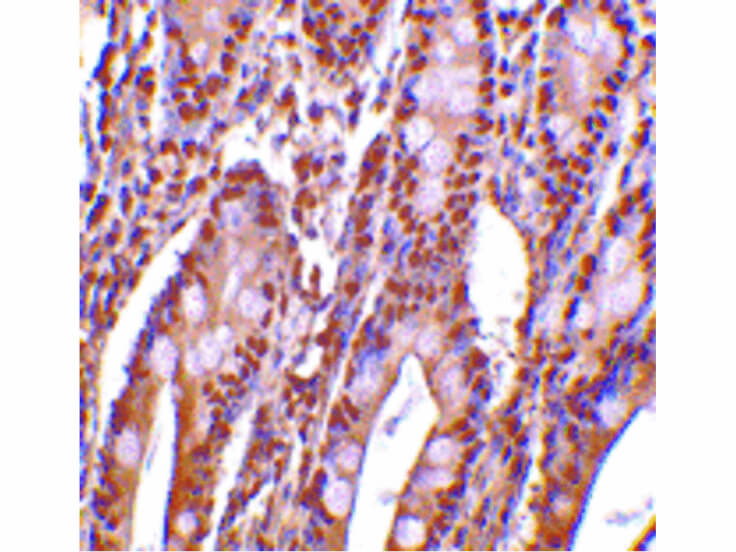
PHAP III Antibody

Cannot supply to this region.
- SKU:
- 600-401-DL9
- Additional Names:
- ANP32E|PHAP III Antibody, LANPL, LANP-L, Acidic leucine-rich nuclear phosphoprotein 32 family member E, LANP-like protein
- Application:
- ELISA, IHC, WB, IF
- Concentration:
- 1 mg/ml
- Physical State:
- Liquid
- Species Reactivity:
- Human
- Storage Conditions:
- 2-8[o]C
- Supplier:
- Rockland Inc
- Host:
- Rabbit
- Reactivities:
- Human, Mouse, Rat
- Buffer:
- 0.01 M Sodium Phosphate, 0.25 M Sodium Chloride
- Immunogen:
- Anti-PHAP III antibody was raised with a synthetic peptide corresponding to amino acids close to C-terminus of human PHAP III.
- Formulation:
- 0.01 M Sodium Phosphate, 0.25 M Sodium Chloride, pH 7.2
- Uniprot:
- Q9BTT0
- Synonyms:
- acidic (leucine-rich) nuclear phosphoprotein 32 family, member E;acidic leucine-rich nuclear phosphoprotein 32 family member E;LANP-L;LANP-like protein;LANPL;leucine-rich acidic nuclear protein like
- Extra Details:
- Apoptosis is related to many diseases and development. Caspase-9 plays a central role in cell death induced by a variety of apoptosis activators. Cytochrome c, after released from mitochondria, binds to Apaf-1, which forms an apoptosome that in turn binds to and activate procaspase-9. Activated caspase-9 cleaves and activates the effector caspases (caspase-3, -6 and -7), which are responsible for the proteolytic cleavage of many key proteins in apoptosis. The tumor suppressor putative HLA-DR-associated proteins (PHAPs) were recently identified as important regulators of mitochondrion apoptosis. PHAP appears to facilitate apoptosome-medicated caspase-9 activation and to stimulate the mitochondrial apoptotic pathway. PHAP was also shown to oppose both Ras- and Myc-medicated cell transformation.
- Shipping Conditions:
- Blue Ice