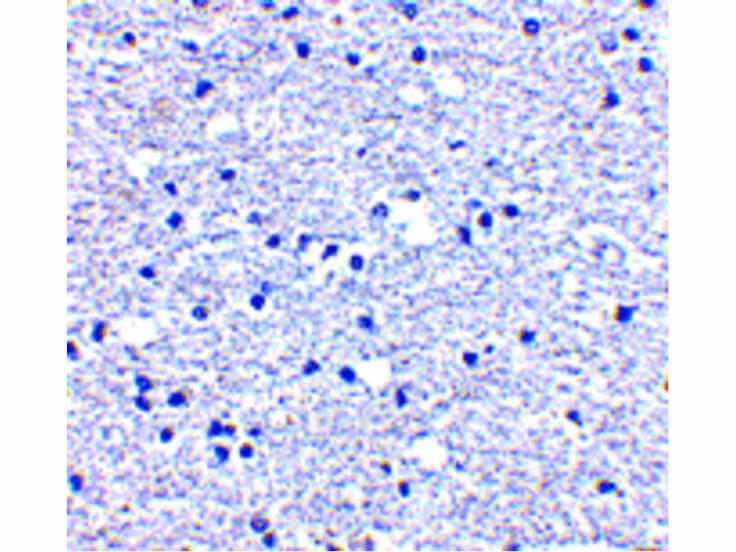
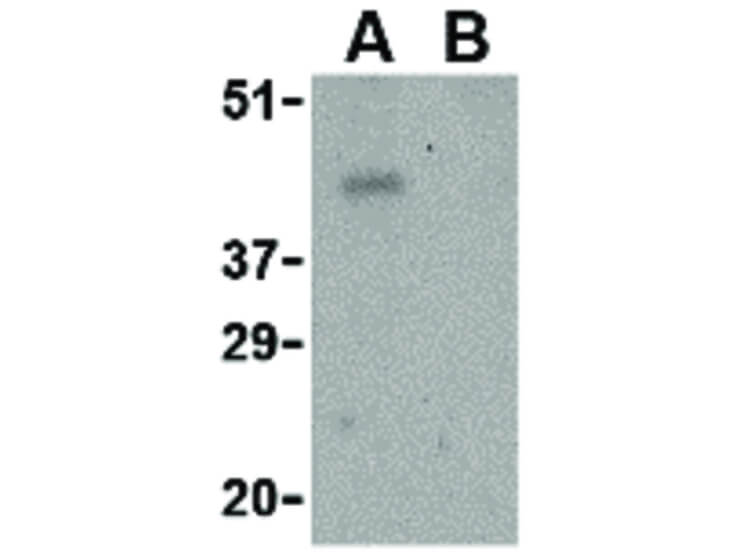
600-401-DK2
PD-1 Antibody

Cannot supply to this region.
- SKU:
- 600-401-DK2
- Additional Names:
- PD-1 Antibody, PD1, PD-1, CD279, SLEB2, hPD-1, hPD-l, hSLE1, PD1, Programmed cell death protein 1, Protein PD-1|PDCD1
- Application:
- ELISA, IHC, WB, IF
- Concentration:
- 1 mg/ml
- Physical State:
- Liquid
- Species Reactivity:
- Human
- Storage Conditions:
- -20[o]C aliquoted. Aliquot. Avoid freeze/thaw cycles., 2-8[o]C diluted. Aliquot. Avoid freeze/thaw cycles.
- Supplier:
- Rockland Inc
- Host:
- Rabbit
- Reactivities:
- Human, Mouse, Rat
- Buffer:
- 0.01 M Sodium Phosphate, 0.25 M Sodium Chloride
- Immunogen:
- Anti-PD-1 antibody was prepared from whole rabbit serum produced by repeated immunizations with a 16 amino acid synthetic peptide from near the internal region of human PD-1.
- Formulation:
- 0.01 M Sodium Phosphate, 0.25 M Sodium Chloride, pH 7.2
- Uniprot:
- Q15116
- Synonyms:
- CD279;hPD-1;hPD-l;hSLE1;PD-1;PD1;programmed cell death 1 protein;programmed cell death protein 1;protein PD-1;SLEB2;systemic lupus erythematosus susceptibility 2
- Extra Details:
- Cell-mediated immune responses are initiated by T lymphocytes that are themselves stimulated by cognate peptides bound to MHC molecules on antigen-presenting cells (APC). T-cell activation is generally self-limited as activated T cells express receptors such as PD-1 (also known as PDCD-1) that mediate inhibitory signals from the APC. PD-1 can bind two different but related ligands, PDL-1 and PDL-2. Upon binding to either of these ligands, signals generated by PD-1 inhibit the activation of the immune response in the absence of "danger signals" such as LPS or other molecules associated with bacteria or other pathogens. Evidence for this is seen in PD1-null mice who exhibit hyperactivated immune systems and autoimmune diseases.
- Shipping Conditions:
- Dry Ice