600-401-CT0
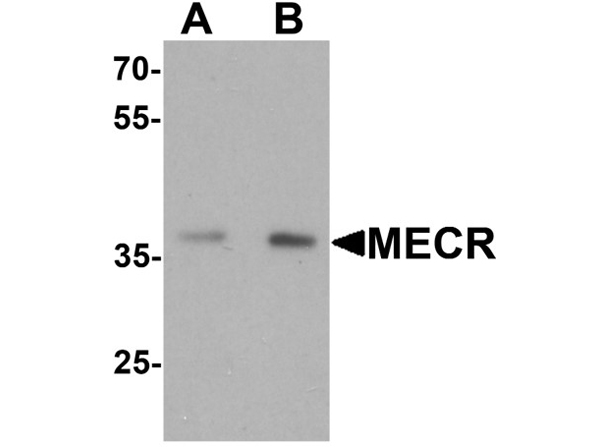
MECR Antibody

Cannot supply to this region.
- SKU:
- 600-401-CT0
- Additional Names:
- MECR|MECR Antibody, NRBF1, CGI-63, FASN2B, NBRF1, Trans-2-enoyl-CoA reductase, mitochondrial, Nuclear receptor-binding factor 1, HsNrbf-1
- Application:
- ELISA, WB
- Concentration:
- 1 mg/ml
- Physical State:
- Liquid
- Species Reactivity:
- Human
- Storage Conditions:
- -20[o]C aliquoted. Aliquot. Avoid freeze/thaw cycles., 2-8[o]C diluted. Aliquot. Avoid freeze/thaw cycles.
- Supplier:
- Rockland Inc
- Host:
- Rabbit
- Reactivities:
- Human, Mouse, Rat
- Buffer:
- 0.01 M Sodium Phosphate, 0.25 M Sodium Chloride
- Immunogen:
- Anti- MECR antibody was prepared from whole rabbit serum produced by repeated immunizations with a 15 amino acid peptide near the C-terminus of human MECR.
- Formulation:
- 0.01 M Sodium Phosphate, 0.25 M Sodium Chloride, pH 7.2
- Uniprot:
- Q9BV79
- Synonyms:
- 2-enoyl thioester reductase;CGI-63;DYTOABG;enoyl-[acyl-carrier-protein] reductase, mitochondrial;ETR1;FASN2B;homolog of yeast 2-enoyl thioester reductase;mitochondrial 2-enoyl thioester reductase;NRBF1;nuclear receptor binding factor 1;Nuclear receptor-binding factor 1;trans-2-enoyl-CoA reductase, mitochondrial
- Extra Details:
- The mitochondrial trans-2-enoyl-CoA reductase (MECR), was initially identified as nuclear receptor-binding factor 1 (NRBF1), which can interact with a multitude of nuclear hormone receptors in the presence of the respective ligands. MECR has been shown to be part of the mitochondrial fatty acid synthesis (FAS II) system and to catalyze the NAPDH-dependent reduction of 2-enoyl thioesters, generating saturated acyl-groups. Overexpression of this gene in transgenic mice can lead to cardiac abnormalities, suggesting that inappropriate expression of genes of FAS II can result in the development of hereditary cardiomyopathy.
- Shipping Conditions:
- Dry Ice