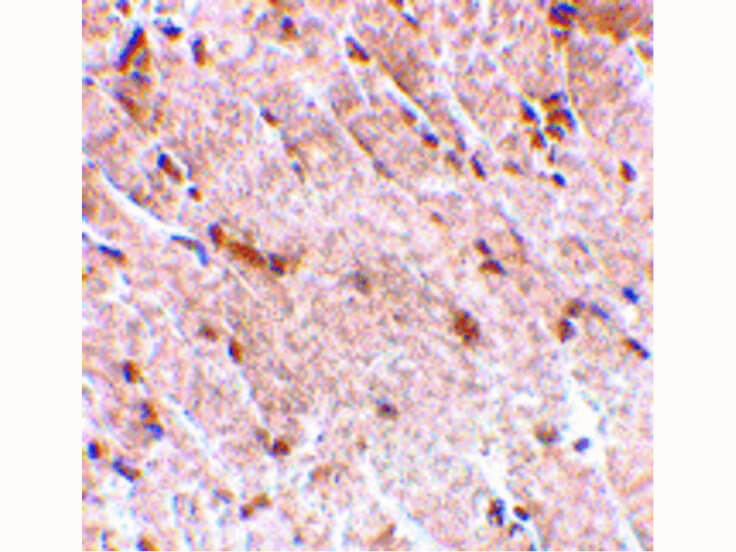
600-401-CQ8
MAPKAP1 Antibody

Cannot supply to this region.
- SKU:
- 600-401-CQ8
- Additional Names:
- MAPKAP1|MAPKAP1 Antibody, MIP1, SIN1, JC310, SIN1b, SIN1g, MIP1, Target of rapamycin complex 2 subunit MAPKAP1, Mitogen-activated protein kinase 2-associated protein 1, TORC2 subunit MAPKAP1
- Application:
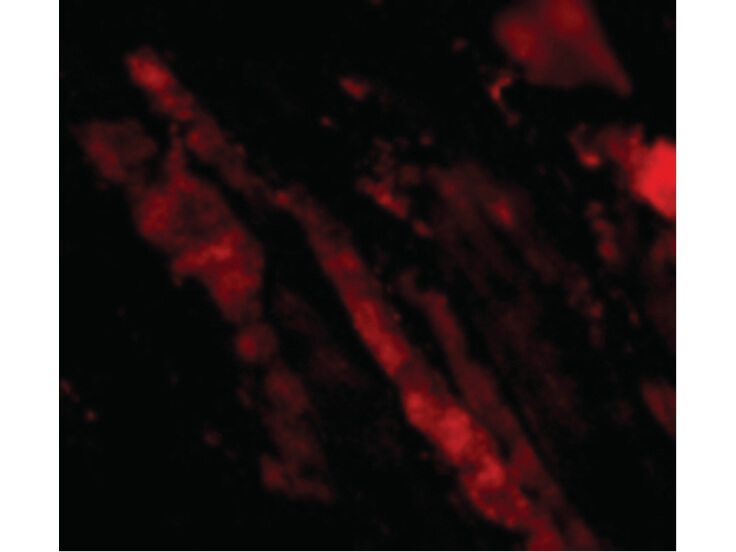
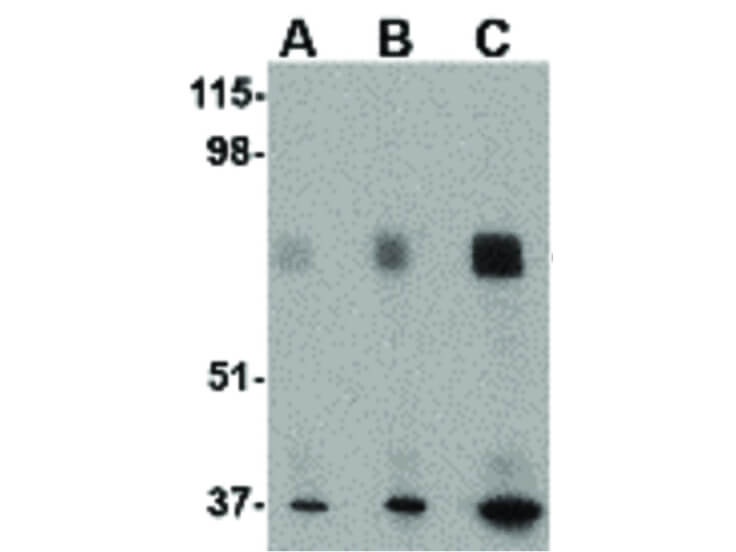
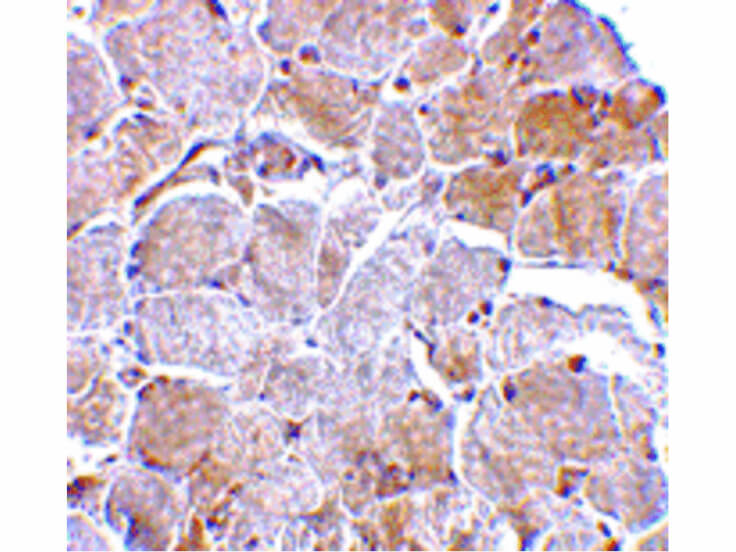
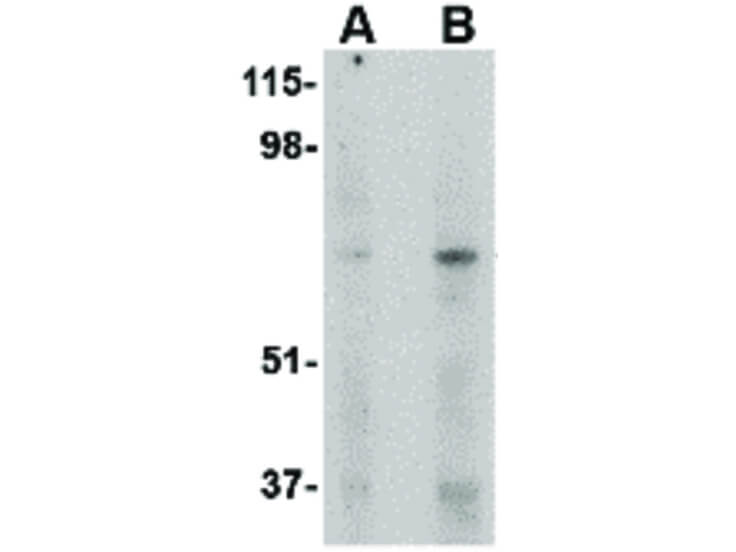
- ELISA, IHC, WB, IF
- Concentration:
- 1 mg/ml
- Physical State:
- Liquid
- Species Reactivity:
- Human
- Storage Conditions:
- -20[o]C aliquoted. Aliquot. Avoid freeze/thaw cycles., 2-8[o]C diluted. Aliquot. Avoid freeze/thaw cycles.
- Supplier:
- Rockland Inc
- Host:
- Rabbit
- Reactivities:
- Human, Mouse, Rat
- Buffer:
- 0.01 M Sodium Phosphate, 0.25 M Sodium Chloride
- Immunogen:
- Anti-MAPKAP1 antibody was prepared from whole rabbit serum produced by repeated immunizations with a 19 amino acid synthetic peptide from near the N-terminus of human MAPKAP1.
- Formulation:
- 0.01 M Sodium Phosphate, 0.25 M Sodium Chloride, pH 7.2
- Uniprot:
- Q9BPZ7
- Synonyms:
- JC310;MEKK2-interacting protein 1;MIP1;mitogen-activated protein kinase 2-associated protein 1;mitogen-activated protein kinase associated protein 1;mSIN1;ras inhibitor MGC2745;SAPK-interacting protein 1;SIN1;SIN1b;SIN1g;stress-activated map kinase interacting protein 1;Stress-activated map kinase-interacting protein 1;stress-activated protein kinase-interacting 1;target of rapamycin complex 2 subunit MAPKAP1;TORC2 subunit MAPKAP1
- Extra Details:
- MAPKAP1 was initially identified as the human homolog of S. pombe SIN1. Recent evidence has shown that it identical to Mip1, a protein that interacts with MEKK2, a member of the mitogen-activated protein kinase (MAPK) intracellular signaling network. MAPKAP1 is thought to prevent MEKK2 activation and dimerization by forming a complex with the inactive and non-phosphorylated MEKK2, thereby blocking the JNK1/2, ERK1/2, p38 and ERK5 MAPKs. MAPKAP1 has also been shown to play a role in the TOR signaling process, a pathway that is involved in controlling cell growth and proliferation in response to environmental cues such as nutrients, growth factors and hormones. Experiments showed that MAPKAP1 helped to maintain the TOR/rictor assembly but not the TOR/RAPTOR complex, which allowed specific phosphorylation of Akt, a kinase that is believed to couple the growth factor-PI3K signaling pathway to the nutrient-regulated TOR signaling pathway. Multiple alternatively spliced isoforms of MAPKAP1 have been identified.
- Shipping Conditions:
- Dry Ice